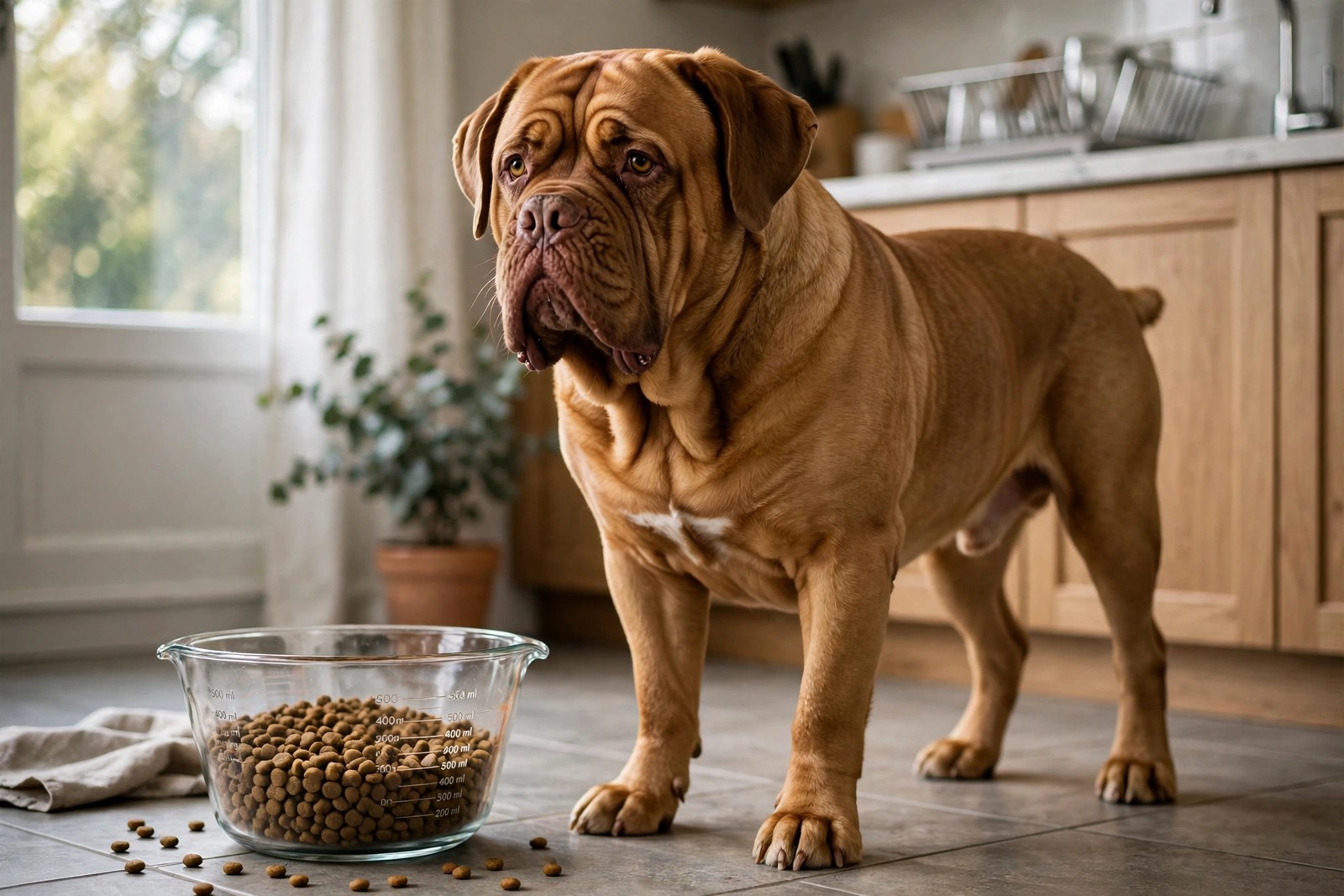
A Daily Amount Built Around a Very Heavy Frame
An adult Dogue de Bordeaux commonly eats about four to five cups of a complete large-breed food across the day. That range suits a dog that is fully grown, moderately active, and holding a steady weight. A smaller female resting most of the day may sit near the low end, while a large male who walks, plays, and trains daily may need the top end or a little beyond it.
Do not judge the amount by appetite alone. This breed was built to be substantial, with a massive head, deep chest, and dense bone, and almost every healthy adult will happily eat more than the bowl should hold. The amount on the bag is a starting point for this breed, not a verdict, because two Bordeaux dogs of the same weight can burn very different amounts depending on age, muscle, and daily movement.
Why Two Measured Meals Matter for This Breed
Split the daily ration into a morning and an evening meal rather than offering one large serving. A deep-chested giant eating a single huge meal loads the stomach in a way that makes most owners and vets uneasy, and smaller meals are gentler on digestion through a short, heavy digestive tract.
Use an actual measuring cup or a kitchen scale for the first weeks with any new food. Eyeballing fails badly with a bowl sized for a mastiff, because a casual extra scoop looks small against that wide dish yet adds up, over a week, to a full extra day of food.
Reading Condition on a Wrinkled, Broad Body
Check condition by hand, not by photograph. Run flat palms along the ribcage: ribs should be felt easily under a thin layer, with a visible waist from above that is modest rather than tucked like a running breed's. From the side, the belly should rise slightly behind the ribs instead of hanging level with the chest.
Weigh your dog regularly if you can, because gradual gain hides well under loose skin and heavy jowls. If ribs disappear under padding, trim the daily amount by a small step and reassess after a couple of weeks rather than cutting sharply. If ribs and hip points become prominent and appetite or energy changes, increase slightly and mention the shift at the next vet visit.
Treats, chews, and table scraps count as food for a Bordeaux. A few large biscuits can quietly equal a third meal. Keep training rewards small, use part of the measured dinner as rewards on heavy training days, and make sure visitors understand that those pleading eyes are not a feeding instruction.
Puppies, Seniors, and Slower Days
A Bordeaux puppy grows fast and heavily, and overfeeding during growth is a real risk for developing joints. Puppies eat more frequent, smaller meals of a large-breed growth food, with amounts guided by the food's chart and your vet's view of growth rate, not by an adult ration divided down.
Older dogs usually need less as activity falls and metabolism slows, even though their fondness for the bowl rarely fades. A senior who is gaining on the old ration should step down gradually, with protein kept adequate to support muscle. Any sudden appetite loss in this breed deserves prompt veterinary attention, since a dog this food-loving going off meals is a meaningful change.
Keeping Every Feeder Honest
In a household where a partner, teenager, and dog walker may all pass the food bin, the Bordeaux's total depends on communication as much as on the cup. KinsLe's Care Teams feature lets you assign each feeding to a named person for this dog, and the completed meal is marked with a timestamp, so the evening feeder can see at a glance that breakfast already happened.