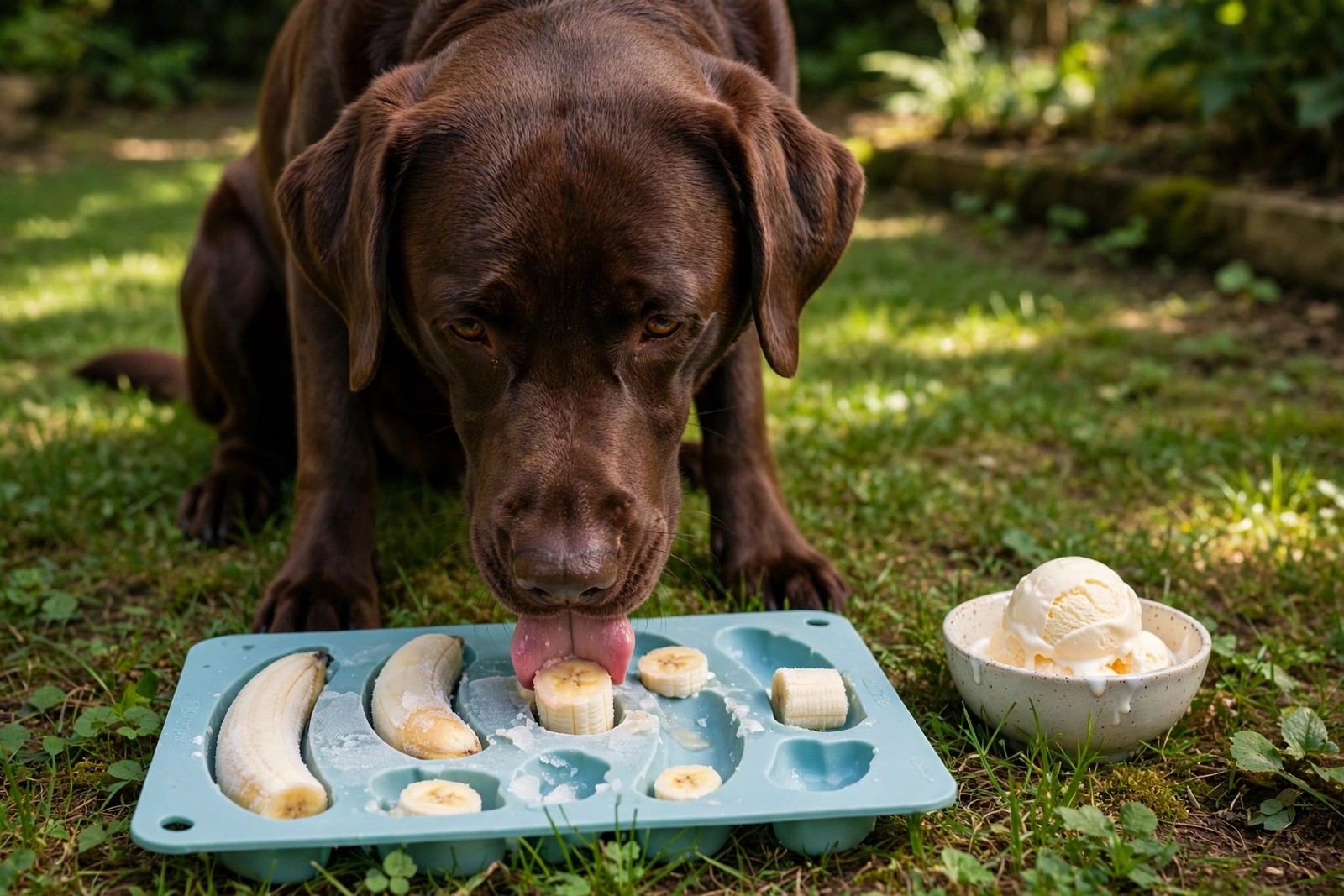
Ice cream is not recommended for dogs. It is rarely an emergency — a lick or two stolen from a dropped cone will pass through most healthy dogs with nothing worse than gas — but as a chosen treat it stacks three problems at once: lactose, sugar, and flavourings that range from pointless to genuinely dangerous.
Lactose is the everyday problem
Puppies produce plenty of the enzyme that digests milk sugar because they need it. Most dogs produce far less after weaning, so a portion of dairy dessert can ferment its way through the gut, producing the classic sequence of gurgling, wind, bloating, and loose stool a few hours later. Tolerance varies — some dogs handle a spoonful without incident — but a food whose best-case outcome is 'probably fine' and whose common outcome is a messy evening is not earning its place when better frozen options exist. Rich, fatty servings add stomach upset of their own and are a particularly poor idea for dogs prone to pancreatic flare-ups.
Flavours where a lick becomes a real risk
Chocolate ice cream contains theobromine, which dogs clear from their bodies slowly; coffee and espresso flavours bring caffeine on top of that. Sugar-free ice creams and toppings may be sweetened with xylitol, which is extremely toxic to dogs even in small quantities — a sugar-free label should end the sharing conversation entirely. Mix-ins raise the stakes further: macadamia nuts are dangerous for dogs, raisins appear in some classic flavours, and hard chunks of frozen chocolate or nut are a choking risk for a dog inclined to gulp. If your dog raids a tub of chocolate or sugar-free ice cream, call your veterinarian for advice rather than waiting for symptoms.
Frozen treats that keep the ritual
The summer moment — something cold after a warm walk — survives perfectly well without ice cream. Banana slices frozen on a tray, a spoonful of plain pumpkin frozen in a silicone mould, or plain watermelon cubes with seeds removed all deliver the cold, sweet experience in dog-appropriate form. Offer them outside or on a washable mat, supervise until they soften, and keep portions treat-sized. A dog who has never tolerated dairy should skip yoghurt-based frozen treats too; fruit versions keep it simple. One more summer point: a frozen treat is refreshment, not heat treatment. A dog who is panting hard, drooling thickly, or unsteady after exercise needs shade, rest, and water, and a dog showing signs of heatstroke needs urgent veterinary care — no frozen snack of any kind substitutes for cooling down properly.
Spell it out in KinsLe's Care Pass before a summer trip, and the temporary link your sitter opens puts ice cream firmly on the never-feed list with the frozen banana and pumpkin swaps written right underneath.