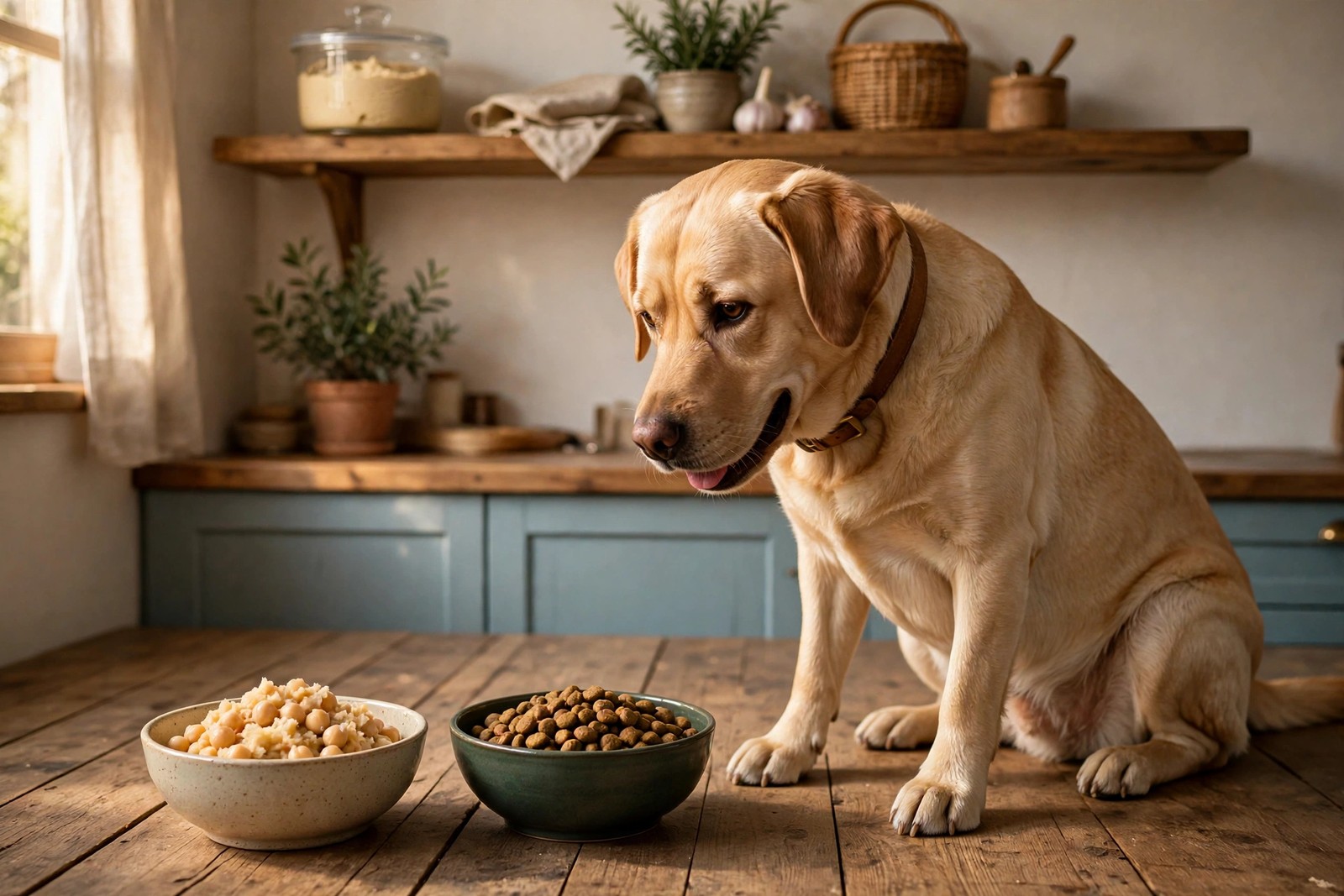
Yes, chickpeas are safe for dogs when they are cooked until tender, served plain and kept to modest spoonfuls. They offer fibre, plant protein and a soft texture that stirs easily through a normal meal, and many dogs take to them readily. The chickpea's dangers are all in its company and its preparation: raw dried chickpeas are far too hard, canned ones arrive in salty liquid, and the best-known chickpea dish of all is one a dog must never eat.
Hummus Is the Firm No
Hummus seems like the natural way to share chickpeas, and it is the route to avoid completely. A typical hummus is blended with garlic, and garlic is toxic to dogs, damaging red blood cells even in amounts a human would call seasoning. Lemon juice, salt and generous olive oil complete a mixture that has no place in a dog's bowl, and flavoured hummus adds chilli, roasted peppers or herbs on top. Picking the garlic out is not an option in a blended dip, and scraping a dog portion from the edge of the tub is guesswork, not safety. Dogs get chickpeas in their plain cooked form or not at all.
Canned, Dried and Getting the Texture Right
Canned chickpeas are the practical route. Drain them and rinse well under running water to remove the salty canning liquid, then serve them as they are for a large dog or lightly mashed with a fork for a smaller one. Dried chickpeas need soaking and full cooking in plain water until they squash easily between finger and thumb; a chickpea that is still firm in the centre is hard to digest and unappealing to chew. Whole cooked chickpeas are round and smooth, and a small dog that gulps can take one down whole, so split or mash them for small mouths as a matter of routine. Cook the dog's portion without stock, salt or spices simmered in, because flavourings added for the family pot disqualify the whole batch for the dog.
Portions and Predictable Gas
Begin with a teaspoon of mashed chickpea for a small dog or a tablespoon for a large one, mixed into food, and increase gradually over several servings if the digestion stays settled. Like other legumes, chickpeas ferment a little as their fibre is broken down, so some wind on chickpea days is normal, and a too-generous first serving can loosen the stool. A few spoonfuls a couple of times a week is a reasonable pattern for a variety extra. Chickpeas supplement a complete diet; they do not replace its animal protein, and a dog on a vet-directed diet should have any new legume approved by the vet before it becomes a habit.
The Spiced Snack Versions
Roasted chickpea snacks, falafel and curried chickpeas all start from the same bean and none of them belongs in the bowl. Roasted snack chickpeas carry salt and spice coatings and a hard, dry crunch. Falafel is fried and seasoned, often with onion and garlic in the mixture. Curries bring onion, garlic, chilli and rich sauces. In each case the chickpea is innocent and the preparation is the problem, which is why the rule travels well: if the chickpeas were cooked for human enjoyment, assume they are seasoned and keep them for humans. KinsLe's Care Teams helps the rule hold by letting you put the plain chickpea serving in the feeding plan as an assigned, timestamped duty, so nobody improvises a dog portion from the family's spiced pot.