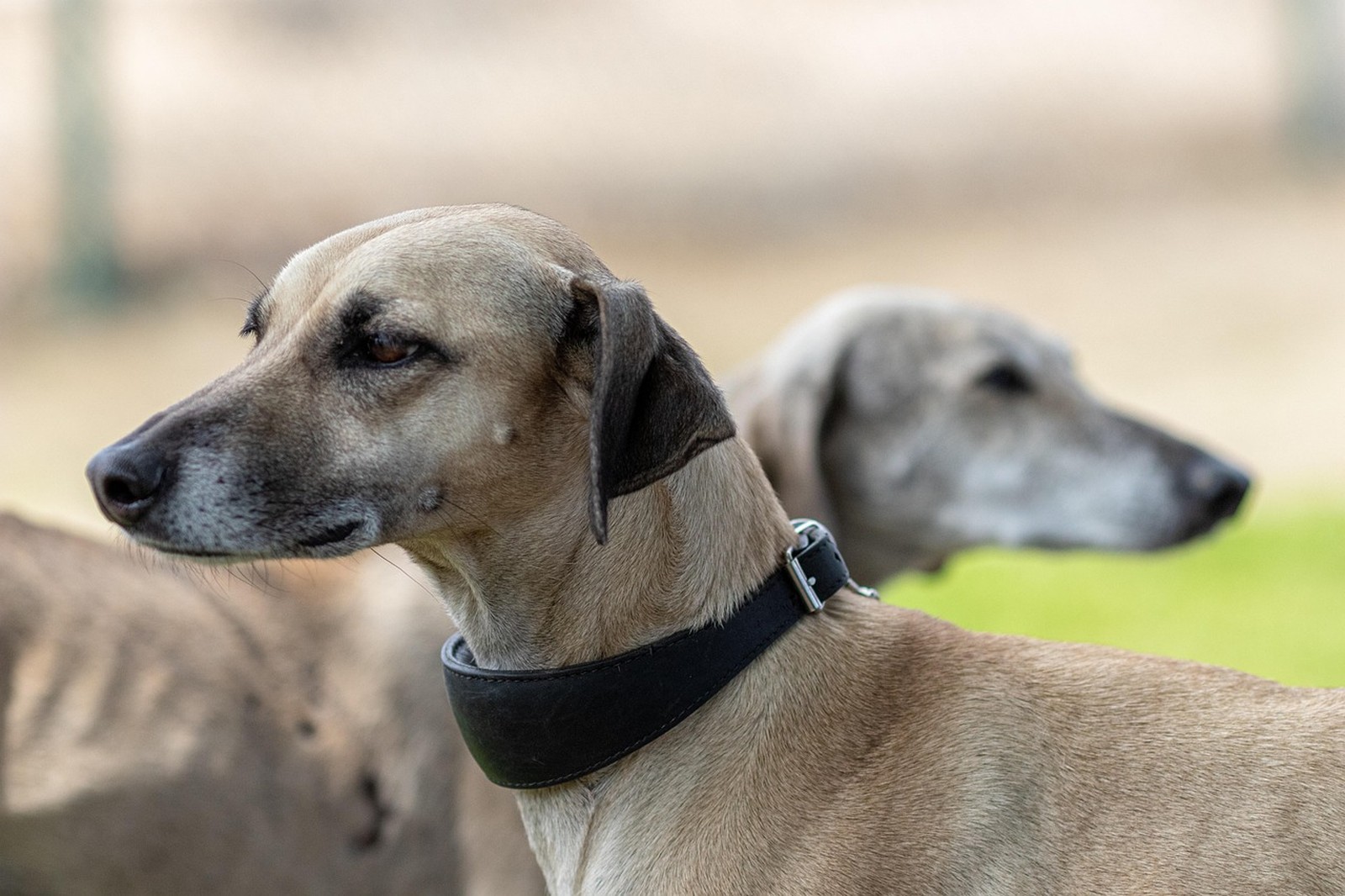
Less Dog, More Athlete, Than the Bowl Suggests
An adult Saluki generally eats two to three cups of complete food a day. The breed is tall but lightly built, a desert coursing hound engineered for speed and endurance over hard ground, and its fuel needs follow muscle and mileage rather than height. A Saluki running free several times a week, in the hard, lean condition the breed is meant to carry, may need the top of the range. A gentle house companion often maintains beautifully on less, to the surprise of owners measuring against broader breeds of similar height.
Start mid-range, divide the food into two meals, and judge after a fortnight. With Salukis the honest question is rarely just how much, but whether the dog is eating the offered amount willingly and holding its characteristic condition.
What Healthy Lean Actually Looks Like
No breed suffers more from kind-hearted overfeeding pressure than a sighthound. A correct Saluki shows a pronounced tuck behind deep ribs, a defined waist, and hip points that can be felt and often faintly seen, under a thin covering of muscle and skin. Ribs should be felt with a light touch, not excavated, and the spine should not feel sharp or bony. That outline is athletic design, not neglect.
Well-meaning comments at the park have pushed many Saluki owners into fattening a dog that was exactly right. Extra weight blunts this breed's speed, stresses slim joints, and disappears the very elegance that signals fitness. Trust your hands and your vet's assessment over public opinion: if energy is high, coat is glossy, weight is stable, and your vet is content, the ration is right even when the dog looks slender beside a Labrador.
Feeding a Dog Who May Not Feel Like It
Many Salukis are indifferent, occasionally disdainful eaters. Serve meals at consistent times in a quiet place, put the bowl down without ceremony, and lift what is uneaten after a reasonable interval. Leaving food down all day blurs appetite signals and lets you miss the day a genuinely off-colour dog stops eating. Fresh food, a clean bowl, and a calm routine do more for a picky Saluki than a rotating cast of toppers, which mostly trains the dog to wait for something better.
Some individuals do better with the larger share in the evening, after exercise has built an appetite. A modest morning meal and a fuller evening feed is a perfectly sound pattern if total intake and condition stay steady.
Protect the meal from competition. A Saluki sharing space with a pushy, food-stealing housemate may simply walk away from the bowl, quietly under-eating while appearing merely aloof.
When Picky Becomes a Problem
Selective eating is breed-typical; a change in pattern is not. A Saluki who has always eaten lightly but steadily needs no intervention, while one who begins refusing meals he usually accepts, loses visible condition, or shows changed thirst, drooping energy, or digestive upset should see a vet. In a breed this lean, there is less reserve to spend while waiting.
Puppies need measured meals of a growth food several times a day and should grow slim and steady, never rounded out to look cuddly. Seniors may need smaller, more tempting meals served more often, with weight checked frequently, since an ageing sighthound can lose muscle quietly under a silky coat. Keep teeth in mind, too — a sore mouth is a common, fixable reason an older dog turns choosy.
Records Beat Impressions
With an eater this individual, memory blurs: was yesterday's half-bowl normal, or the third small day running? With KinsLe, Care Teams lets whoever feeds your Saluki mark the meal complete and timed, turning vague impressions into a record you can trust when judging appetite.