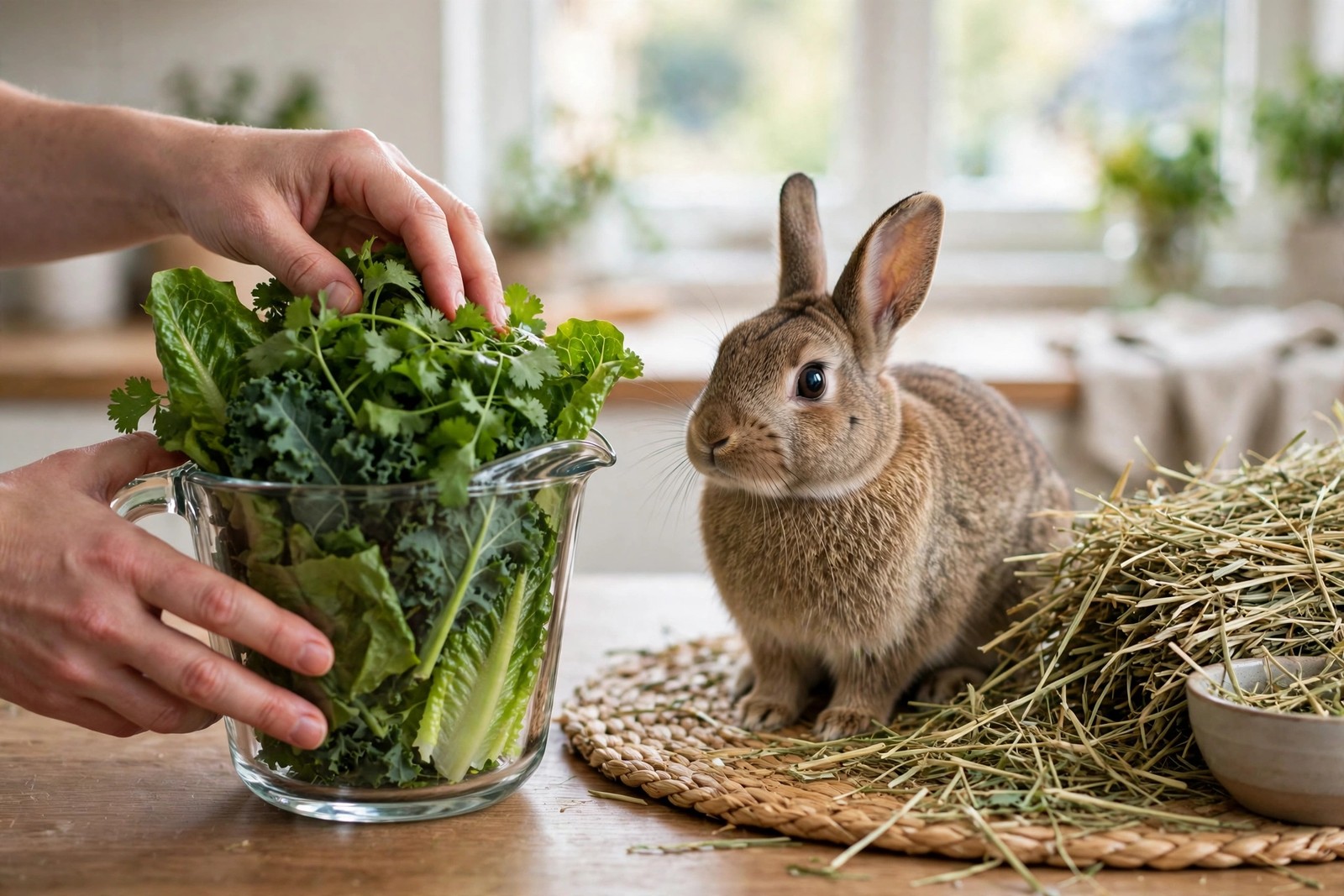
Fresh food matters to a rabbit, but it is the garnish on the diet, not the diet itself. The foundation is unlimited grass hay, available day and night — a rabbit should eat a bundle of hay roughly its own body size daily, because that fibre keeps the gut moving and grinds down teeth that never stop growing. The fresh portion described below sits on top of that hay, alongside a small measured handful of pellets.
The daily amount
A reliable working rule is one tightly packed cup of leafy greens for each kilogram (about 2.2 pounds) of body weight. A typical 2-kilogram adult rabbit therefore gets about two packed cups a day, split between morning and evening so the gut receives a steady flow rather than one large wet meal. Dwarf breeds get proportionally less, giant breeds more — weigh your rabbit, or have your vet weigh them at the annual check, and set the portion from the real number rather than guessing from size. Baby rabbits are different: very young rabbits should be weaned onto hay and pellets first, with greens introduced gradually in small amounts once the gut is mature, so ask your vet before offering a youngster a full adult portion.
What counts as the fresh portion
Build the cup mainly from leafy greens and herbs:
- Leafy staples: romaine and other dark lettuces, kale, spring greens, cabbage in modest amounts, and leafy carrot tops or celery leaves
- Herbs, which most rabbits love: coriander, dill, parsley, mint, and basil
- Wild plants you can identify with certainty, such as dandelion leaves, gathered away from sprayed verges and dog-walking routes
Rotate at least three different greens across the week so the diet stays broad, wash everything, and shake or pat it dry — serving greens dripping wet is a common route to a loose stomach. Non-leafy vegetables such as broccoli, peppers, and courgette can appear in smaller amounts alongside the leaves. Fruit and carrot are treats, not vegetables in rabbit terms: both are sugary, so offer a piece the size of your thumbnail a few times a week at most, however insulted the rabbit looks.
Introducing changes, and what never to feed
A rabbit's gut bacteria are tuned to the current diet, so add any new green in a small piece on the first day and build up over a week, watching the droppings: healthy ones are round, dry, and plentiful; soft, small, or absent droppings mean slow down, return to hay and a familiar green, and contact a vet if eating or droppings do not return to normal promptly, because a rabbit who stops eating is an emergency in this species. Never feed onion, potato, rhubarb, or avocado, keep iceberg lettuce out of the main portion because it is mostly water with little fibre or nutrition, and never offer lawnmower clippings, which ferment dangerously fast.
In a household where two or three people all 'helpfully' feed the rabbit, double portions of greens are a genuine problem, and KinsLe's Care Teams solves it by letting you assign the morning greens, evening greens, and hay top-up as named duties that get marked off with a timestamp, so everyone can see the cup rule has already been followed today.