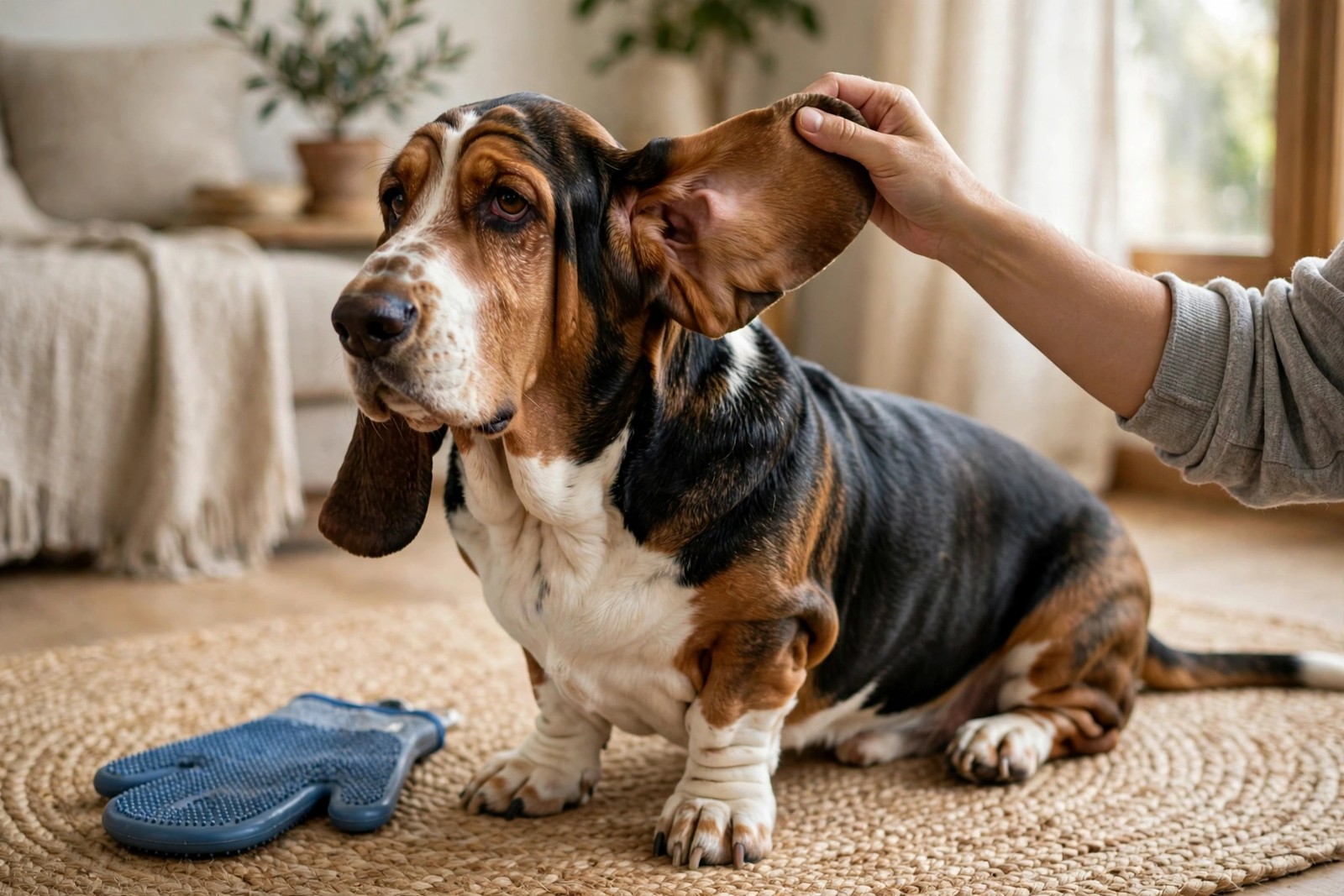
A Basset Hound's coat is short, dense, and deceptively low-effort. One thorough brush a week, about ten minutes with a rubber grooming mitt or a bristle brush, lifts out loose hair and the steady shedding this breed produces all year. The brush is honestly the smallest part of the weekly job. The real work sits in the ears, the skin folds, and the paws, and a Basset whose coat looks fine can still be uncomfortable in all three places if those checks are skipped.
The weekly brush, done properly
Work against the lie of the coat first, then with it, so loose hair comes out instead of sliding over the surface. A rubber mitt suits the Basset's short, slightly oily coat because it grips dead hair without scratching skin. Check the skin as you go: Bassets can develop greasy patches and a strong hound odour when the coat is left unbrushed, and a weekly session is when you notice flaking, redness, or a sore spot early. Bathing is an occasional job, not a weekly one; a bath every few weeks, or sooner after a muddy walk, is usually enough, and over-bathing strips the coat and makes odour worse.
Ears: the main weekly task
Those long, heavy ears are the breed's signature and its main grooming burden. They hang close to the head, limit airflow, and their tips trail through grass, puddles, and the food bowl. Once a week, lift each ear, look and sniff inside, and clean the outer canal with a vet-approved ear cleaner and cotton wool, wiping away wax and debris. Never push anything deep into the canal. A sour smell, dark discharge, head shaking, or scratching at the ear means a vet visit rather than another home clean, because those signs can point to an infection that cleaning alone will not settle. After wet or muddy walks, dry the ear tips themselves as well, because the heavy tips stay damp long after the rest of the dog has dried, and check the feathering behind the ears for grass seeds picked up at ground level, where a Basset's head spends most of its walking life.
Folds, paws, and nails in the same session
While the dog is settled, run a hand through the loose skin at the neck and armpits and check that the folds are dry and calm rather than damp or pink. Wipe a damp fold with a clean, dry cloth and let it dry fully. Check between the toes and under the paws for mud, small stones, and grass seeds worked into the hair, and trim or file nails that click on hard floors, since a long, low dog puts real strain through its front legs when nails push the toes back. Doing ears, folds, paws, and nails in one weekly session keeps the whole job to roughly twenty to thirty minutes.
A weekly rhythm that survives busy weeks
Pick one fixed session a week, after a walk, when the dog is calm and slightly tired, and reward stillness with small treats placed beside the dog one at a time. Split the session between two people if you share care: one person brushes while the other does ears and folds, and both follow the same order every week so nothing is quietly dropped. Puppies need shorter, gentler versions of the same session so handling becomes normal before they are full-grown and stubborn about it. KinsLe's Care Teams turns that rhythm into assigned duties for each person, with the ear clean, brush, and fold check each marked complete with a timestamp, so the next person can see exactly what was done and when.