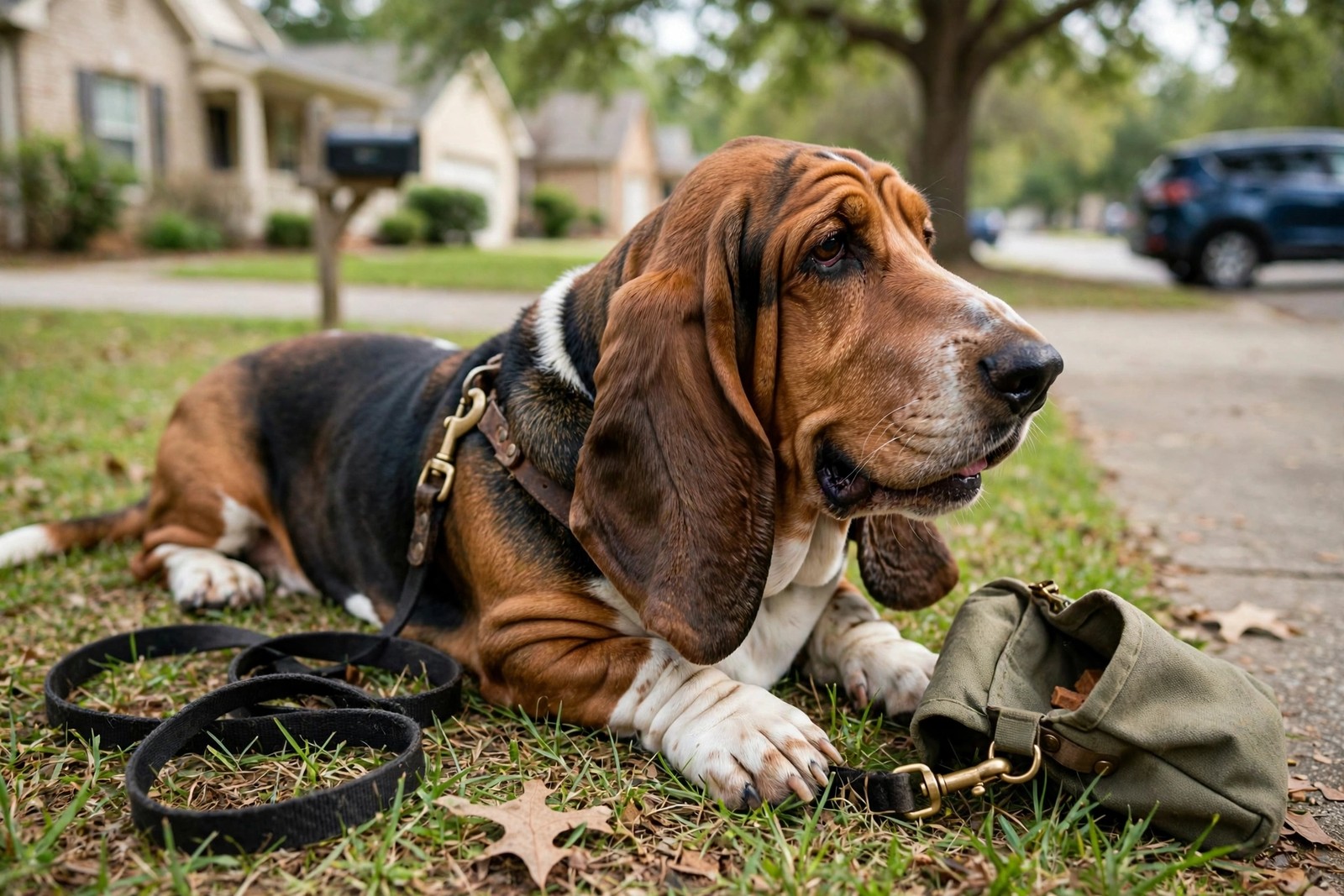
A Basset day starts at nose height. The morning outing is rarely a brisk march, because a Basset Hound typically reads the pavement the way people read headlines, stopping at gateposts and grass verges to work through scent stories left overnight. Plan around an hour across the day for these steady, sniffy walks, and expect that hour to cover less ground than the same hour with a leggier breed. A secure long line in a park lets the dog range and quarter the grass without vanishing after a rabbit trail, since recall tends to dissolve once a scent takes over. Owners who enjoy the amble thrive here, while owners who wanted a jogging partner usually feel the mismatch within the first week.
A Heavy, Low-Slung Housemate Indoors
At home, a Basset of 40 to 65 pounds (about 18 to 30 kilograms) is a substantial presence packed into short legs. Stairs in the home deserve thought, since repeated climbing loads a long back and short limbs, and many owners use a gate and carry puppies rather than letting them bounce down steps. Floors get a low, sweeping occupancy: the dog sprawls across doorways, sighs heavily and relocates only when food sounds hopeful. Company matters more than activity at home, and a Basset often follows its person from room to room at a stately pace before collapsing again. Food motivation runs deep, so bins need lids, counters need clearing, and meals for other pets need a door between them and a determined snout.
Ears, Coat and the Weekly Hands-On Round
The short coat asks little: a weekly brush lifts loose hair and lets you check skin folds and paws in the same sitting. Ears ask much more. Those long, draping ears trail through water bowls and wet grass, and the enclosed ear canal stays warm and damp unless you clean and check it weekly, drying the inner flap after every wet walk. Lift each ear, look for redness or dark buildup, sniff for a sour smell, and wipe folds around the neck and armpits where skin rubs. Persistent scratching, head shaking or a strong odour from an ear is a prompt for a veterinary visit rather than stronger home cleaning. Nails on a slow-walking dog wear down slowly too, so clip or file them on the same weekly round before clicking on hard floors announces that you forgot.
Evenings, Voices and the Social Contract
Evenings are the breed's social peak indoors, and the voice is part of the package. Bassets often bay rather than bark, a deep carrying sound that neighbours will hear through walls, so apartment living needs honest thought about noise and about who is home during the day. A lonely Basset may sing, while a tired and occupied one usually snores. Training works when it follows the nose: short sessions paid in small, smelly rewards, practised after a walk rather than before one, and repeated without expecting instant obedience from a dog bred to make independent decisions on a trail. Visitors should expect a courteous greeting, a thorough scent inspection of their shoes, and then a dog who returns to a cushion as though the audience had ended.
Costs follow the shape of the dog rather than the height of the dog. Food bills sit in the large-breed range because 40 to 65 pounds eats accordingly, a sturdy lead and a long line are one-off purchases, and the recurring extras are ear-cleaning supplies, fold wipes and a washable bed cover that survives weekly laundry. Car journeys need a ramp or a low step for many Bassets, since jumping down from a boot repeatedly is unkind to that long back, and a harness that fits the deep chest is worth choosing carefully in the shop.
If circumstances ever change, KinsLe Transferrable Profiles hands the next household a ready-made record covering ear-cleaning cadence, measured meals and the walking routes this particular dog loves.