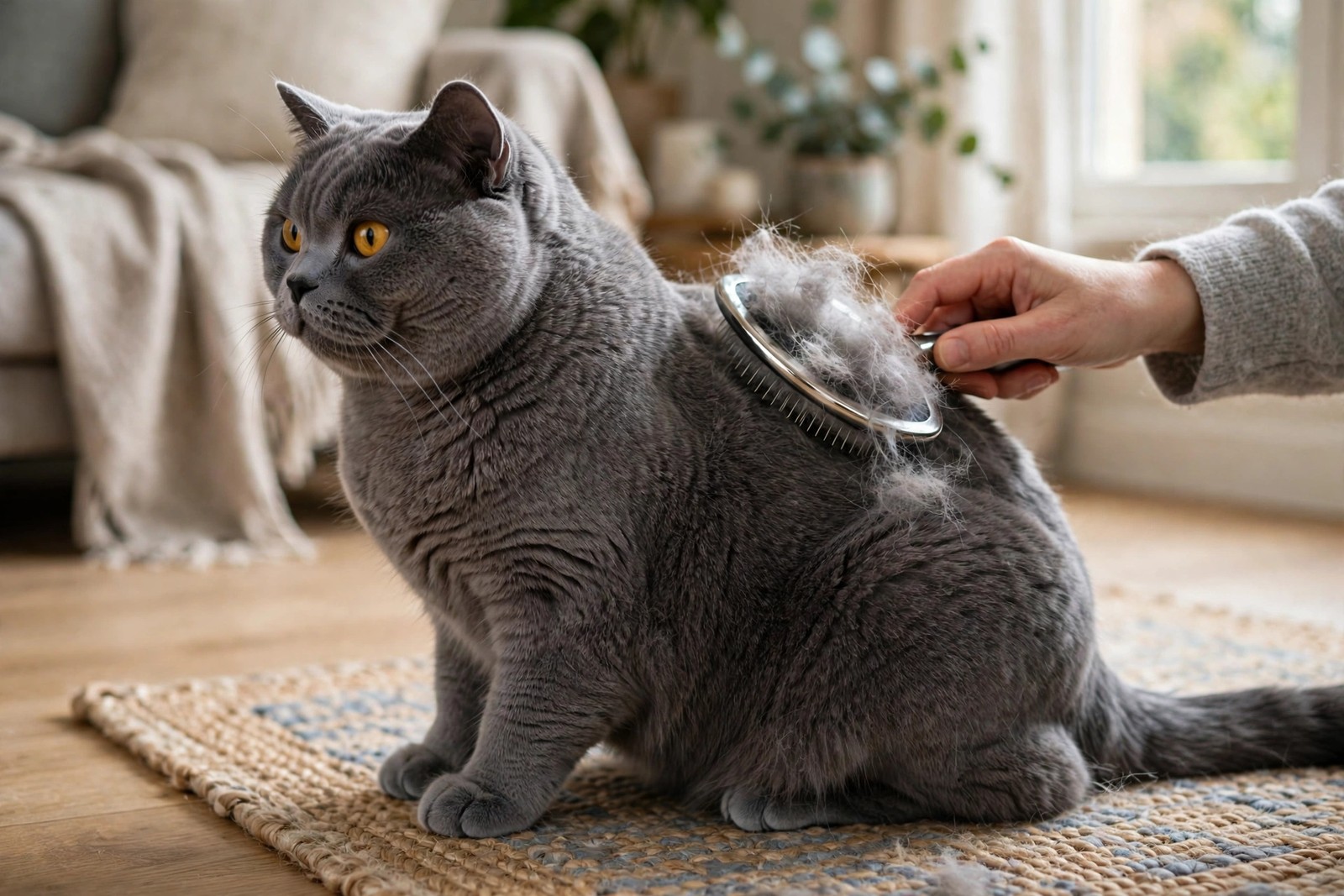
A British Shorthair needs one thorough brushing a week, and that single session matters more than the cat's tidy appearance suggests. Under the short topcoat sits an unusually dense, springy undercoat, the insulation that gives the breed its plush, teddy-bear feel. Loose undercoat does not fall away easily; it packs down among living hair, dulls the coat, and gets swallowed during self-grooming. Five to ten minutes weekly keeps the coat breathing and the hairballs down.
How to Brush a Coat This Thick
A slicker brush or a steel comb works better here than a soft brush, which skims the surface. Work in sections, brushing gently against the lie of the hair first to lift the undercoat, then smooth everything back down. You will be surprised how much hair a cat who 'barely sheds' produces on the brush; that is the undercoat doing exactly what it should. Keep sessions calm and unhurried, since many British Shorthairs are dignified cats who tolerate handling on their own terms, and stop while the cat is still relaxed so next week stays welcome.
Shedding Season Changes the Schedule
Twice a year, typically spring and autumn, the coat turns over heavily and weekly brushing stops being enough. Move to two or three shorter sessions a week until the wave passes, usually a few weeks. This is also peak hairball season, because the cat is ingesting more loose hair despite your efforts; an occasional hairball is normal, but frequent vomiting, appetite loss, or straining is a vet conversation, not a grooming problem. Bathing is seldom necessary for this breed and most British Shorthairs would like to keep it that way.
What Else the Weekly Session Covers
Pair the brush with a quick claw trim every two to three weeks and a glance into the ears. British Shorthairs are a stocky, weight-prone breed, and the grooming slot is a good moment to feel along the ribs: you should find them under a modest padding, not go hunting for them. A coat that suddenly thins, flakes, or develops bald patches is a health flag for your vet, not something to brush through. While you work, part the hair at the neck and lower back and look for flea dirt or redness, which a coat this thick can hide from casual view for weeks. Because the schedule shifts with the seasons, KinsLe's Care Teams helps by holding the weekly brush as a shared duty you can temporarily double in shedding season, with each session assigned and marked complete so nothing drifts.