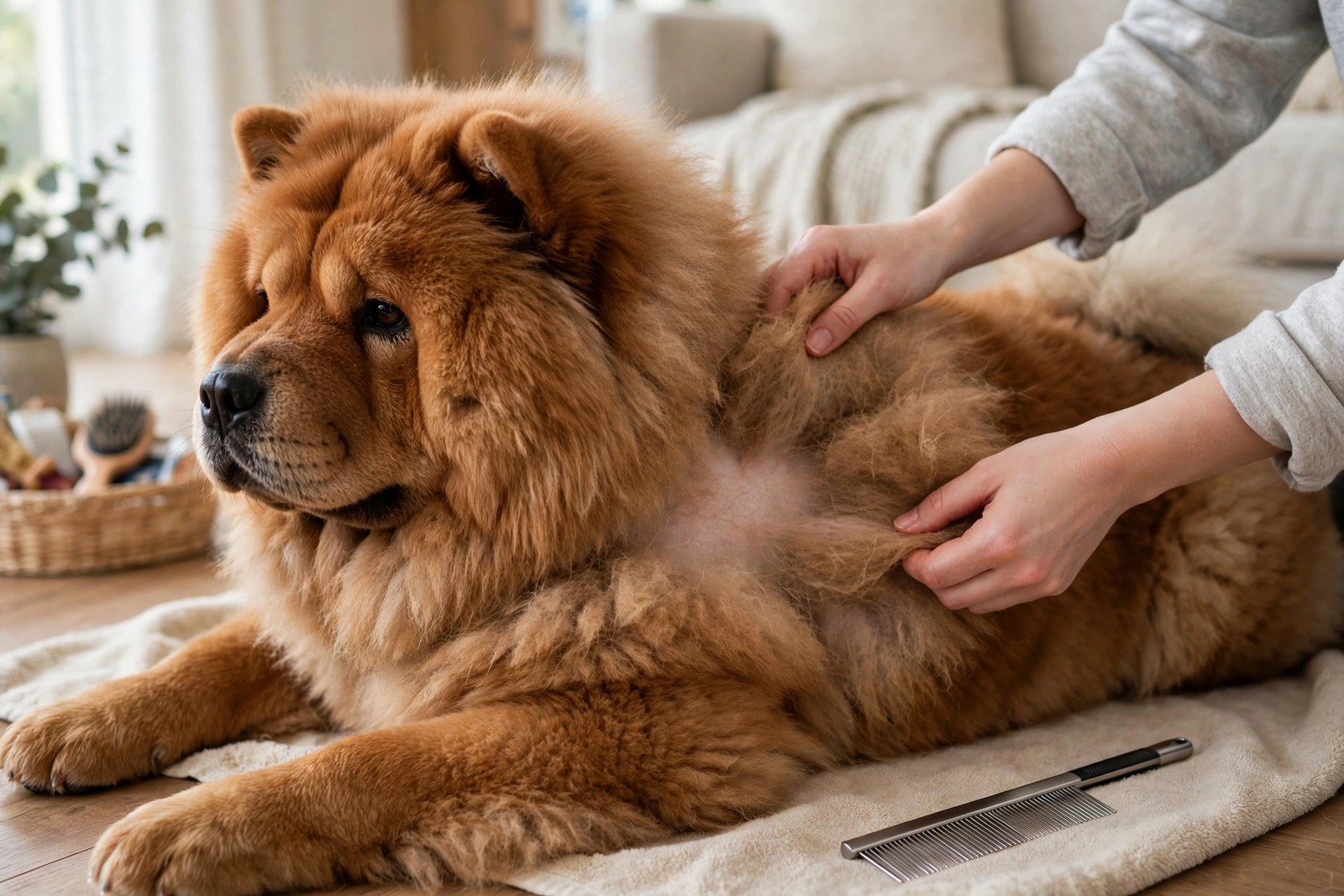
The skin under a Chow Chow's coat is skin you almost never see, and that is the whole problem this question is really about. The double coat is dense enough to hide the skin's surface completely, so skin health depends on a grooming routine that opens the coat up regularly: brushing three or four times a week all the way to the skin, a deliberate skin inspection built into the week, and complete drying whenever the coat gets wet. Skip any of those three and trouble can establish itself underneath a coat that still looks magnificent from across the room.
Brushing as an airflow and inspection habit
Line brushing, lifting the coat in sections and brushing from the skin outward, does two jobs at once: it removes the dead undercoat that would otherwise felt into a solid layer, and it lets air circulate down to the skin between sessions. Felted undercoat holds warmth and moisture against the body and blocks your view entirely, which is why three or four sessions a week matters more here than the exact brush you choose. A metal comb that glides to the skin confirms a section is clear; a comb that rides across the top means the undercoat below is still packed, whatever the surface looks like.
The weekly skin check, done deliberately
At one session each week, slow down and part the coat to the skin in the places trouble hides: behind the ears, inside the ruff, at the armpits, along the belly, and at the base of the tail. Healthy skin looks pale and calm and feels dry. Signs worth acting on are redness or a raised sore patch, flaking or crusting, a musty or sour smell from one area, scratching or licking aimed at one spot, and hair that comes away in clumps. A single sore, spreading, or weeping patch, or scratching that keeps returning, is a reason to see your vet rather than to brush more, because skin problems under a coat this dense can deepen out of sight.
Drying is a skin task, not a cosmetic one
A Chow that has been bathed, rained on, or swimming carries water down into the undercoat, where it can sit against the skin for many hours while the outer coat feels dry to a casual hand. After any soaking, dry the dog section by section until the skin itself and the undercoat at the partings are dry, using a dryer on a cool or warm setting and your free hand to feel down to the skin. Never bathe a coat that is already felted, since water tightens the felt and holds it wet against the skin; brush out first, or have a groomer clear the packed areas before the bath. Between wet days, keep the dog's resting place dry and aired, since a damp bed undoes careful drying.
Holding the standard when someone else grooms
Skin care fails when a helper brushes the visible coat and skips the partings, the drying, and the weekly check, because none of that work shows on the surface. Write the standard down in plain terms: brush to the skin three or four times a week, part and inspect once a week, dry completely after any wetting. KinsLe's Care Pass puts that written standard into a temporary link a sitter or groomer can open without an account, so your Chow's skin routine is followed in full, not approximated, whenever someone else does the grooming.