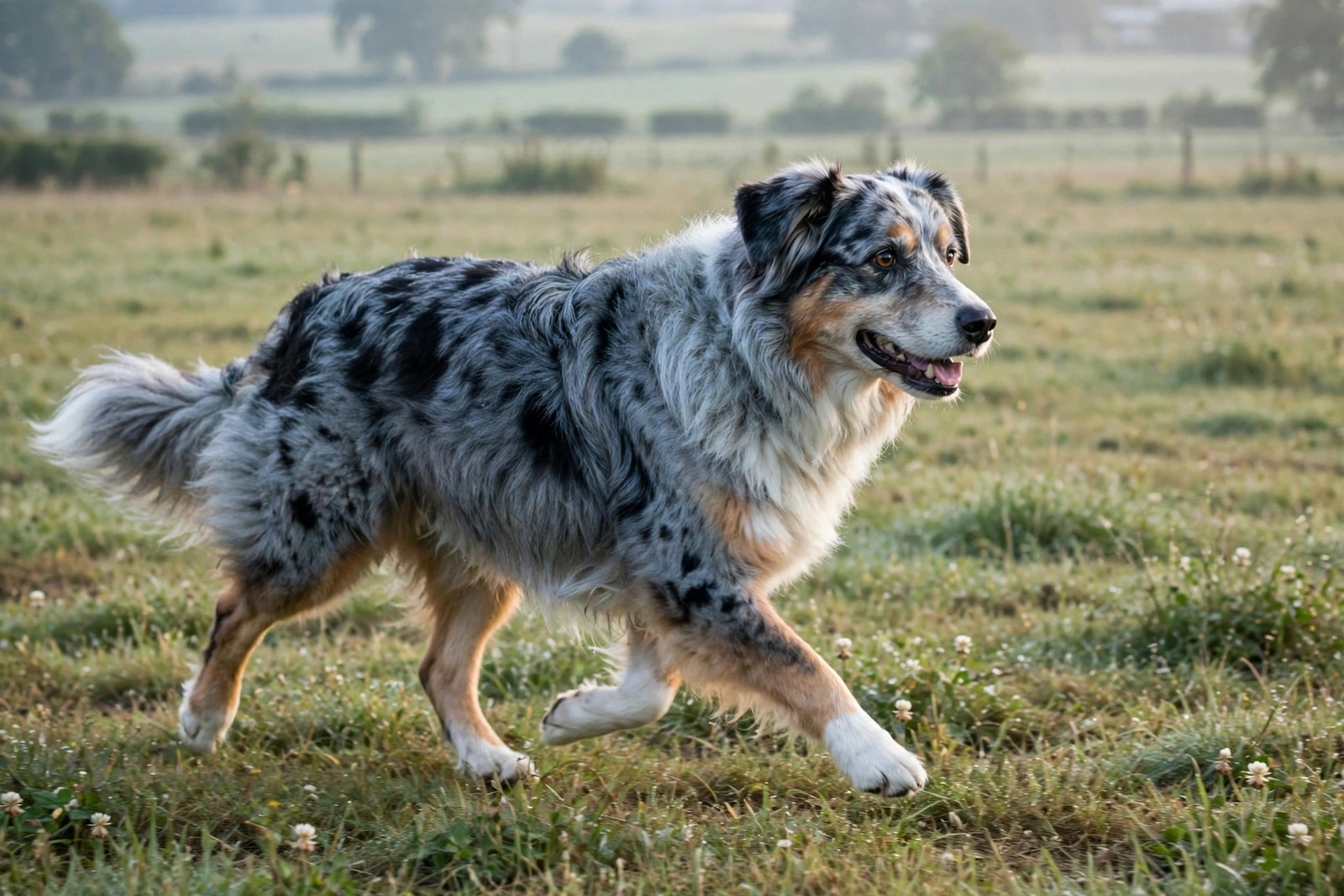
An Australian Shepherd typically lives for 12 to 15 years. For a medium-sized, high-energy working breed that is a solid lifespan, and it means a puppy chosen today is likely to be part of your life well into the next decade, through changes of house, job and family. The range is wide because individual outcomes depend on breeding, weight, and how early health problems are caught.
What Shapes Where a Dog Lands in the Range
Genetics sets the starting point. Responsible breeders screen breeding dogs for hip problems and for the inherited eye conditions this breed can carry, and they can show you those results; a puppy from screened parents starts life with better odds. Ask about the ages and health of grandparents as well as parents, because longevity itself runs in lines, and a breeder who knows the old dogs in a family can tell you a great deal.
Weight is the factor owners control daily. A Shepherd who stays lean, with ribs you can feel under a thin covering and a visible waist from above, puts less strain on hips and joints across a whole lifetime than a dog carrying extra condition, and excess weight also makes an ageing dog's arthritis harder to manage. Measure food rather than filling the bowl by eye, count training treats in the day's ration, and adjust promptly when the dog's work drops, because a retired or less active Shepherd keeps an athlete's appetite on a fraction of the exercise.
Eyes, Hips and the Checks That Matter
Two areas deserve lifelong attention in this breed. Eyes should be checked by your vet at routine visits, and any cloudiness, bumping into objects in dim light, or reluctance on stairs in the evening is worth an appointment rather than a wait, because several inherited and age-related eye changes benefit from being found early. Hips and general mobility show up as stiffness after rest, a bunny-hopping run, or a dog who stops wanting to jump into the car; those signs deserve a vet conversation about joint care and pain management rather than simply shorter walks and silence.
Cancer and epilepsy also occur in the breed, which is another reason new lumps, seizures, unexplained weight loss or a lasting change in energy should always be checked promptly rather than watched for months. None of this is a reason to hover; it is a reason to keep routine appointments even in the healthy middle years, when problems are simpler and less costly to address.
The Senior Shepherd: Slower Body, Busy Mind
Shepherds often stay mentally intense long after the body slows, and the senior dog who can no longer run for hours still needs a job for its brain: scent games, gentle training refreshers, short varied walks with plenty of sniffing, and food puzzles replace the old workload. Keep the dog's weight honest in this stage above all, because every extra pound is carried on ageing joints.
Practical home adjustments extend comfortable years: a supportive bed in a warm, draught-free spot, a ramp for the car, rugs over slippery floors, and food and water in a place that does not require stairs. Book senior vet checks as your vet advises, and take a note of appetite, water intake, sleep and mobility to each one, because gradual change is hard to date from memory and easy to show from a log.
Plan realistically for the whole span when you choose the breed: 12 to 15 years of a demanding, devoted dog is the commitment, including the final years when care needs rise. Keeping dated weights, eye and hip notes and every vet visit together in KinsLe's Pet Passport turns that long span into a clear record your vet can use at every stage of your Shepherd's life.