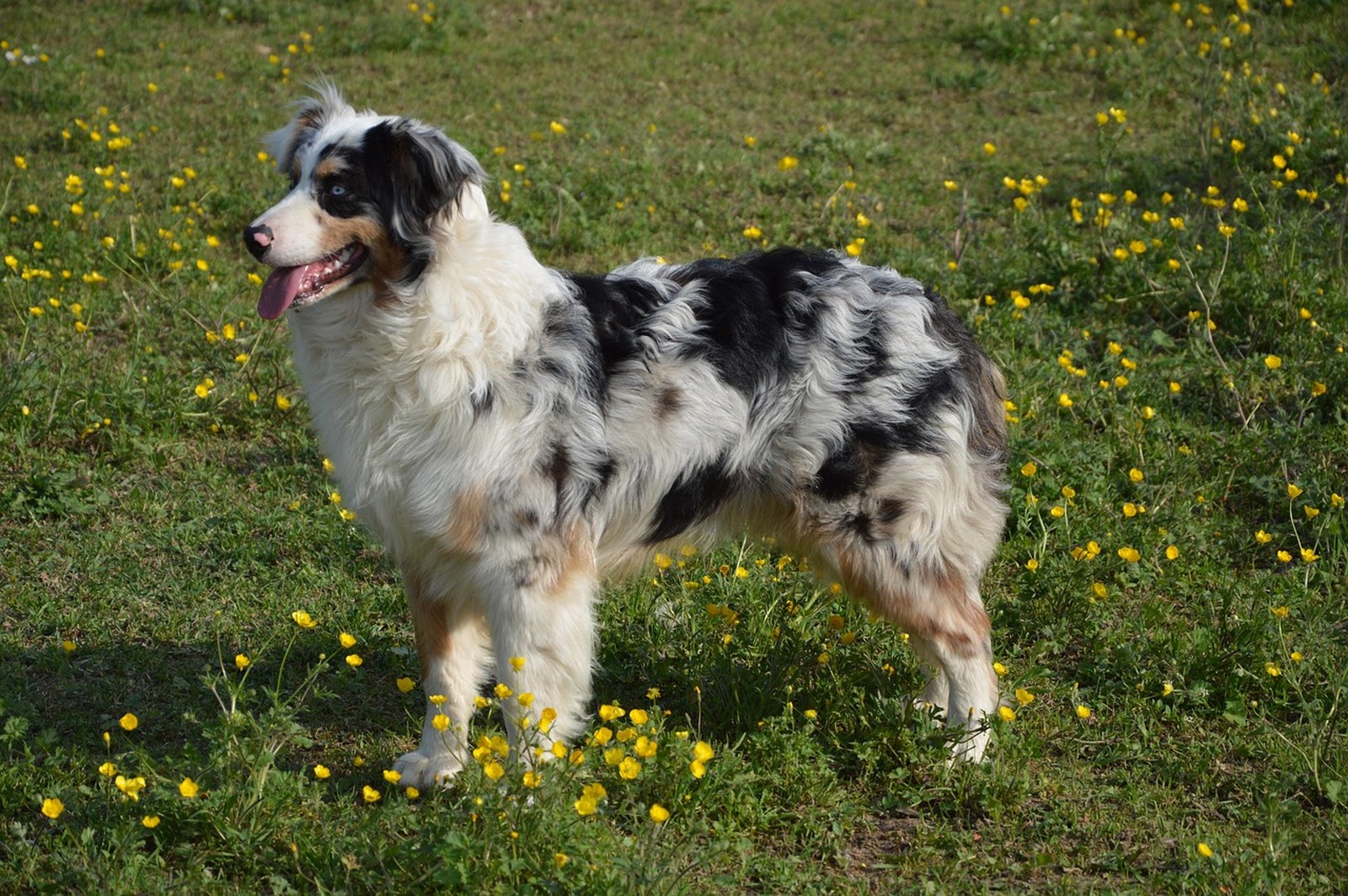
An Australian Shepherd's first year is a masterclass in living with a dog who is always paying attention. Aussies bond intensely, learn routines after a couple of repetitions, and spend their waking hours watching for the next thing the family is about to do together. Year one is about giving that focus somewhere useful to go.
Puppy months: people, places, and the herding script
Socialisation carries unusual weight with this breed. Aussies can be reserved with strangers as adults, so a puppy who calmly meets many kinds of people, children, dogs, and environments in the early months starts adult life with a much broader sense of normal. Keep meetings relaxed and let the puppy approach rather than being passed around. The herding script arrives early too. Puppies chase running children, round up other dogs, stare hard before bursting into motion, and nip in excitement. Teach a reliable interrupt cue, reward checking in with you, and give chasing an approved outlet in fetch and tug games that start and stop on your word. A puppy who learns that you control the exciting games becomes an adolescent you can actually call off a distraction.
The adolescent engine: work the brain first
Through the middle of the year, energy and confidence climb together. Long walks alone rarely satisfy an Aussie; ten minutes of learning a new trick, searching for hidden toys, or practising control around other dogs can settle one more than an extra hour of pavement. Rotate problem-solving games, teach useful jobs like carrying, finding named toys, and waiting at doors, and protect sleep, because overtired young Aussies get mouthy and frantic rather than tired in any obvious way. Sensitivity runs alongside the brilliance. Many Aussies startle at novel objects, worry at changes in the home, or react to movement at dusk. Note what unsettles your dog, build confidence gradually at a distance the dog can handle, and mention persistent fearfulness, sound sensitivity, or any eye squinting, bumping into objects, or unusual eye appearance to your vet, since this breed rewards owners who catch changes early.
Coat, body, and household logistics
The double coat looks glamorous in photos and sheds with commitment in real life. Weekly brushing becomes twice-weekly during seasonal blow-outs, and the feathers behind the legs and ears mat if neglected. Bathing stays occasional; brushing is where the real maintenance lives. Feed for a growing athlete, keep the adolescent lean enough to feel ribs under a light fat cover, and expect the dog to supervise every meal preparation from a hopeful distance. Plan the working day honestly. An Aussie left alone with nothing arranged will rearrange soft furnishings and announce every delivery at full volume, so mid-day visits, puzzle feeders left ready, and a household rota matter as much as weekend adventures.
Ending the year well
A well-raised one-year-old Aussie is a partner: athletic, funny, and tuned to you in a way few breeds match. The year asks for imagination more than mileage, and on the flat evenings when your young dog is bright-eyed and every toy is boring, KinsLe's built-in assistant Kimmy can be asked for a new game or training idea in the moment, and what you learn about your Aussie stays alongside their profile in KinsLe for the next person who needs it.