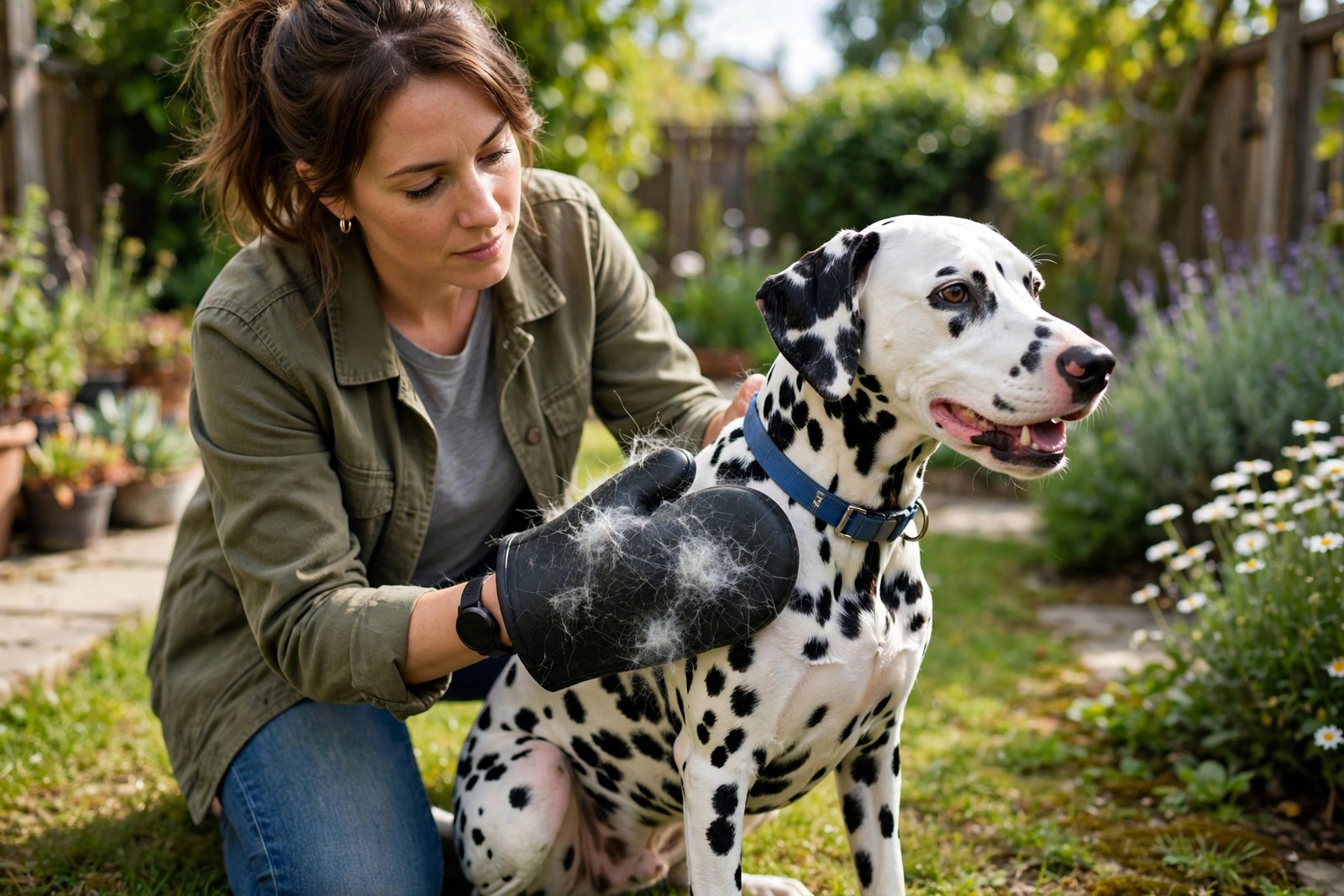
For a Dalmatian, the weekly coat routine comes down to a single session of about ten minutes, worked over the whole body using either a rubber mitt or a brush with soft bristles. That is genuinely all the coat itself asks for. There is no clipping, stripping, or detangling in a Dalmatian's life, because the coat is short, dense, and single, lying flat against the body. What the weekly session is really for is shedding and skin surveillance: this breed sheds constantly, in every season, and those short, stiff hairs work their way into upholstery and clothing in a way longer, softer hair rarely does.
Shedding, Not Matting
Set expectations correctly. A Dalmatian's single coat has no soft undercoat, so it does not form mats, even if a session is missed. What a missed week produces instead is a heavier fall of loose hair around the home and a skin check that did not happen. Brushing with a mitt, using firm strokes in the direction of growth and then a pass against it, lifts surprising quantities of dead hair from a coat that looked sleek beforehand. Doing the session outdoors or on a washable floor, and finishing with a wipe from a damp cloth, keeps much of that hair out of your carpets. Puppies shed their first coat as they grow, so a young Dalmatian may leave even more hair during that change.
Skin Checks Built Into the Session
Dalmatians can have sensitive skin, and the weekly session doubles as your inspection. Part the coat on the neck, belly, inner thighs, and behind the ears, and look for flaking, redness, spots, scabs, or a sour smell. Feel for lumps or thickened patches as your hand passes over the ribs and shoulders, and note anything new or changing to mention to your vet. Pale skin under a white coat also shows sun exposure readily, so check ears and nose after sunny periods and discuss sun protection for sparsely coated areas with your vet if your dog sunbathes. Catching irritation at the flaky stage is far simpler than dealing with a dog that has scratched itself sore.
Bathing, Ears, and Nails Around the Weekly Brush
Bathe a Dalmatian only when the dog is genuinely dirty or smelly; frequent washing strips oils from a short coat and can worsen dry, flaky skin. Use lukewarm water and a dog shampoo, rinse thoroughly, because residue left in a dense short coat is a common cause of itching, and dry the dog well in a warm room. Check ears during the weekly session for redness, dark wax, or odour, and clean only the outer ear as your vet has shown you. Nails need attention on a separate rhythm from the coat: check them regularly and trim small amounts at a time, or use a professional groomer or vet nurse if your dog objects, because overlong nails change how this athletic breed stands and moves.
Making Ten Minutes a Habit Your Dog Enjoys
Pick a regular slot, after a walk when your Dalmatian is settled, keep the session calm and unhurried, and end with praise or a small treat so the mitt predicts good things. A dog that leans into the mitt is easier to examine than one that has to be cornered, and that cooperation pays off at vet visits too. Increase handling gradually with puppies, touching paws, ears, and belly during brief handling moments, so the adult routine is familiar rather than negotiated weekly. Note shedding changes, skin findings, and baths in a simple log, because a sudden rise in hair loss or itching is information your vet will ask about.
The Dalmatian's grooming bargain is a fair one: no salon bills or matted coats, in exchange for ten honest minutes every week and hair on your clothes all year. Share that routine so it survives busy weeks and different handlers. Access to the profile for this spotted dog can be passed to relatives an owner picks by way of KinsLe Family Sharing.