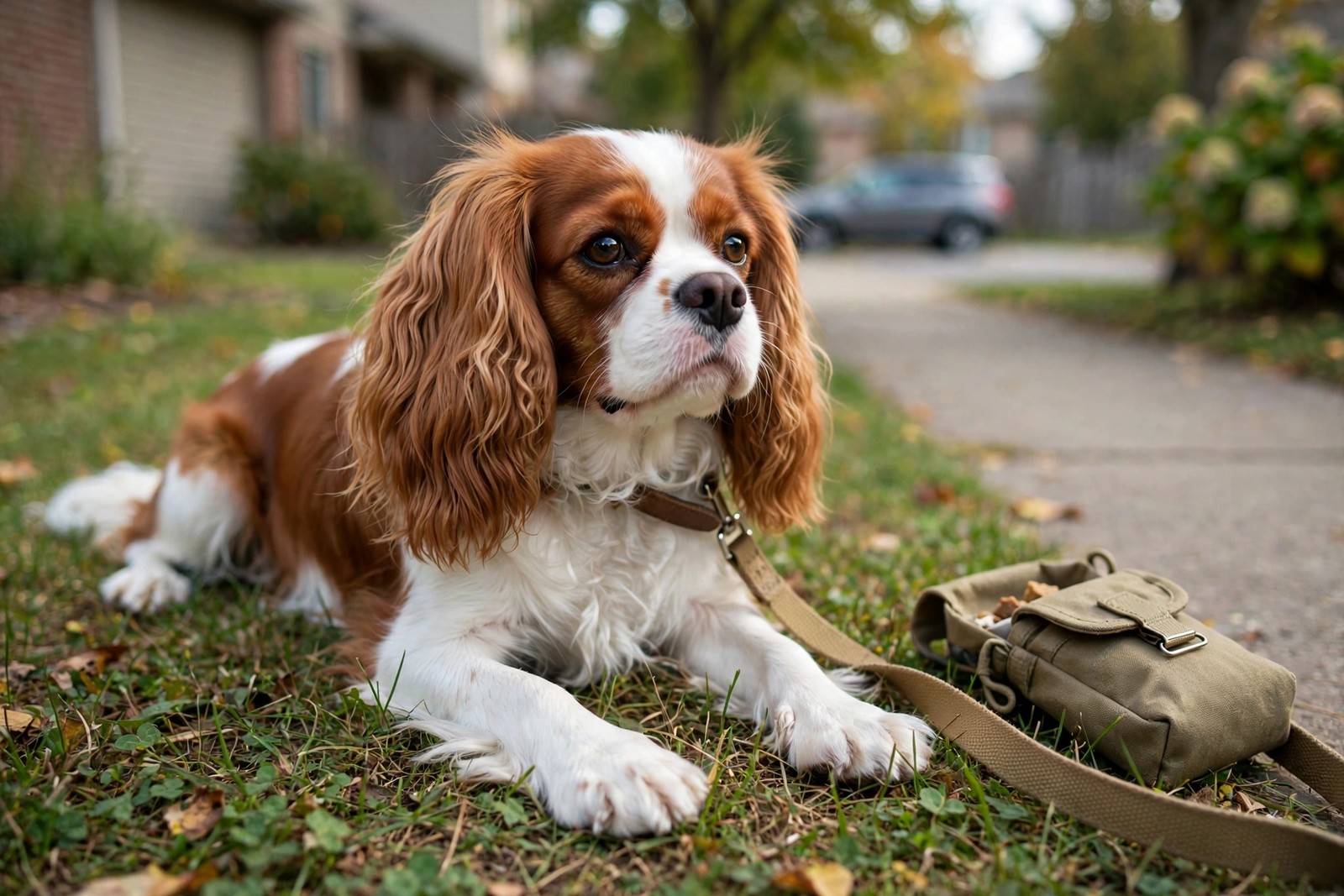
An adult Cavalier King Charles Spaniel typically weighs 12 to 18 lb, which converts to about 5 to 8 kg. That six-pound span is narrow compared with many breeds, because Cavaliers were bred to a consistent small size for life as close companions. A dog inside the range can still carry too much fat, and a dog a pound beyond it can be perfectly lean, so the number opens the conversation and the condition check finishes it.
Feathering Hides the Evidence
The Cavalier's silky coat, long ears, and generous feathering on the chest, legs, and tail create a rounded silhouette even on a lean dog. Owners who judge by eye alone tend to overfeed, because the dog looks slight and elegant at weights where padding has already gathered over the ribs. Part the coat and use your hands. Ribs should be easy to feel under a thin fat layer, the waist should narrow gently when viewed from above with the coat held flat, and the hip bones should feel covered rather than buried or sharp.
The chest deserves a specific check in this breed. Feathering and a naturally full chest can disguise fat that settles along the brisket, and a monthly hands-on pass catches that drift months before a photograph would.
Why Owners Guard This Range Carefully
Extra weight on a small, lightly built frame increases the work of every system, and Cavalier owners have an additional reason for vigilance. Heart conditions occur in this breed, and heart monitoring belongs on the agenda of routine vet visits, where your vet can advise what applies to your individual dog. Weight control sits firmly within owner influence, and a lean Cavalier places less demand on the heart and joints with every walk and stair climb. Framing weight as part of lifelong heart-aware care, rather than as appearance, helps households hold portions steady when the dog deploys its considerable charm at mealtimes.
That charm is a genuine management factor. Cavaliers bond intensely, follow their people between rooms, and treat every kitchen visit as a shared occasion. Treats flow freely in such households unless the allowance is counted in advance and treats shrink to tiny pieces that still honour the ritual.
Portions, Ageing, and Vet Partnership
Rations for a dog of this size are small, and a difference of a few grams per meal compounds across a month. Weigh food rather than scooping it, and reassess after any change in activity, because retired or ageing Cavaliers often need less than the amount that suited them at three years old. Senior dogs also benefit from more frequent condition checks, since muscle can fade while fat quietly replaces it at the same total weight.
Report unexplained trends to your vet. Gain that continues under verified portions, loss of weight, a fading appetite, or new reluctance to exercise all give a vet reason to investigate possibilities that home monitoring cannot distinguish. Bring the weight log, because a gradual slope across six readings tells a clearer story than alarm at a single visit.
Use exercise tolerance as a functional cross-check on the scale. A Cavalier in good condition manages the usual walk with a loose, swinging gait, recovers breath quickly at home, and still shows interest in play afterwards. A dog who begins to lag on a familiar route, sits down mid-walk, or needs long rests after ordinary activity is telling you something the weigh-in alone cannot, and that change belongs in a vet conversation even when the number still sits inside the typical range.
A narrow target range rewards households that measure and record together, and KinsLe Care Teams keeps your Cavalier's monthly weigh-in and treat allowance in one shared duty list for every feeder.