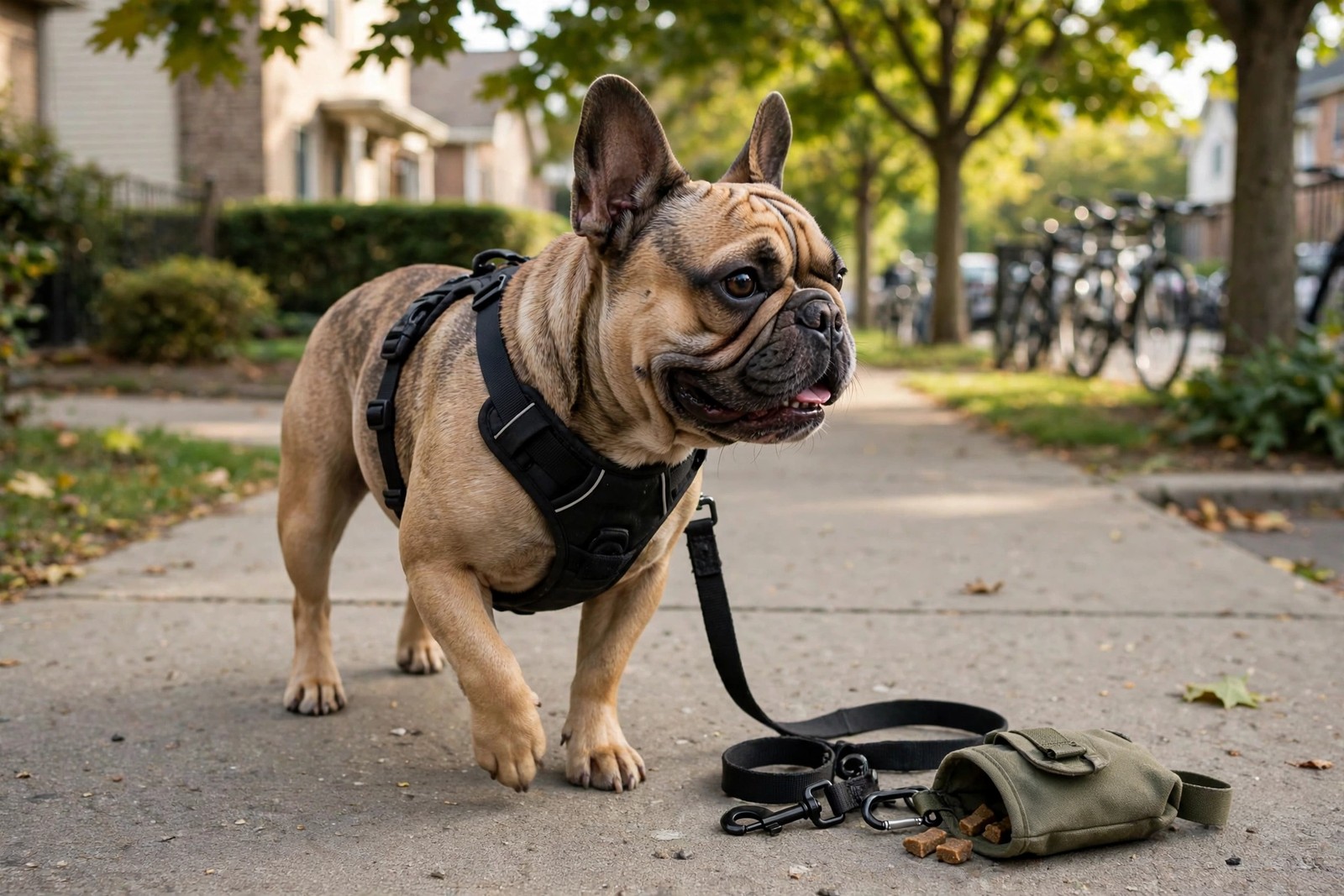
An adult French Bulldog typically weighs 8 to 14 kg (18 to 31 lb). Females usually fall at 8 to 11 kg (18 to 24 lb), and males usually fall at 9 to 14 kg (20 to 31 lb). The breed packs that weight into a short, muscular body on short legs, and a French Bulldog should look compact and solid without looking round. Height varies less than in taller breeds, and frame size still separates a naturally larger male from an overfed smaller one. The range starts your assessment, and touch completes it.
The One-Kilogram Problem
Proportions make small-breed weight management unforgiving. One kilogram on a 10 kg (22 lb) French Bulldog equals a tenth of the whole dog, and owners rarely notice a tenth arriving treat by treat. Feel the ribs weekly with flat palms and expect a thin fat cover over bone you can find without digging. Look from above and behind for a waist that narrows behind the ribs, and look from the side for a slight tuck rather than a straight tube from chest to hips.
A round silhouette, a neck that merges into the shoulders and a reluctance to finish a familiar walk all suggest a review. Weigh the daily food for a week and count training treats honestly, including the pieces other household members hand out during the evening. French Bulldogs charm food out of people with industrial efficiency, and a household count usually finds the surplus within days.
Breathing, Heat and Honest Exercise
French Bulldogs share the compact airway of flat-faced breeds, and extra weight narrows the margin that airway already works within. Keep exercise gentle and frequent, walk in cool hours, and stop for noisy breathing, heavy panting or lagging rather than pushing to finish a route. Heat builds fast in this breed, and a dog carrying extra fat heats faster and cools slower. Tell your vet about breathing noise at rest, disturbed sleep or fainting episodes, and let the vet investigate possible causes and advise on weight alongside any other findings.
Swimming is not a safe fitness shortcut for this breed, and many French Bulldogs cannot swim at all. Leash walks, indoor play and food puzzles that slow eating down give activity without that risk. A puzzle feeder also stretches a measured ration into an event, and a satisfied dog begs less than a dog who inhaled dinner in forty seconds.
Setting a Personal Target
Ask your vet to name a target weight for your individual dog and revisit that figure at each routine visit. Feed to the target rather than to the bag guide alone, and adjust by small amounts with a fortnight between changes. Photograph your dog from above each month beside the scale reading, and the waist trend will show itself even when daily handling feels unchanged.
Check harness fit alongside weight, since a French Bulldog chest changes shape as condition changes and a tight harness adds breathing work on every walk. You should fit two fingers flat between strap and body all the way around. Stairs deserve thought in heavier dogs too, because short legs and a compact spine handle repeated jumping down poorly, and carrying a dog who sits near the top of the range on steep stairs protects joints while condition improves. Ramps for the car and the sofa give a heavy little dog independence without the landing impact.
Households undo good feeding with kindness from several directions at once, and French Bulldogs collect that kindness expertly. Through KinsLe Care Teams, one named person owns treats for the day and another owns the weigh-in, and the shared timestamped list ends the double-feeding that charm produces.