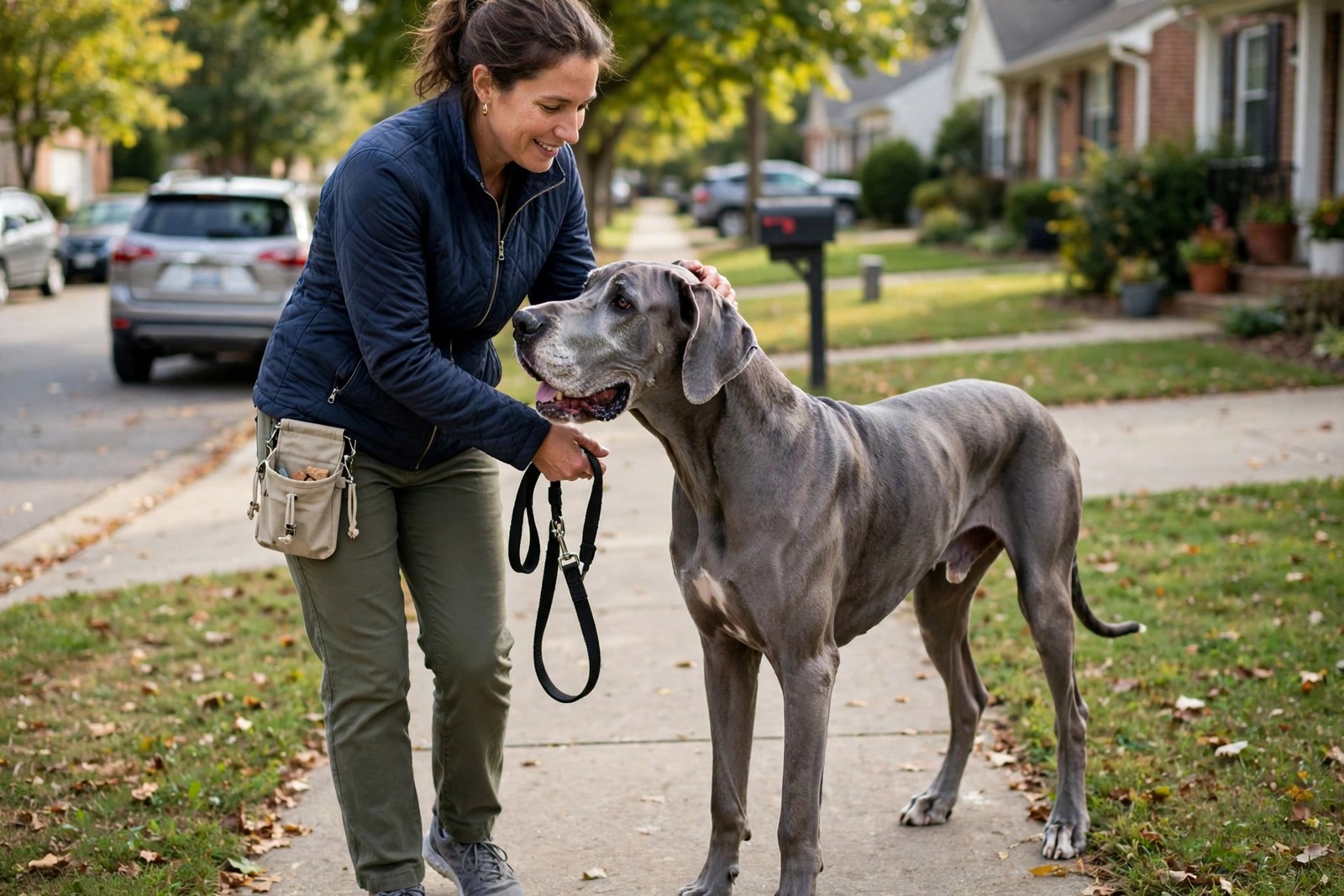
An adult Great Dane weighs from about 45 kg (99 lb). Females usually fall at 45 to 59 kg (99 to 130 lb), and males start from about 54 kg (119 lb), with large males well above 80 kg (176 lb). No tidy ceiling serves this breed, and height drives weight more than appetite does. A tall, lean male can outweigh a shorter, overfat female by a wide margin while needing no dietary change at all. Judge a Dane by proportions and touch, and treat any single number as the weakest evidence in the room.
Lean Is the Giant Virtue
A Dane in correct condition shows a deep, narrow chest, a tucked abdomen and long muscle lines without bulk. Feel along the ribs and expect a thin fat cover over bone you can find with light pressure. Look from above for a waist behind the ribs, and from the side for a belly that climbs toward the rear. Hip bones that jut sharply and ribs visible at a distance suggest too little, and a swaying back with a sagging belly suggests too much.
Giant joints pay for every surplus kilogram across thousands of daily steps. Keeping a Dane lean protects hips, elbows and spine, and leanness also keeps an old Dane mobile for longer. Owners sometimes chase impressive size in a breed already defined by size, and the dog pays for that pride at eight years old.
Growing Slowly on Purpose
Danes grow for a long period, often until around two years of age, and the growth plates and joints of a young Dane need steady, moderate nutrition rather than maximum growth. Feed a diet formulated for large-breed growth, measure portions, and expect the adolescent phase to look leggy and unfinished. A young Dane under the adult range with good rib feel and steady growth is usually a dog on schedule rather than a dog in trouble.
Weigh monthly during growth on a large platform scale, and plot the curve rather than reacting to single readings. Plateaus and spurts both appear in normal giant growth. Ask your vet to review the curve at each visit, and raise slow growth, uneven growth or limb discomfort promptly, since a vet can investigate development, diet and other possible causes while change still helps.
Emergency Awareness for Deep Chests
Danes share the deep-chested shape that vets associate with stomach twist, a life-threatening emergency in which the stomach rotates. Learn the signs your vet wants you to act on, including a swollen or tight abdomen, retching without bringing food up, restlessness and drooling, and treat those signs as a reason to reach emergency care at once rather than waiting. Discuss meal size, meal frequency and exercise timing around meals with your vet, who can advise on precautions suited to your individual dog.
Measure height at the shoulder when you weigh a Dane, since a young dog can add height while the scale barely moves and an adult reading means little without the frame it hangs on. Old Danes lose muscle along the spine and thighs, and a lighter old dog is not automatically a healthier one. Watch an ageing Dane for a bony back under a loose coat of skin, keep gentle daily movement in the routine to protect remaining muscle, and ask your vet how to feed for muscle maintenance in a senior giant.
Record that emergency plan where every carer can find it, and rehearse who drives and which clinic handles out-of-hours care. Through KinsLe Care Teams, the growth weigh-ins, the split meals and the emergency contact list each sit with a named person, and the shared record keeps a giant dog's care joined up.