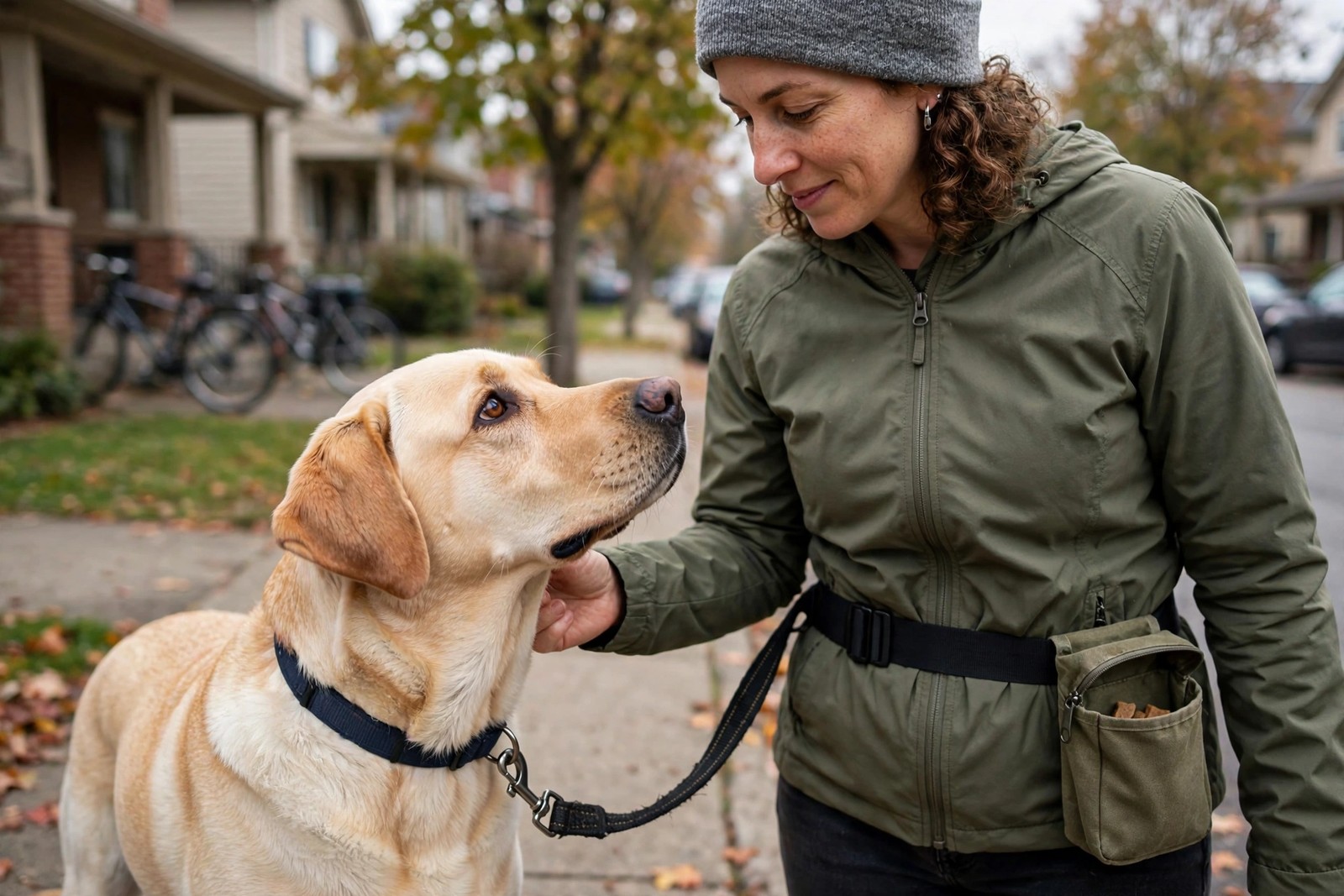
An adult Labrador Retriever typically weighs 25 to 36 kg (55 to 79 lb). Females usually fall at 25 to 32 kg (55 to 71 lb), and males usually fall at 29 to 36 kg (64 to 79 lb). The honest spread inside the breed explains the width of that range. A compact working-bred female bred for long days in the field and a broad show-bred male bred for the ring can differ by 10 kg (22 lb) while both stand in correct condition. Know which type you own before you judge the number.
The Labrador Appetite Problem
Labradors carry a famous food drive, and many will eat far past need whenever opportunity appears. Counter surfing, bin raiding and soulful staring all belong to the breed toolkit, and none of them measure hunger. Weigh the ration, lock bins and treat jars, and hold back part of the normal meal for training rewards rather than adding rewards on top. A Labrador who gains weight is usually eating more than the household realises, and a written week of everything consumed tends to find the gap.
Condition checks need firm hands in this breed. The dense, water-resistant double coat and a naturally thick tail base hide early fat, and the otter tail should taper smoothly rather than bulge at its root. Feel ribs under a thin fat cover with deliberate pressure, look from above for a waist behind the ribs, and look from the side for a tuck behind the deep chest. A level, rectangular silhouette from every angle means surplus in a Labrador, however cheerful the dog appears.
Working Weight and Honest Exercise
A working Labrador in season often sits at the lower half of the range with visible athleticism and endless stamina. A retired or lightly exercised dog drifts upward unless portions drop as work drops, and retirement feeding is where many Labradors quietly pile on weight. Match the ration to the current week rather than to the dog's younger biography, and recheck rib feel after any change in routine.
Swimming, retrieving and scent games suit the breed and burn real energy. Protect joints by building distance gradually and by keeping a young dog lean, since extra weight during growth loads developing hips and elbows. If weight rises despite accurate measuring and genuine exercise, ask your vet to review the dog, and a vet can investigate thyroid function and other possible causes before portions shrink further.
When to Bring the Vet In Early
Rapid gain, rapid loss, new lethargy or a coat that turns dull alongside weight change all deserve a prompt appointment. Labradors hide discomfort behind enthusiasm, and a dog who still charges for a ball can still need examination. Bring your weight log and your honest food record, and the visit becomes a working session rather than a guessing game.
Scavenging inflates many Labrador rations beyond anything the household serves, since dropped chips, picnic remains and kind strangers all add unrecorded meals. Walk a known route with the dog on a lead through picnic season if scavenging is a habit, and count a successful raid day as a smaller dinner day within reason. Children feed Labradors with love and no record at all, and a simple rule that all dog food comes through one adult or one logged duty ends that invisible surplus faster than any lecture about willpower.
Big families and busy streets both feed Labradors behind the owner's back. With KinsLe Care Teams, each meal and each treat budget holds a named owner for the day, and the timestamped list gives the whole household one version of what the dog actually ate.