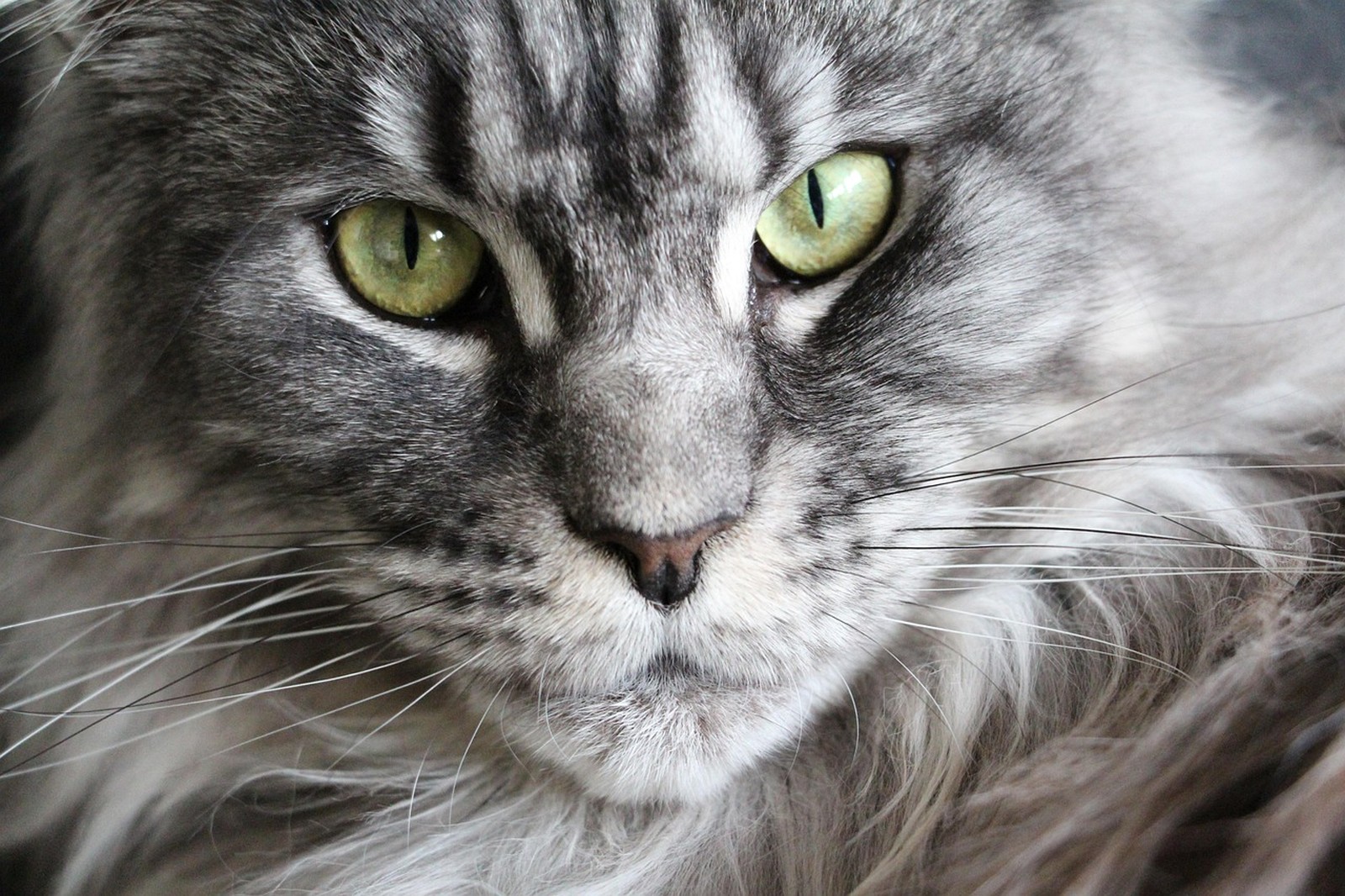
An adult Maine Coon typically weighs 13 to 18 pounds if male and 8 to 12 pounds if female. That makes the breed one of the largest domestic cats — a fully grown male can weigh double an average house cat without carrying an ounce of excess. The numbers only make sense alongside the frame they hang on: a Maine Coon is long-bodied, tall, and heavily boned, with a broad chest and a coat that adds visual bulk of its own.
Slow to Finish Growing
Do not judge a young Maine Coon against the adult ranges too early. Where most cats reach full size around their first birthday, Maine Coons mature slowly and commonly keep growing and filling out until they are three to five years old. A lean, leggy 14-pound male at eighteen months is not underweight — he is unfinished. Equally, a young cat already at the top of the range with a rounding belly is not 'destined to be huge'; he is probably just gaining fat early, and the distinction matters because the breed's big joints do not thank it for carrying extra load while they are still developing.
Body Condition Beats the Scale
The scale gives you a number; your hands give you the verdict. On a healthy Maine Coon you should feel the ribs easily under a thin layer of fat when you run your palms along the sides, without pressing hard. Looked at from above, there should be a slight narrowing behind the ribs rather than a straight or bulging outline, and from the side the belly should tuck up a little rather than hang level or low. The thick coat hides all of this visually, which is why this breed fools owners in both directions — 'he's all fur' and 'he's just big-boned' are the two most common misreadings, and the hands-on check settles both.
When the Number Deserves a Vet Visit
Book a conversation if your cat moves well outside the typical range, gains or loses noticeably over a couple of months, or passes the range while failing the rib and waist checks. Weight drifting up in a neutered indoor male is the most common pattern — appetite stays Maine-Coon-sized while activity does not — and it is far easier to correct with small portion adjustments early than with a formal diet later. Weight dropping in an older cat, especially alongside increased thirst or appetite changes, should never be waved away as ageing; it is a standard reason for blood work.
Practical rhythm: weigh monthly on the same scale — carrier-weighing works well at this size — and write the figure down, because a one-pound gain on an 11-pound female is nearly ten percent of her and invisible month to month. Portions then adjust in small steps against the recorded trend, not against the size of the bowl. KinsLe's Care Teams helps a household run exactly that rhythm, assigning the monthly weigh-in and daily measured feeds to named family members with timestamps, so everyone feeds to the same plan and the record your vet wants is already written.