
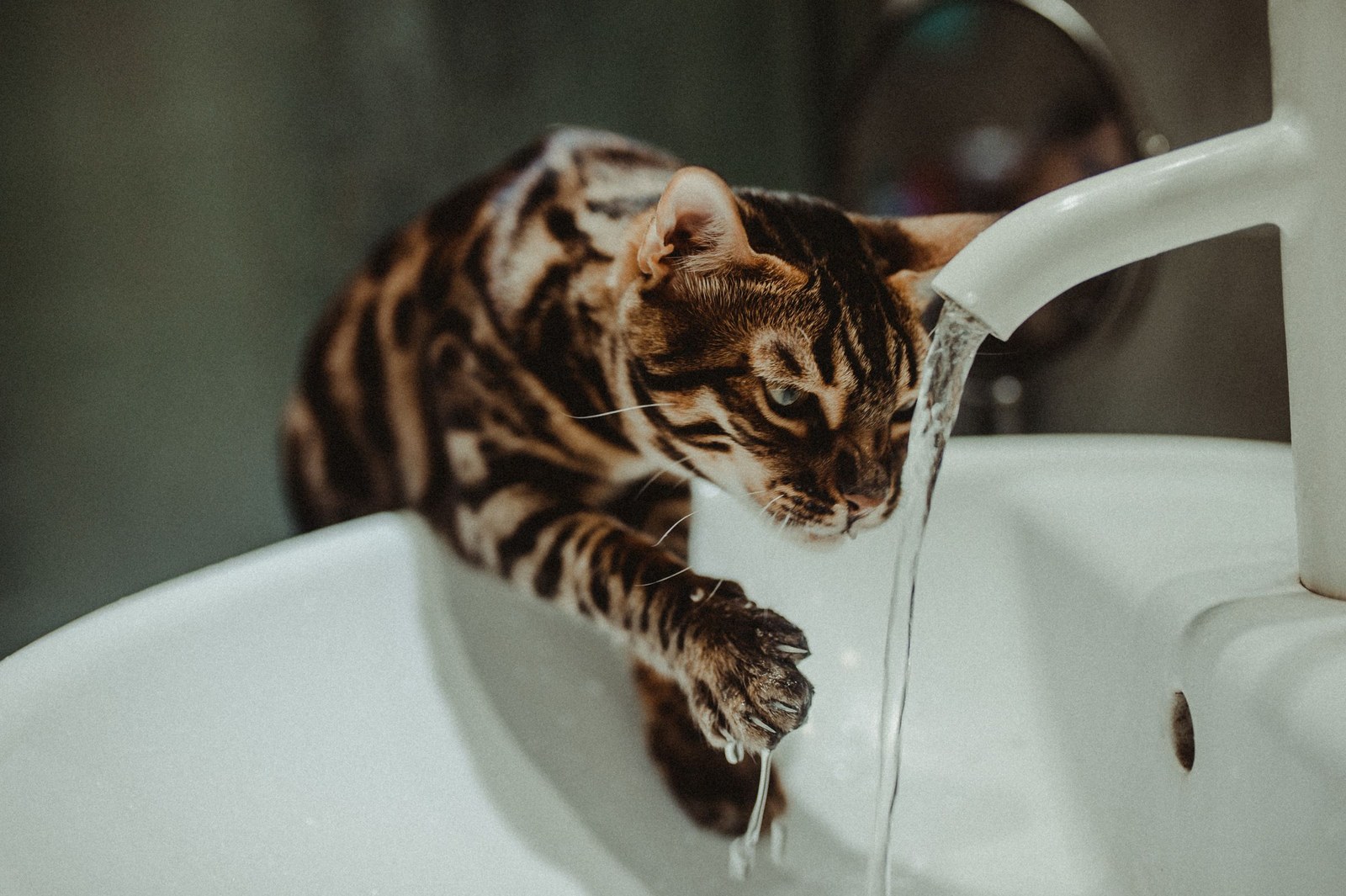
Your cat likely prefers the faucet because running water seems fresher, cooler, and safer to her instincts — it moves, sparkles, and makes a sound she can locate, while still water in a bowl can look dull, taste stale, and be harder for a cat to judge the surface of. It is a normal, common preference, not a sign that you have done anything wrong with her bowl.
An instinct older than the kitchen sink
Cats descended from desert ancestors who learned to seek the best available water and avoid stagnant sources, which were more likely to be contaminated. Moving water in nature tends to be fresher and better oxygenated. That wiring is still present in a cat who ignores a bowl filled an hour ago and comes running when she hears a tap.
Vision plays a role too. Cats see close-up, still surfaces poorly, and the surface of water in a bowl is almost invisible — some cats dip a paw first to find the level rather than risk dunking their nose. Running water is easy to see and hear, and droplets are easy to lap. Temperature and taste matter as well: faucet water is freshly drawn and cool, while bowl water warms to room temperature, picks up dust and food smells, and can taste of the bowl itself, especially plastic.
Some cats also simply enjoy the ritual — the tap is an event, you are there, and drinking becomes social. Breed and personality play a part; curious, water-tolerant cats, including many Maine Coons, are notorious sink enthusiasts.
Turning the preference into good hydration
You do not have to become a full-time tap attendant. A circulating pet fountain mimics running water and often increases how much a faucet-loving cat drinks on her own. Place it where she already likes to drink if possible, clean it regularly, and keep a wide, fresh bowl as backup.
If she does drink from the tap, let her have a brief drink when you are there, but make sure she has an appealing alternative for the many hours you are out or asleep. Refresh bowls daily, move at least one away from food, and try a wide ceramic or steel dish if she rejects her current bowl. Wet food also quietly boosts total moisture intake without any negotiation at the sink.
Watch for changes behind the habit. A cat who suddenly demands the tap constantly, drinks far more than usual, or urinates much more should see a veterinarian — a new, intense thirst is different from a lifelong faucet preference and needs checking. Likewise mention it if she will only drink running water and you are worried she is not drinking enough when alone.
Keeping the routine when someone else is caring for her
Faucet cats confuse sitters who do not know the routine. If your cat will be with a sitter, KinsLe's Care Pass can help: it is a temporary, scoped link you share for your pet's care, and the recipient needs no account or app to view it. Use it to note their fountain routine, where bowls go, and that a short supervised tap drink is part of the morning — so hydration habits do not change while you are away. Curious about other quirky cat drinking and eating habits? Hand your regular sitter a Care Pass on KinsLe for your long weekend away, covering her supervised morning tap drink, where each bowl belongs, and the fountain that must stay filled and running.