
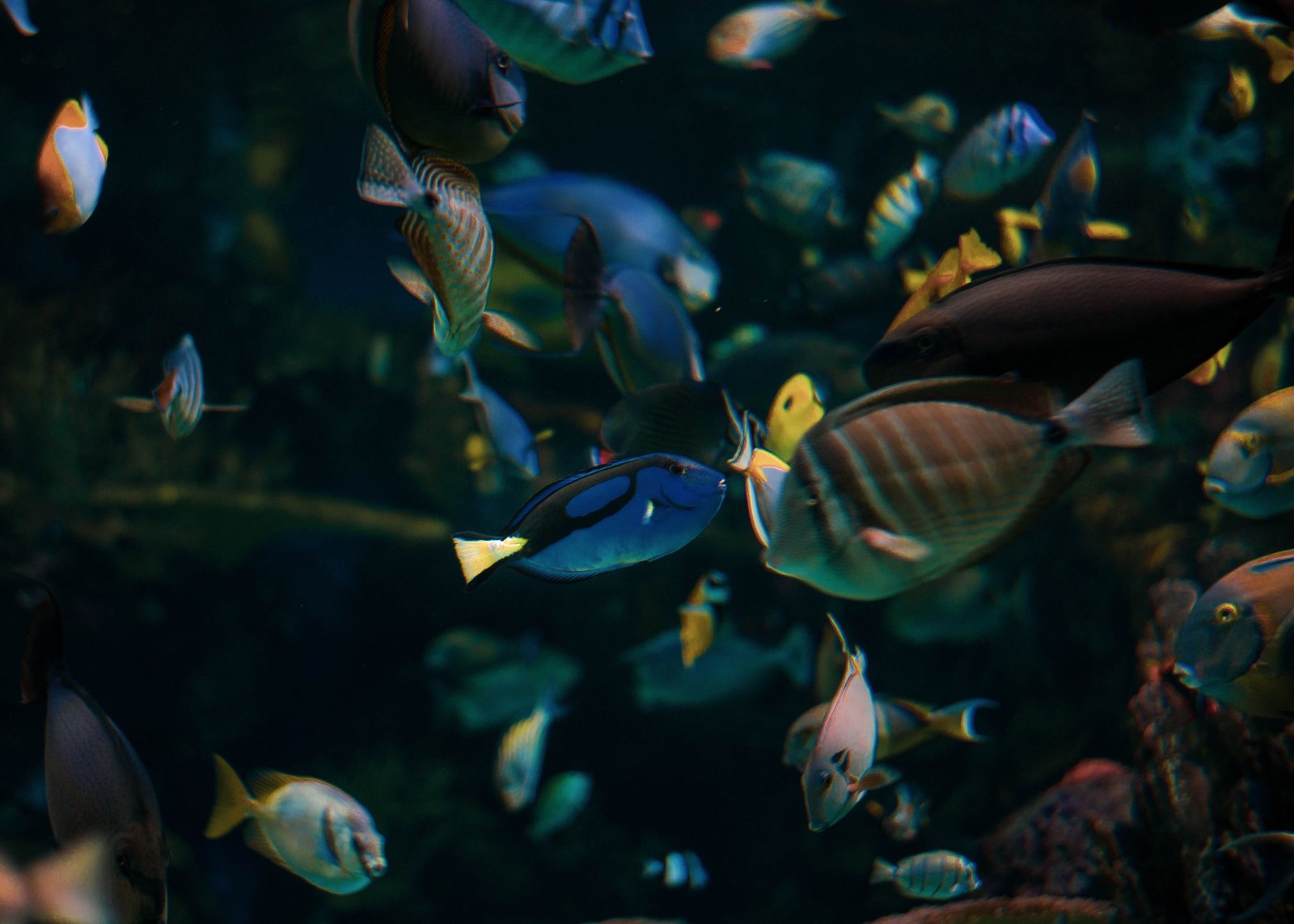
Feed your community fish once or twice a day, offering only what they can eat in about two minutes, then stop. If flakes or pellets are still floating after that, you fed too much. This simple two-minute rule keeps your fish healthy and your water clean, and it takes less food than most beginners expect.
Why less food is usually the right answer
Fish have tiny stomachs — roughly the size of one of their eyes — and they do not need large meals. In the wild, most small community species like tetras, guppies, rasboras, and mollies graze throughout the day on tiny amounts. A single small pinch of quality flakes or micro-pellets is genuinely enough for a tank of a dozen small fish. Uneaten food sinks, rots, and breaks down into ammonia, which is the single most common cause of poor water quality and stressed fish in home aquariums. It is far easier to add a tiny extra pinch than to fix a tank full of rotting food.
The once-or-twice-a-day decision
For most adult community fish, one good feeding per day is plenty. Twice a day works too, as long as you halve each portion — small morning and evening feeds mirror their natural grazing pattern and give shy fish more chances to eat. The real enemy is not the schedule but the portion: split the same total amount across two feeds rather than doubling it. Watch your fish during feeding. Active, eager fish that finish everything in under two minutes are fed correctly; fish that ignore food or let it drift past are telling you to cut back.
Match the food to the mouths in the tank
Crush flakes slightly for tiny species like ember tetras or chili rasboras so they can actually fit the pieces in their mouths — uncrushed flakes often get ignored and sink. Alternate between two or three staple foods across the week: flakes one day, micro-pellets the next, a frozen treat like daphnia or brine shrimp once or twice a week. Variety covers nutritional gaps that any single food leaves behind, and your fish's colors will show it. Always thaw frozen food in a cup of tank water before adding it, and never feed more than the two-minute rule allows, no matter how excited they get.
Bottom feeders need their own plan inside that rule. Corydoras, loaches, and algae eaters cannot live on whatever drifts down, so drop a small sinking wafer or pellet in near lights-out, when they are active and the surface feeders are slowing down, and remove what is untouched the next morning.
The double-feeding problem (and the fix)
The biggest overfeeding culprit is not the portion — it is well-meaning family members. The classic scenario: three people each feed the fish because each assumed nobody else did. In KinsLe, Care Teams solve this neatly: assign morning feeds to one person and evening feeds to another, and completions get logged with timestamps so everyone can see the tank has already been fed. Nobody guesses, nobody double-feeds, and the fish never get three lunches.
When to adjust
Feed a little more often when young fish are actively growing, and a little less if water tests show rising ammonia or nitrite, algae is spreading fast, or food regularly reaches the gravel. New tanks under six weeks old should be fed lightly while the biological filter matures. A fast day once a week also suits most adult community species. If fish become lethargic, stop eating altogether, or you see gasping at the surface, test the water first and seek advice from an aquatic specialist or vet promptly — those signs point to water or health problems that feeding changes alone will not fix.
Keeping a community tank well-fed is a rhythm more than a rulebook, and once the household feeds as one team, the tank practically runs itself. On KinsLe, Care Teams keep every feeder in your home on the same page, so the two-minute rule survives even the most enthusiastic helpers.