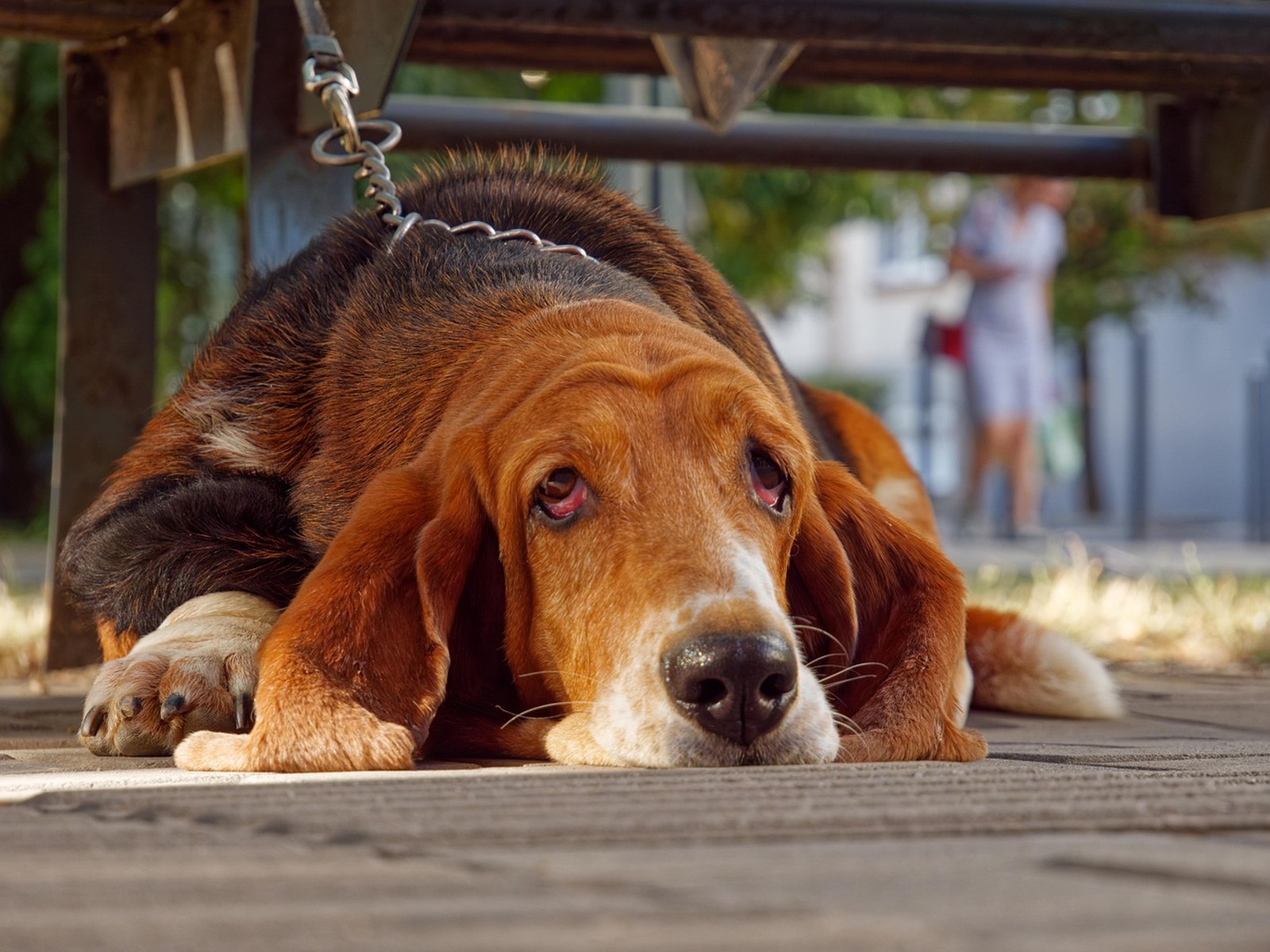
Measuring a Home in Bloodhound Lengths
A Bloodhound is among the biggest dogs most people will ever live with, and his space needs start with simple geometry. Stretched out asleep, he is longer than most sofas are wide; standing, his head reaches worktop height; turning in a narrow kitchen involves a slow multi-point manoeuvre with a tail clearing anything at that level. A home for a Bloodhound needs a bed area sized for a giant breed, ideally in the room where the family spends its evenings, because this is an affectionate dog who wants to be near his people. It needs feeding space with room for very large bowls and the splash and slobber zone around them, and storage for the quantities of food a dog this size goes through. A generously sized house handles all this without thinking; a small flat makes every doorway, hallway and bedtime a negotiation.
Ground Floor Living and Honest Flooring
Stairs deserve a blunt mention: a heavy, long-backed hound is not built for a life of climbing them, and carrying a Bloodhound is not a realistic fallback for most people. Ground-floor living, or a house where his whole world of bed, food, garden and family is on one level, is the sensible layout. Flooring matters almost as much as floor area. Bloodhounds drool, properly and without apology, and they shake, which distributes it. Washable hard floors in his main areas, washable covers on anything he rests against, and a feeding station on a surface that can be wiped down daily will keep the house pleasant. Add a mud-and-drying zone by the door, because a Bloodhound returns from walks wearing a good deal of the walk, carried in those magnificent ears, folds and paws.
The Garden: Secure Against the Greatest Nose
No breed tests a fence like a Bloodhound. His scenting ability is legendary, and an interesting trail leading under or through a boundary will be followed with calm determination and no thought for returning. Fencing must be solid, high enough and checked at ground level, and gates need latches that stay latched, because a Bloodhound who gets out is not lost in the usual sense; he is employed, following a scent line that may run for miles of countryside. The garden itself can be moderate in size: he uses it for toilet trips, pottering and scent games, while his real exercise comes from daily lead walks with plenty of sniffing time built in. What he cannot do without is that secure perimeter and a household that treats an open gate as an emergency, every single time.
Gentle Indoors, Provided the Basics Fit
For all his size, a well-exercised Bloodhound is a placid indoor companion who mostly sleeps, leans affectionately against legs and waits for meals with deep seriousness. Fit the basics, the giant bed, the ground-floor layout, the fencing, the washable floors, and a Bloodhound can live contentedly in a home that is comfortable rather than palatial. His feeding, exercise and ear and skin-fold care still need organising across the household so nothing is doubled or missed. With KinsLe, Family Sharing keeps your Bloodhound's profile and care information in front of every family member who helps look after him, so the giant's routine stays steady from person to person.