
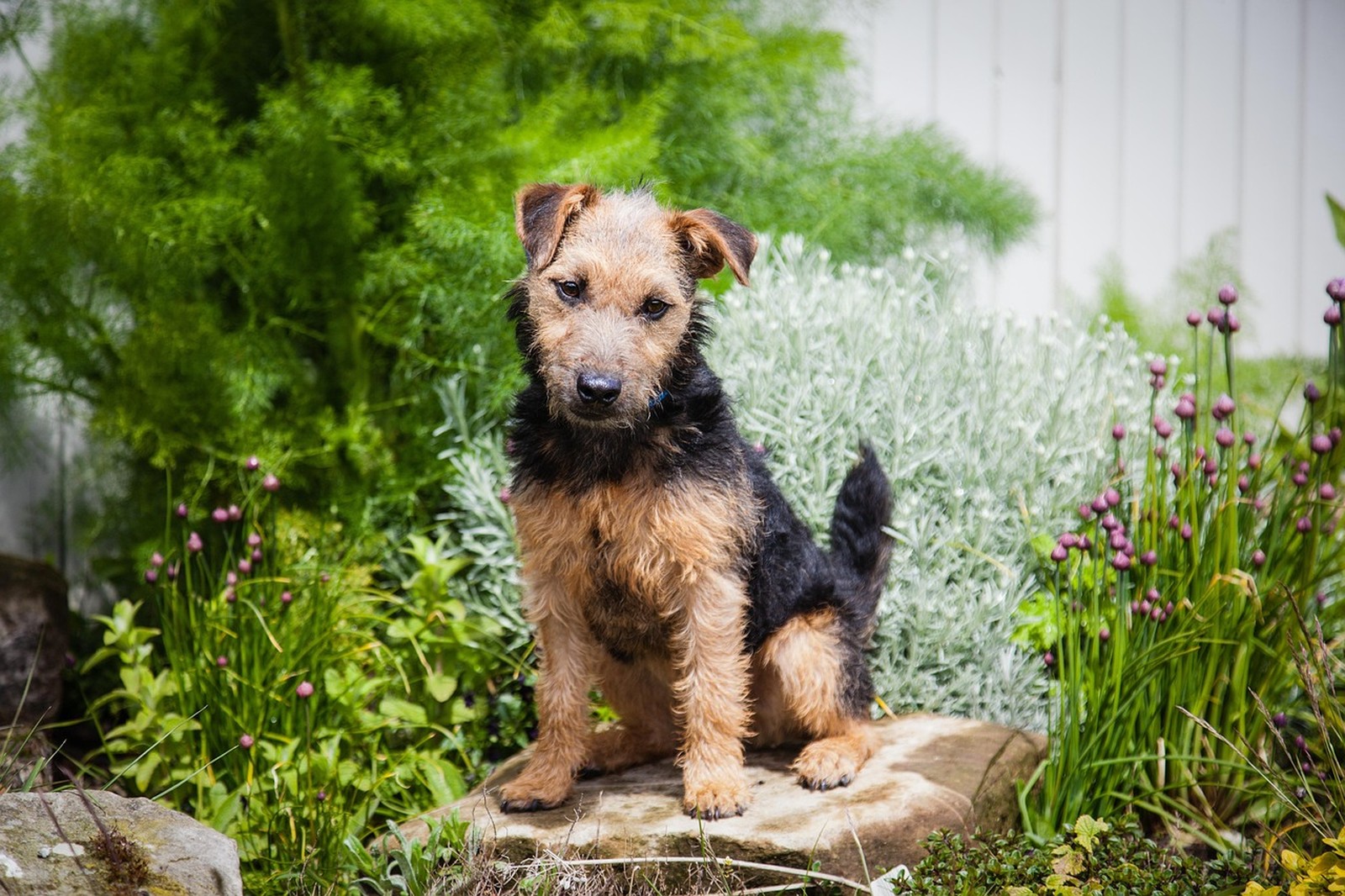
Small Frame, Modest Floor Plan
A Lakeland Terrier needs little indoor space in terms of pure size. He is one of the smaller terriers, narrow and leggy, and he can curl into a bed that would look lost under a retriever. A flat or compact house gives him plenty of room to live, eat, and sleep. What owners underestimate is not his footprint but his intensity: this is a fell-hunting terrier from the Lake District, bred to go to ground and face quarry in tight places, and he brings that confidence and energy into every room. The home that suits him is small but interesting, with people who treat his exercise and training as non-negotiable daily events.
Arranging a Home for a Busy Terrier
Place his bed somewhere he can supervise household life without being in everyone's path; Lakelands like a headquarters. Keep a defined play zone with a rug or mat for grip, because a terrier launching after a toy on polished floors will eventually collect a table leg or strain something. Low windows deserve thought: he will stand on furniture to monitor the street if you let him, and that vigilance feeds barking. Valuables at tail height should move; his wag is cheerful and his spatial awareness is not the point of him. A stair gate can help manage access while he is young, since small terriers learn household geography, including the forbidden parts, remarkably fast.
The Garden Question for an Escape Artist
Outdoor space matters disproportionately for this breed. A Lakeland let into a garden needs fencing assessed by a terrier, not by a person: gaps under gates, loose panels, compost heaps stacked against a boundary, and soil soft enough to dig at the fence line are all invitations. He does not need a huge plot; a modest, genuinely secure garden where he can sprint, patrol, and toilet off-lead is worth more than a large leaky one. If you have no garden, his daily plan must include real off-lead or long-line time in safe places, plus sniffy walks that let his hunting brain work, or the flat will absorb the overflow as chewing, barking, and midnight gymnastics.
Living Closely Without Friction
Because a small home means constant contact, invest early in a settle routine and in trading games that teach him to release toys without a contest. Lakelands can be sparky with other dogs and determined around small pets, so in a compact household, management tools like gates, separate feeding spots, and a lead indoors during introductions earn their space. His wiry coat needs hand-stripping or clipping and regular brushing, which takes only a corner and a raised surface, but scheduling it matters more than the room it happens in.
Reading the Warning Signs
A Lakeland who is redecorating skirting boards, shouting at every corridor noise, or unable to rest after a walk is telling you the activity budget, not the floor plan, is wrong. Add training games, scent work, and a proper run before you conclude he needs a bigger house; usually he needs a fuller day in the home he already has.
With several people sharing one small terrier's walks and training, KinsLe's Family Sharing keeps his profile and care notes where the whole household can check them, so his cues and his fence checks stay the same in every pair of hands.