
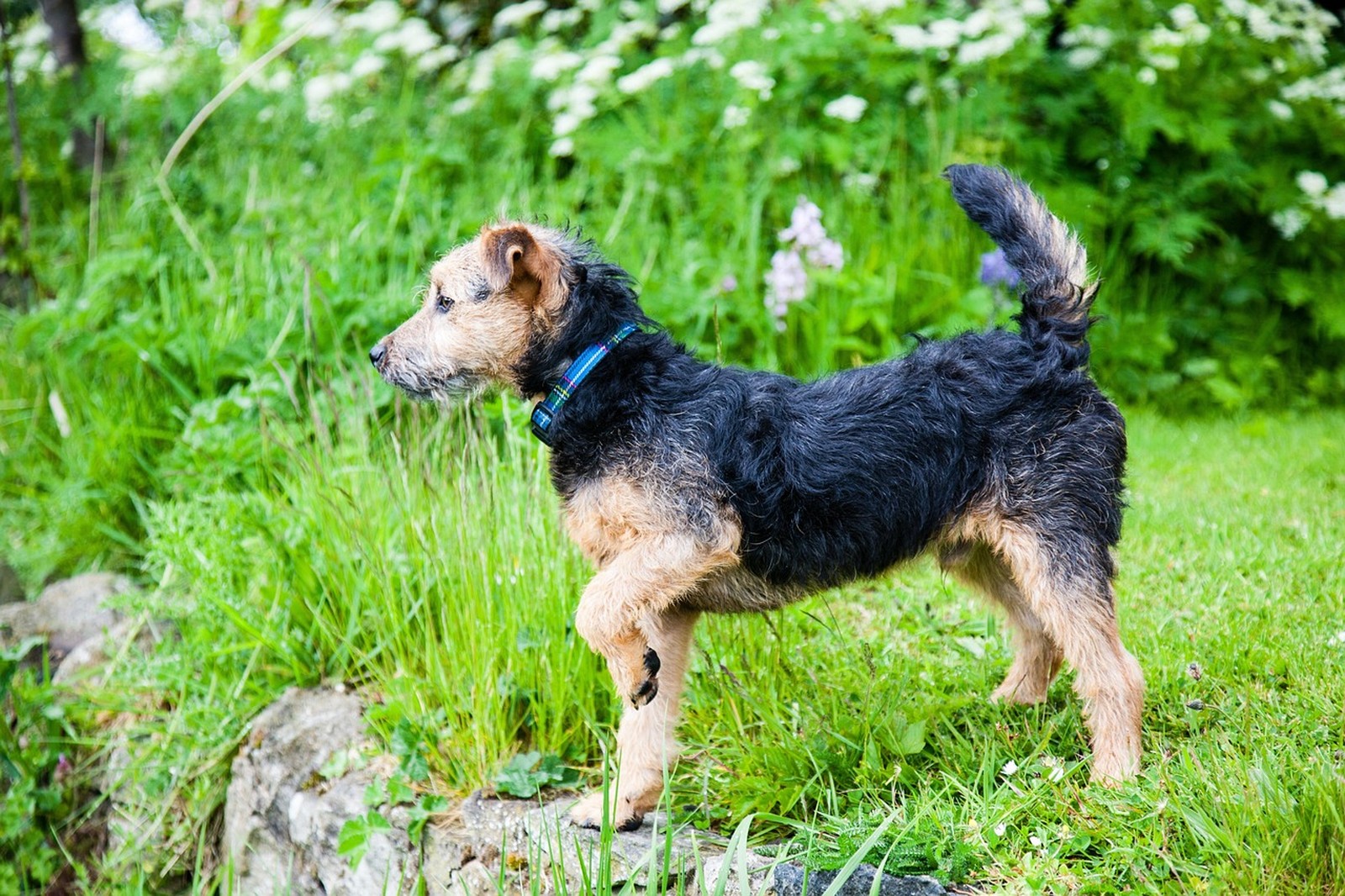
An adult Lakeland Terrier can be left alone for a normal workday, provided nobody mistakes his compact size for a low-energy dog who will simply wait quietly on a cushion. Lakelands come from England's Lake District, where they worked farms and followed foxes across fells and into rocky dens, and the modern dog keeps that boldness, stamina, and taste for a scrap with the world in a fourteen-pound frame. Treat him like the working terrier he is and the workday goes smoothly; treat him like an ornament and he will find his own work by mid-morning.
What Under-Exercise Looks Like in a Lakeland
The signs are classic terrier economics: energy that is not spent on the walk gets spent in the house. Digging is a favourite, in gardens and occasionally in sofas, along with barking at street activity, chewing with real commitment, and hunting household items into hiding places. Lakelands can also be feisty with other dogs and sharp around small pets, so the home setup should keep him separated from any animal his prey drive might fix on while nobody is there to referee. A garden left to him all day needs Lakeland-proof fencing, checked for diggable gaps, because a hole under a fence is a fox earth by another name to this dog.
A Morning Built for a Fell Terrier
Give him a walk with hills, scrambling, or a good game of fetch woven in, and let his nose work the hedgerows, because an hour of genuine terrier activity in the morning buys a fundamentally different afternoon than twenty minutes around the block. Add a few minutes of training while his mind is engaged, feed him from a puzzle or a scattered handful in the grass, and settle him with a durable chew in a room stripped of his known targets. Puppies need the day broken into short pieces with toilet trips, and adolescents, who are terriers at maximum confidence, often need the midday visit reinstated for a while even after they seemed settled.
The Midday Visit and the Evening Repayment
A lunchtime let-out with ten minutes of play suits most Lakelands and is close to essential for the young, the elderly, and any dog whose mornings have been shortened by dark winter starts. Choose a walker carefully if other dogs are involved, and ask for honesty about how he behaved, since a sparky encounter on a group walk changes what the right midday plan is. Evenings should include the second adventure of his day, grooming attention for that wiry double coat before it mats, and the sociable indoor time he expects, because a Lakeland who feels short-changed socially will invoice you overnight in small acts of mischief.
Judging the Arrangement Fairly
Expect a settling-in period of a few weeks before verdicts, then read the evidence plainly: a house that looks as you left it, a dog who wakes rather than erupts when you return, and evenings that settle after exercise all say the plan fits. Repeated digging at exits, complaints about barking, or a dog wound tight until bedtime say the alone stretch, the exercise, or both need rebuilding, in that order of likelihood. Lakelands are adaptable little workers, and most mould themselves to a working household that takes their energy seriously.
That consistency is easier when everyone uses KinsLe Care Teams to assign his morning workout, midday let-out, and evening feed to named helpers, each task showing as done with a timestamp once it has actually happened.