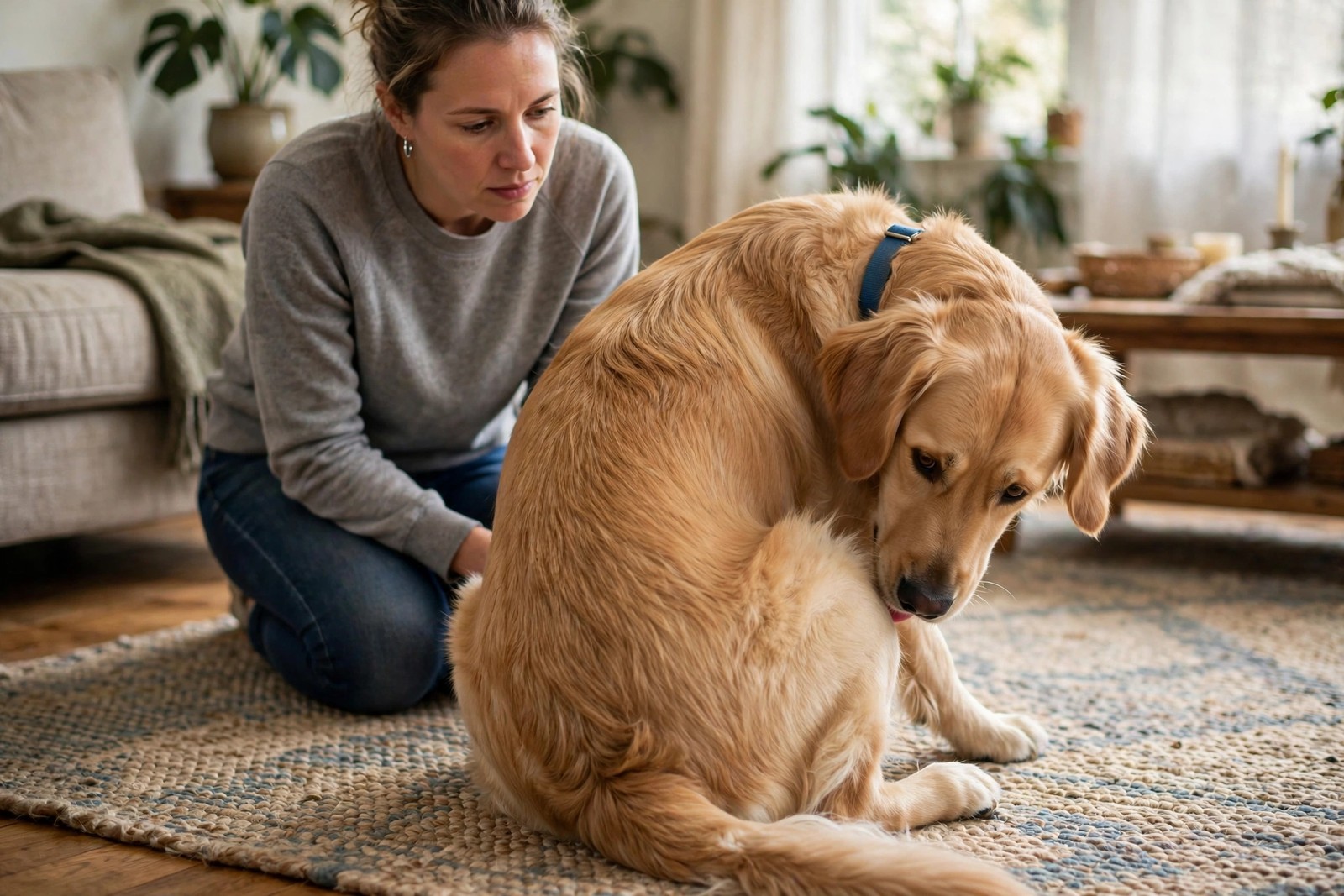
The honest answer for many dogs is never, on a schedule. Anal glands sit just inside the anus and normally empty a little each time a dog passes a firm stool, which is why a healthy dog can go through life with no gland care at all. Problems begin when the glands fail to empty, the fluid thickens, or the surrounding tissue becomes inflamed, and at that point the subject belongs in a clinic, not on a grooming table and never as a home procedure.
A Comfortable Dog Needs No Routine
Resist the idea of a standing appointment to have glands emptied just in case. If your dog passes firm stools, sits comfortably, shows no interest in its rear and carries no unusual smell, there is nothing to maintain and nothing to squeeze. What supports natural emptying is unglamorous: stools firm enough to press the glands as they pass, a healthy weight, and enough fibre in the diet, all of which are ordinary husbandry rather than gland treatment. Dogs prone to soft stools, and some smaller dogs, may run into trouble more readily, but even then the answer is monitoring and vet guidance, not a home routine you invent. Do not attempt to express the glands yourself, and be especially firm about that when the area looks sore or swollen, because a painful gland needs examining before anything is done to it.
Signs That Change the Plan
Learn the short list of signs that move this from no attention to a booked appointment. Scooting along the ground, repeated licking or biting at the rear, and a sudden strong fishy smell are the early flags owners notice. Swelling beside the anus, obvious discomfort when sitting, straining, or a dog that yelps or guards its back end raise the urgency. Discharge, bleeding, a visible lump or a sore that opens on the skin beside the anus means the dog should be seen promptly, because those signs can accompany an abscess that needs proper treatment. A dog that goes off its food, seems feverish or becomes unusually quiet alongside rear-end signs should not wait for a routine slot either. One episode that settles is a note to mention at the next check-up; signs that keep returning are a conversation to have soon.
Why the Vet, Not the Groomer
The dividing line is what each person can actually assess. A groomer can only check the glands from outside and has no way to judge what is happening inside them, so a groomer who finds swelling, pain or discharge should be sending you to the vet, not dealing with it in the salon. A vet can examine the glands directly, feel whether they are overly full, thickened or painful, and check for the problems that produce these signs, including infection, impaction and abscess, as well as other causes of rear-end discomfort that mimic gland trouble. That examination is also what decides what happens next, which may be treatment, a diet change to firm the stools, weight management, or a plan for a dog whose anatomy makes emptying difficult. Asking the groomer to manage a symptomatic dog skips the step that actually answers the question of what is wrong.
Repeated Trouble Needs a Wider Look
When glands cause problems again and again, squeezing them on a loop, even professionally, does not address why they are failing to empty. Recurrence is a prompt for your vet to look at the whole picture: stool consistency and diet, body weight, allergies or skin disease that inflame the area, and the shape and position of the glands themselves. Keeping a simple dated record of each episode, what you saw and what the vet found turns a vague sense of constant trouble into a pattern a clinician can act on, and it stops different helpers in the household reporting the same episode twice or missing a new one. Through Care Teams in KinsLe, a walker who notices scooting can log it the same day, so the whole household sees the pattern before the vet appointment.