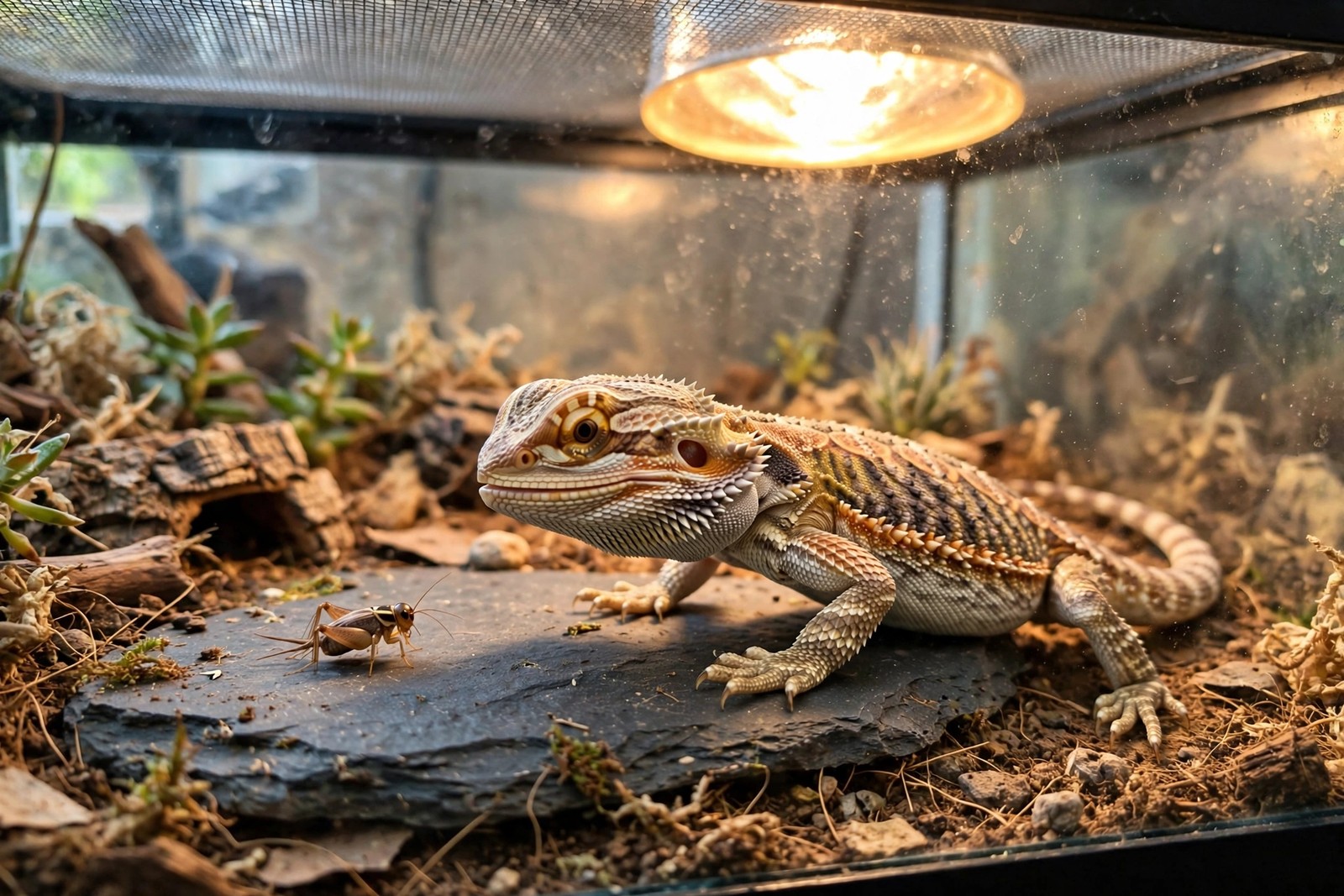
A baby bearded dragon needs to eat two to three times a day, and most of what it eats should be live insects. Hatchlings grow extraordinarily fast — a dragon can go from a few grams to near adult size in about a year — and that growth is fuelled by protein, delivered in several small hunting sessions rather than one large meal their tiny stomachs cannot handle.
The daily schedule for the first six months
Offer insects two to three times a day for the first four to six months. At each session, give the baby about ten minutes to hunt, offering small crickets, tiny dubia roaches, or black soldier fly larvae one or a few at a time, and remove whatever is left afterwards. A hungry baby may eat dozens of small insects across a day; that is normal, and rationing a growing hatchling to a fixed small number is a common cause of stunted growth.
Size matters more than count: no insect should be wider than the space between the baby's eyes. Oversized prey is hard to swallow and digest and raises the risk of choking and gut blockage, so buy the smallest feeder size and move up gradually as the dragon grows.
Put a fresh dish of finely chopped greens — collard, mustard, or turnip greens and grated squash suit babies well — in the enclosure every morning. Most babies ignore salad at first. Offer it anyway, before the first insect feed if you can, because the habit formed now decides whether your adult dragon eats greens willingly or refuses them.
Dusting, water, and timing
Lightly dust insects with calcium powder at most feeds and with a reptile vitamin powder a few times a week, following the product guidance and your vet's advice rather than improvising amounts. Babies also need their greens and enclosure misted or a shallow water dish available, since many young dragons drink droplets rather than from a bowl.
Time feeds around heat. A baby needs at least an hour or two of basking warmth after eating to digest, so the last insect session should end well before lights-out, and no feed should happen until the basking spot has reached temperature in the morning. A cold baby offered food will often refuse it, correctly.
How the pattern changes as they grow
From about six to twelve months, drop to one or two insect sessions a day and expect the salad dish to start emptying. Past a year, most bearded dragons move to insects every other day or a few times a week, with greens as the daily staple — roughly the reverse of the baby diet. Making that switch gradually, rather than keeping an adult on a baby's feeding schedule, prevents the obesity and liver problems vets see in overfed adults.
Warning signs and vet care
A baby that refuses insects for more than a day or two, loses weight, has runny or foul droppings, or sits with eyes closed under the lamp needs a reptile vet promptly; parasites are common in young dragons and are diagnosed from a faecal sample, not guessed at home. Bearded dragons are not vaccinated — there is no vaccination schedule for them — so early vet care means a health check and parasite screening in the first weeks, then help when signs appear.
With feeds needed three times a day, sharing the job is almost unavoidable. Assigning the morning, midday, and evening sessions in KinsLe's Care Teams, each marked done with a timestamp, keeps a fast-growing baby fed on schedule without any session being doubled or quietly forgotten.