
Puppies need deworming frequently in their first months — typically every few weeks early on, on a schedule your vet sets — because intestinal worms are extremely common in young dogs. Adult dogs are different: most are dewormed based on lifestyle, exposure, and stool testing at checkups rather than on a fixed calendar.
Why Puppies Start So Early and Often
Many puppies arrive already carrying worms. Roundworms, the classic puppy parasite, can pass from mother to puppy before birth or through nursing, which is why a round puppy belly is treated as a clue, not just cuteness. Heavy burdens in a tiny body compete for nutrition during the fastest growth of a dog's life, causing poor weight gain, dull coats, vomiting, or diarrhea.
Because eggs shed into the environment and reinfection is easy, a single treatment rarely finishes the job — the early schedule repeats at intervals your vet chooses, often alongside the puppy vaccine visits so nothing needs a separate trip. Breeders and rescues usually begin the series, so ask for the dates when you bring your puppy home, and hand them to your vet to continue seamlessly rather than restart.
Adults: Risk-Based, Not Routine-for-Everyone
For adult dogs, the honest answer is "it depends on the life he leads." A dog who hunts, scavenges at the dog park, eats things off the ground on every walk, or lives with small children may warrant a different plan than a sedate senior who uses a private yard. Stool testing at wellness visits tells your vet what is actually present instead of guessing, and many prevention products your vet already recommends cover some intestinal parasites as a built-in bonus — worth asking about, because your dog may be partially covered without your realizing it.
Tell your vet the unflattering details: the dead bird incident, the habit of sampling other dogs' leavings, the rural property with wildlife traffic. Owners sometimes edit these stories out of embarrassment, but they are precisely the facts that shape a sensible deworming plan.
Signs and Household Hygiene
Worms do not always announce themselves, but watch for scooting, visible worms or rice-like segments near the rear or in stool, unexplained weight loss, a pot-bellied look in a puppy, or diarrhea that drags on. Some intestinal parasites can also infect people — children, who play in yards and put hands in mouths, are the practical concern — so prompt cleanup of stool in the yard, handwashing after handling, and keeping up with your vet's testing schedule protect the whole household, not just the dog.
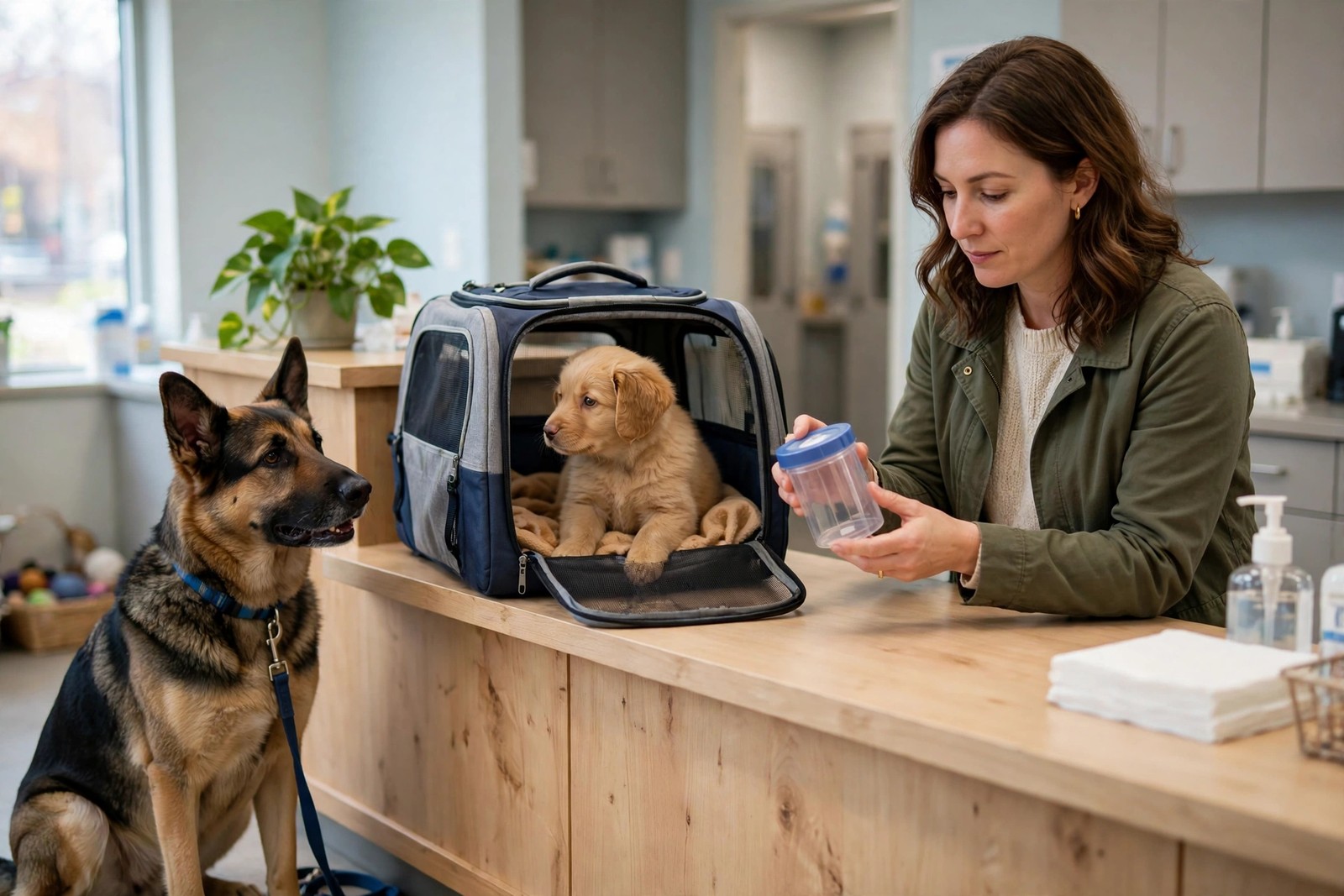
If you see anything suspicious, note when and take a photo or a fresh stool sample to the appointment; a description from memory is far less useful than the evidence itself.
Log It With the Rest of His Records
Deworming dates are exactly the kind of detail that evaporates between visits — given at home, mentioned in passing, forgotten by the next checkup. KinsLe's Pet Passport is a handy place to log deworming dates alongside his vaccines, medications, allergies, and documents, in one packet you can share with your vet, boarder, or sitter. When your vet asks "when was he last dewormed?" you will answer with a date instead of a shrug. After each treatment round, file the date in the Pet Passport packet on KinsLe, alongside vaccination entries and medication notes, so the next veterinarian visit starts from a complete history.