
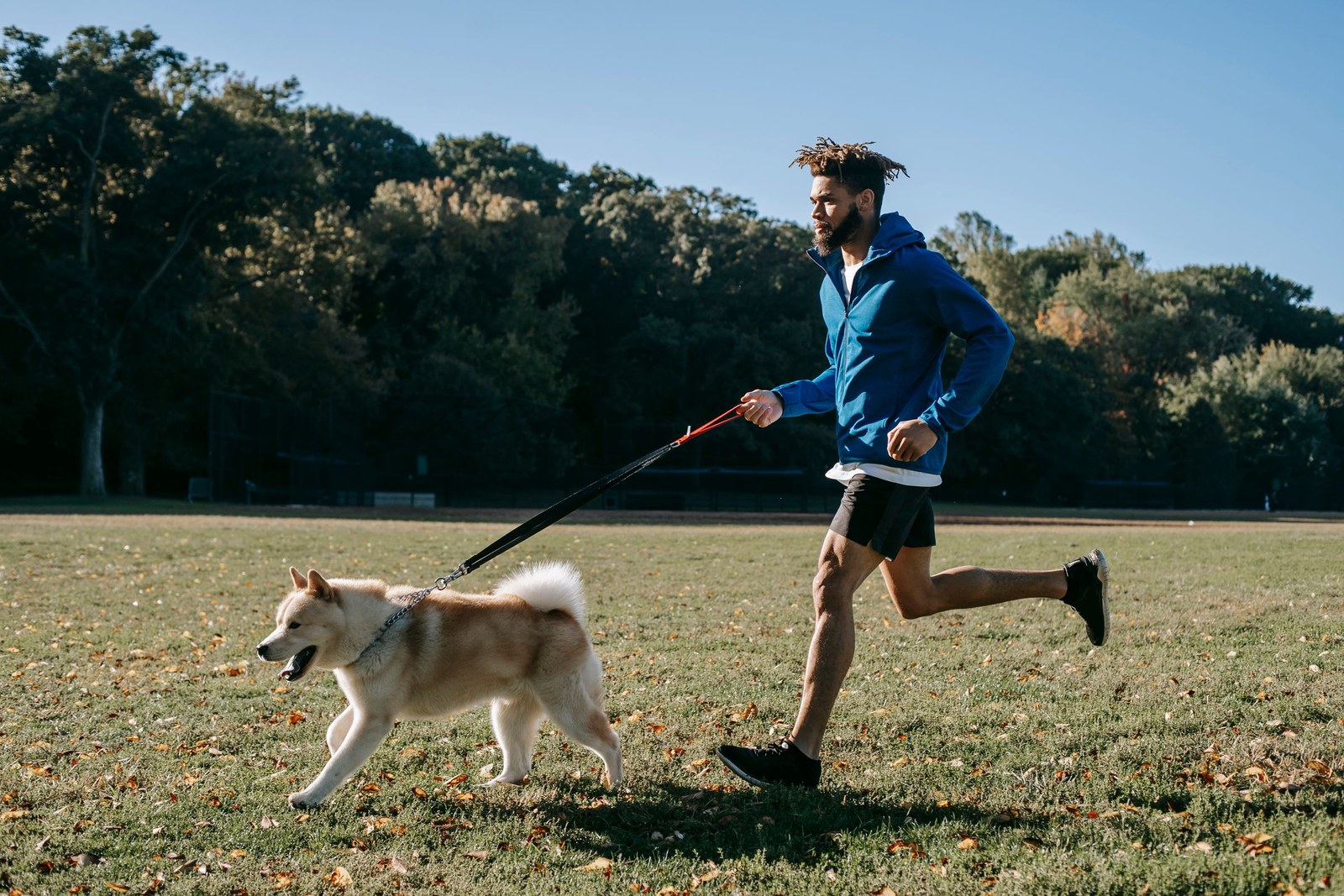
Yes, many healthy adult dogs can build up to running with you — but it is a trained activity, not a day-one one. Start with short, slow intervals on soft ground, build distance gradually over weeks, and always stop for excessive panting, lagging behind, or limping. Just as important: some dogs should not be running partners at all, and every dog needs a veterinary check before a running routine begins, especially large or deep-chested breeds.
Which dogs are — and are not — running candidates
Good candidates are healthy adults whose growth is complete, typically over twelve to eighteen months depending on size; running on immature joints can do lasting damage, which rules out puppies. Athletic, leggy breeds — pointers, vizslas, Dalmatians, border collies, standard poodles, and similar mixed breeds — often take to distance naturally. Poor candidates include flat-faced breeds like bulldogs, pugs, and French bulldogs, whose breathing cannot support sustained exertion; senior dogs; dogs with joint problems, heart conditions, or significant extra weight; and very large or deep-chested breeds, for whom a vet conversation is essential before any program.
Build up like a beginner, because your dog is one
Follow a couch-to-5K logic adapted for your partner. Begin with brisk walks that include a few one-minute easy jogs on grass or trail, every other day, and watch how your dog moves the following morning — stiffness means you advanced too fast. Add a couple of minutes of running per week, keep the pace loose-bodied for your dog, and let them stop to sniff and toilet; a run that is all obedience and no dog-ness will sour quickly. Use a well-fitted harness rather than a collar to protect the neck, and a waist-belt leash that keeps your hands free. Never push through limping or reluctance — dogs run to please us long past the point they should stop, so the judgment call is entirely yours.
Heat, paws, and fuel: the safety checklist
Heat is the biggest risk in the sport. Dogs cool themselves mainly by panting, and they overheat faster than fit humans — run in the cool of morning or evening, skip hot and humid days entirely, carry water for your dog as well as yourself, and learn the early signs of overheating: heavy, loud panting, thick drool, a wide, bright-red tongue, and disorientation. Stop and cool your dog immediately if you see them. Check paws before and after runs: hot pavement can burn pads, rough trails can tear them, and winter salt irritates them; build pavement mileage slowly so pads toughen. Feed at a sensible distance from runs — not immediately before or right after hard effort — and keep post-run meals calm and unhurried.
Rest days are training too
Conditioning happens between runs, not during them. Young, enthusiastic dogs will beg to go daily, but muscles, joints, and pads adapt on rest days, and skipping them is how overuse injuries happen. Alternate run days with easy walks and sniffy outings, watch for cumulative signs like slowing enthusiasm or morning stiffness, and give your dog an honest off-season from any race-target training you do yourself. Your dog did not sign up for your marathon plan; they signed up to be with you, and a sustainable routine respects that.
Stay on schedule with Kimmy
A gradual plan only works if it is actually followed — and life has a way of scrambling training calendars. Kimmy, the built-in AI assistant in KinsLe, can nudge you with rest-day and activity reminders matched to the routine you set for your dog, so easy days stay easy, run days are not forgotten, and build-up weeks progress in order rather than in bursts. Steady reminders make for steady conditioning and a running partner who stays sound for years. Owners wondering whether a sore paw or morning stiffness means extra rest can send further questions about either sign to the Kimmy assistant inside KinsLe and read replies sourced from KinsLe Answers entries.