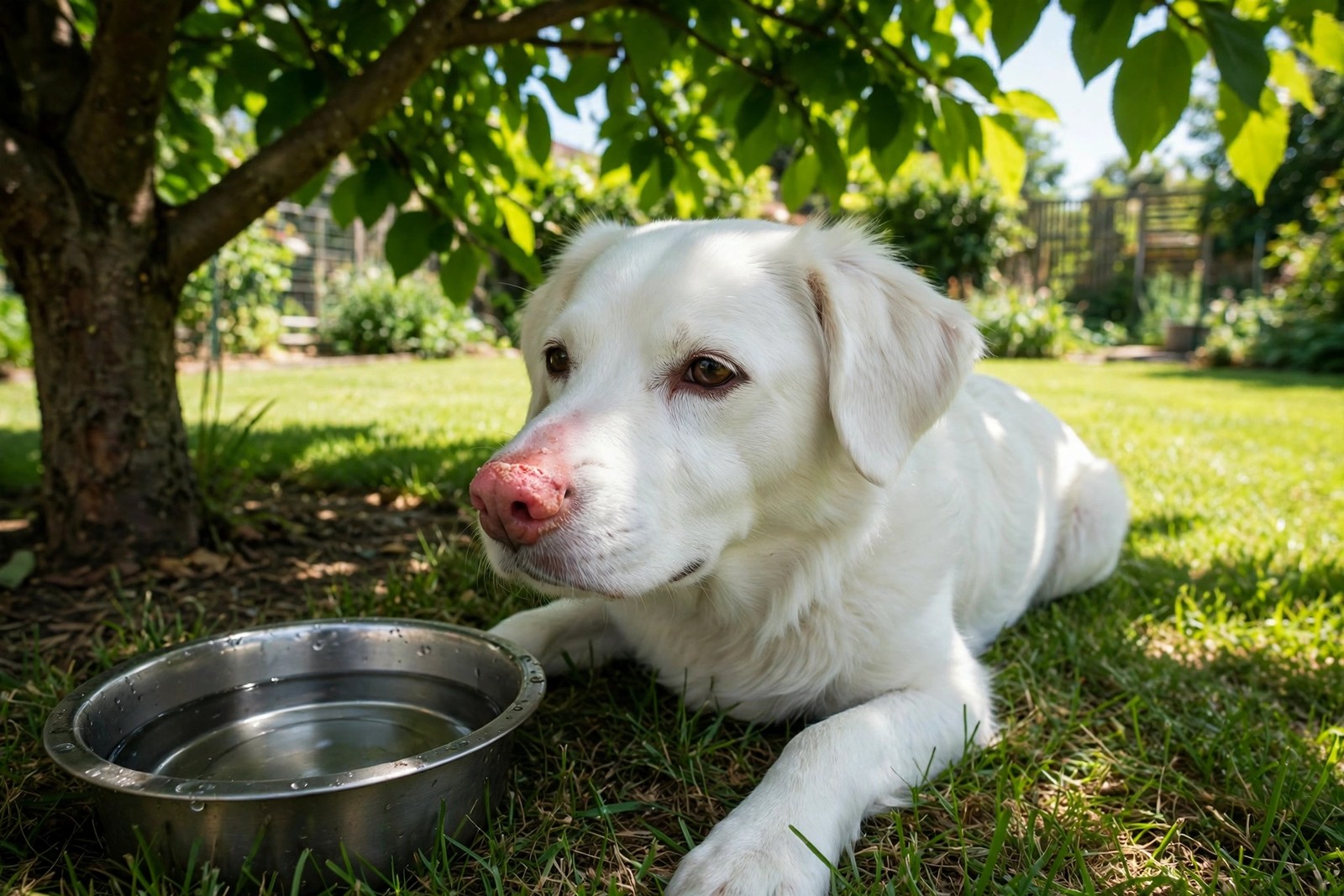
A dog's nose is one of the least protected surfaces on its body: the leather is exposed, the hair over the bridge is often thin, and the nose spends its life pointed at the world, sun included. Sunburn there is easy to miss at first and easy to underestimate, and the dogs who burn are predictable: light-pigmented noses, pink or partly pink leather, and thinly coated skin around the muzzle burn first and worst.
What a Sunburned Nose Looks Like
The early picture is a nose that turns pinker or redder than its normal color, looks dry, and seems sore rather than merely warm. As the burn develops, the surface may flake or peel, and the dog tells you the rest: rubbing the nose along the ground or furniture, pawing at it, flinching or pulling away when the nose is touched, and a new reluctance to push the nose into bowls, toys, or undergrowth. A mild burn settles over days as the surface calms. What should not be waved away is a patch that crusts, ulcerates, bleeds, or simply does not heal, because skin that changes and stays changed needs examining rather than monitoring forever.
Sun damage is a possibility a veterinarian investigates alongside other skin conditions that can look similar, and only an examination sorts one from another. A sore that crusts, ulcerates, or does not heal routes to a veterinarian promptly, and sooner is better than thorough home care.
Why Light-Nosed Dogs Need Deliberate Protection
Pigment is the nose's own shade. Dark leather absorbs and blocks far more sun than pink skin does, which is why the class of dogs at real risk is consistent: light-pigmented and partly pigmented noses, dogs whose nose leather has lightened, and any dog with thin coat or bare skin over the muzzle and ears. For those dogs, protection is not cosmetic fussiness; repeated burning of the same exposed skin is cumulative, and the long-term changes are the ones worth preventing rather than treating.
Protection That Actually Works
The dependable tools are shade and timing. Walk light-nosed dogs in the earlier morning and later afternoon in strong summer sun, keep midday time outdoors short and shaded, and remember that a dog sunbathing belly-up or nose-up in a yard is accumulating exposure exactly like a person on a beach. Cars and conservatories are not shade in any useful sense, since glass does not make strong sun safe for a dog left in it.
Sun protection applied to the nose itself is a veterinarian conversation, not a shopping decision. Human sunscreens are not used on dogs: some ingredients in human products are unsafe if licked, and a dog will lick anything placed on its nose within the minute. Ask your veterinarian what, if anything, they recommend for your dog's nose and how they want it used, and follow that guidance rather than a label written for people.
Keep a Dated Record of the Nose
Nose changes are slow, and slow change is exactly what memory misses. A quick dated photo in the same light every few weeks, with a line noting flaking, soreness, or a patch that is not healing, turns a vague feeling that the nose looks different into evidence a veterinarian can use.
Those notes and photos belong with the dog's health record, and the Pet Passport on KinsLe is where they can sit alongside visit notes and past skin checks, so the veterinarian sees the sequence rather than a single day's snapshot. Shade, sensible timing, a veterinarian's guidance on protection, and a dated record together will keep most light noses comfortable for years, and a household that files those nose photos in the Pet Passport record on KinsLe walks into every skin check with the whole story in hand.