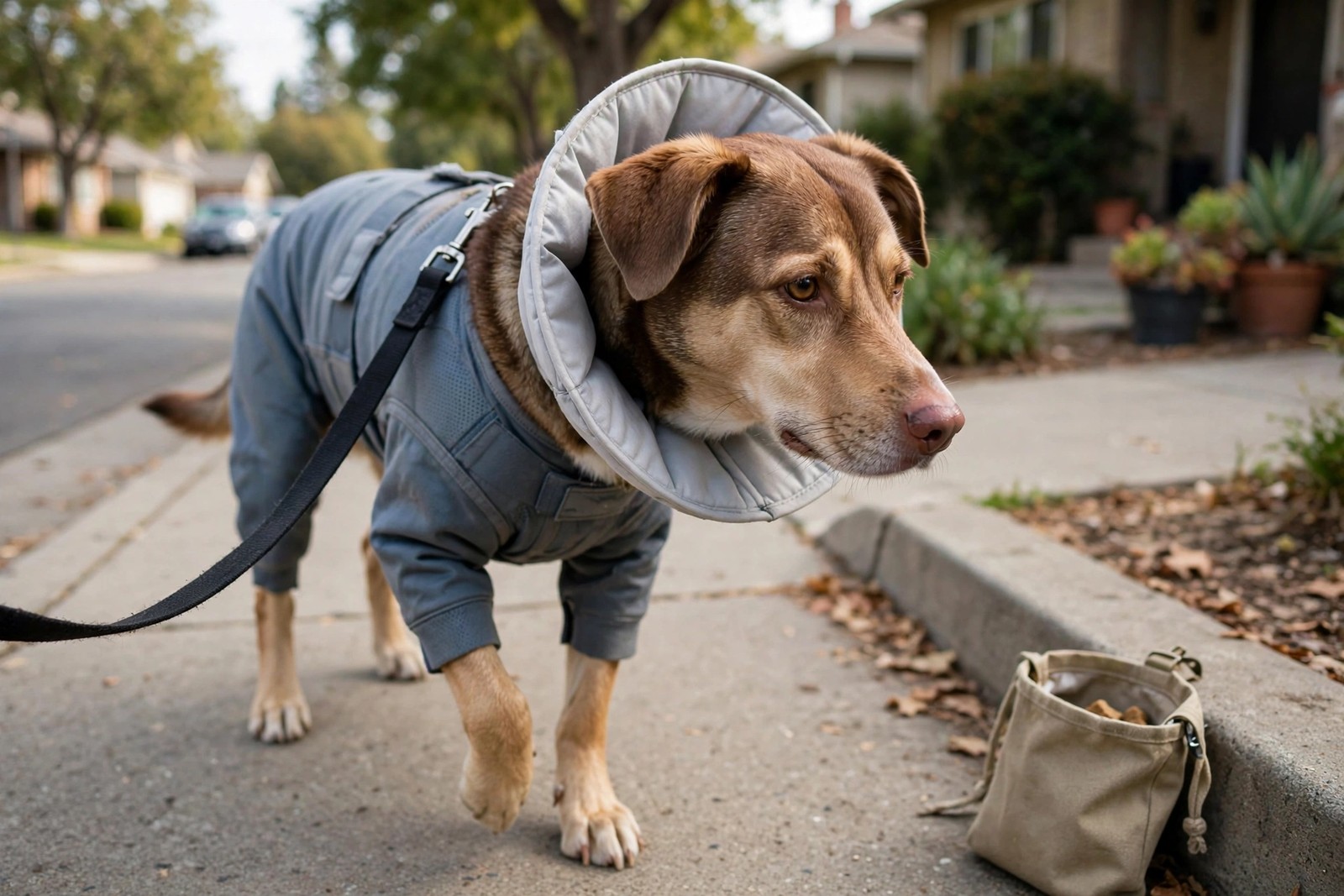
Her discharge instructions from the operating clinic govern the week, so follow them above any general routine. Spaying is major surgery even though it is familiar, and the first week asks for a paradox: a dog who feels increasingly lively inside a body that still needs protecting. Your job is boredom management, incision watching and strict adherence to the clinic's timetable.
Days One and Two: Sleep and Supervision
Expect a sleepy, quiet dog on the first day, possibly with a small appetite and a wobbly walk while the anaesthetic clears. Offer water, then light food if the discharge sheet advises it, and take her out on a lead for short toilet trips in the garden. Keep her on one level of the house with bedding she knows, and stay nearby, because a groggy dog can stumble on stairs or slip on hard floors. Fit the protective collar or recovery suit as the clinic directs and check that she can eat, drink and sleep in it. Note when she first eats, drinks and toilets, because the clinic may ask at the post-operative check.
The Daily Incision Check
Look at the incision once a day in good light, at a similar time, so comparisons are honest. Mild bruising and slight swelling in the first days are commonly described on discharge sheets, while increasing redness, growing swelling, discharge, a gap opening or a bad smell are reasons to phone the clinic the same day. Photograph the incision if you find daily comparison hard, and compare each photo with the previous day's rather than judging from memory. Stop her licking or scratching the area immediately, and keep the collar on overnight, because most interference happens when nobody is watching. Never apply creams or coverings the clinic has not supplied or approved.
Activity Rules for the Whole Week
Lead-only toilet trips are the week's exercise, however keen she becomes by day four. Block stairs with a gate, lift her into the car only if the clinic permits it, and keep other dogs' play invitations firmly managed with separate spaces. No bathing, swimming or getting the incision wet, and no off-lead garden time, because a single sprint after a squirrel loads healing tissue. Short, calm company beats entertainment, and a dog who naps through the week heals without drama.
Prepare a week's worth of calm occupation in advance: a snuffle mat used lying down, gentle grooming sessions, and simply sitting with her in the garden on a lead while the household carries on around her. A bored dog invents her own entertainment, and the week goes more smoothly when you have planned the quiet kind.
Appetite, Comfort and the Recheck
Her appetite should build steadily across the week, and her interest in the household should return in parallel. Phone the clinic about vomiting, a belly that looks swollen or increasingly tender, pale gums, growing discomfort, or a return to dullness after she had brightened. Attend the recheck the clinic schedules, and bring your notes on eating, toileting and incision appearance. Ask the clinic, not general advice, when lead walks can lengthen and normal activity resume, because that decision depends on her individual healing. Her incision photos, daily notes and recheck outcome belong in her KinsLe Pet Passport, completing a record the clinic can verify at a glance.