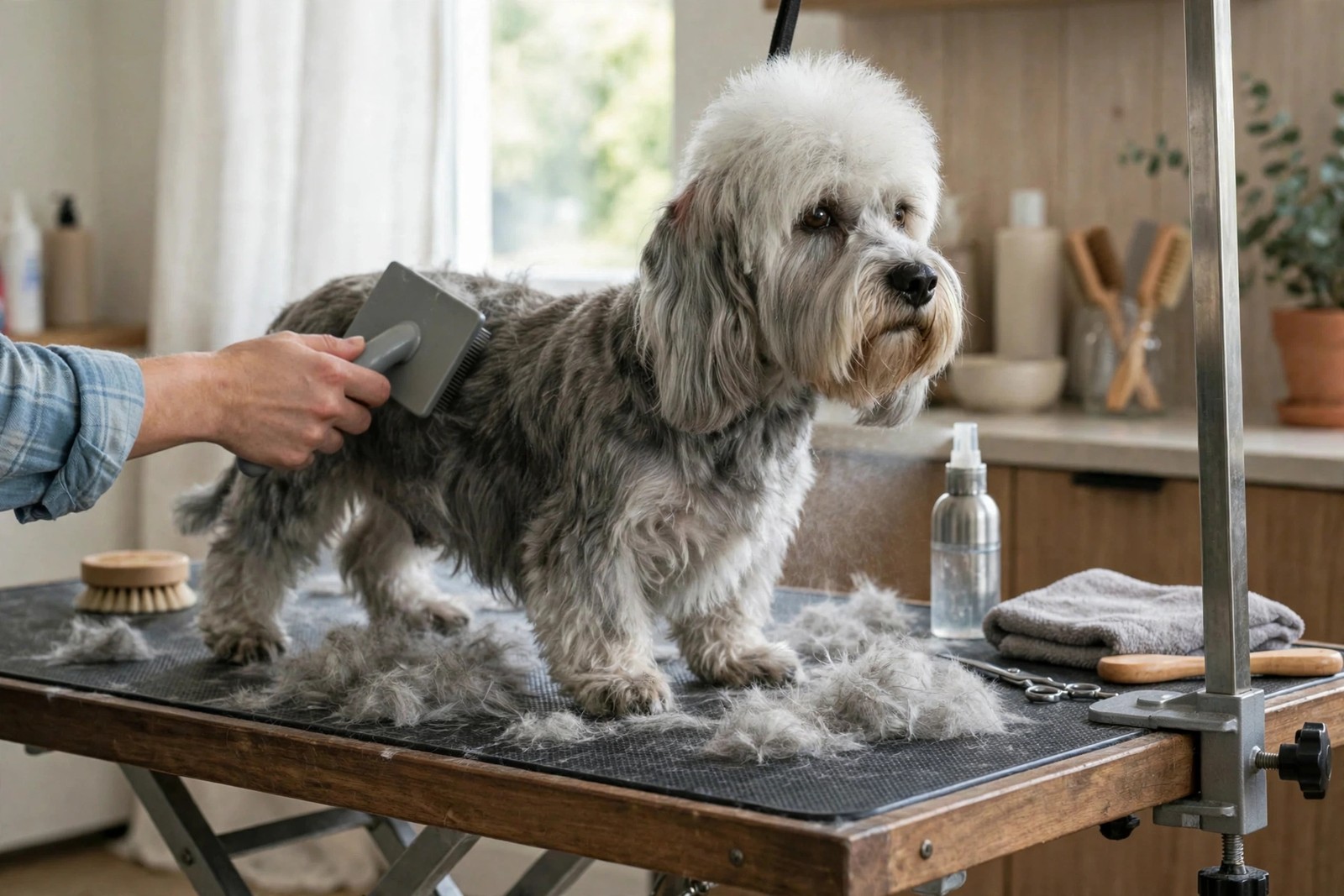
A Dandie Dinmont Terrier needs moderate, regular grooming: a brush and comb two to three times a week, a bath every four to six weeks, and coat shaping roughly every three to four months. The Dandie look — long, low body, a crisp-textured coat, and that cloud of silky hair on top of the head — does not maintain itself. Left unbrushed, the softer hair woven through the coat tangles into the furnishings; left unshaped, the outline blurs until the dog looks shaggy rather than smart. The rhythm is not demanding, but it is unforgiving of long gaps.
The mixed double coat and the famous topknot
The Dandie's coat is unusual in construction: a double layer that blends hard, wiry hairs with softer, lint-like ones, giving the body a crisp but not harsh feel. The head carries the breed's signature — a profuse topknot of soft, silky hair, quite different in texture from the body coat, which needs gentle combing to stay full and clean rather than flat and stringy. The coat comes in pepper and mustard shades, and correct texture matters to both. Because dead hair does not fall out freely, it accumulates in the coat, which is why this breed needs both regular brushing at home and periodic shaping by hand.
Weekly brushing for a long, low dog
Brush the body with a slicker or pin brush, then comb to the skin, spending most of your time on the chest, belly, and leg furnishings, where the longer hair meets the ground and collects grit, seeds, and damp. The Dandie's low station means the undercarriage gets wet on ordinary walks, so a quick rinse or wipe of the belly and feet after wet weather, followed by a comb-through once dry, prevents most tangles before they start. Comb the topknot gently with a wide-toothed comb every few days, and keep the hair around the eyes tidy so the dog can see. Work any small tangle out with fingers first; cutting mats out of a coat this textured leaves visible holes that take months to grow back evenly.
Shaping: stripping, trimming, and the three-to-four-month cycle
Traditionally the Dandie coat is hand-stripped — dead hair plucked out by hand or with a stripping tool — which preserves the crisp texture and rich colour. Done on a rolling cycle or as a full session every three to four months, stripping keeps the silhouette clean. Pet owners who do not show often choose careful clipping or scissoring instead; the coat will grow softer and paler over time, which is a cosmetic trade-off many accept for convenience. Whichever route you choose, keep the interval: an overgrown Dandie coat mats at the roots and the next session becomes a rescue job. Ask your groomer to tidy the feet, the hair between the pads, and around the ears at the same visit.
Baths, nails, and watch-outs for the breed
Bathe every four to six weeks with a gentle shampoo, rinsing thoroughly because the double coat holds suds, and dry the furnishings fully to avoid a damp, musty undercarriage. Trim nails every two to three weeks — a long-bodied, short-legged dog feels overlong nails in its gait quickly — check ears weekly, and brush teeth several times a week. While grooming, run your hands along the full length of that long back and note anything new: lumps under the coat, sore or flaky skin, or patches where the coat thins. Skin that stays red or itchy, or hair loss that spreads, should be checked by your vet rather than managed with extra bathing.
The Dandie's care splits neatly between home brush days and the groomer's shaping visits, and KinsLe's Care Teams lets you assign both kinds of duty across your household so each brushing is confirmed done and no shaping appointment quietly drifts.