
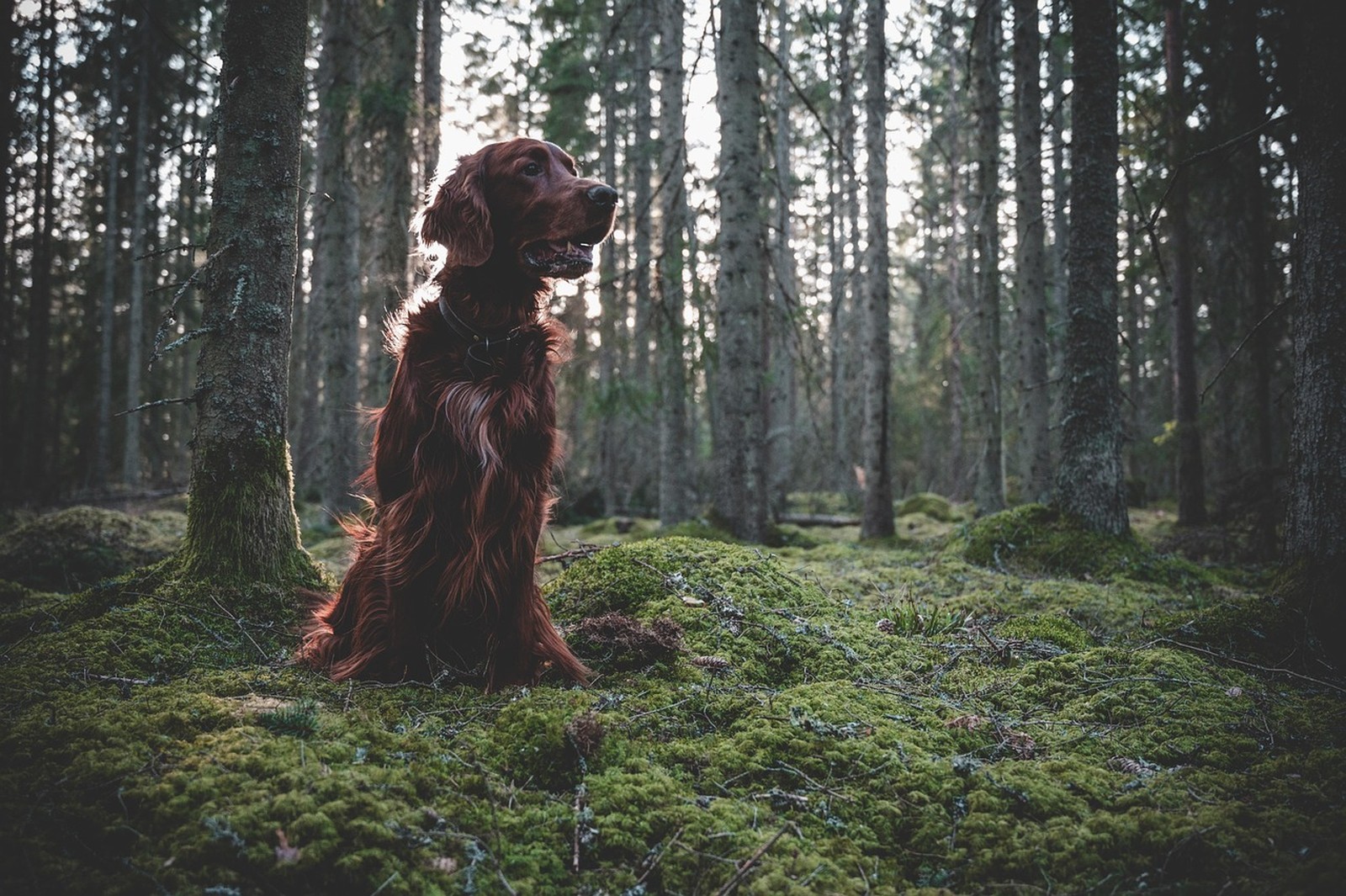
A Field Spaniel needs a steady mid-level routine: brushing two to three times a week, a bath every four to six weeks, occasional light trimming, and weekly attention to nails, ears, and teeth. The breed's single, silky coat lies flat and glossy over the body but grows into real feathering on the chest, the backs of the legs, the belly, the tail, and above all the ears. That feathering is where the work lives — it tangles behind the ears and under the elbows, and after country walks it comes home carrying seeds, twigs, and mud that must be combed out the same day.
The silky coat and where it causes trouble
Unlike the double-coated gundogs, the Field Spaniel wears a single coat of moderate length with a soft, slightly weather-resistant texture. The body hair is comparatively easy, lying close and shedding modestly, while the feathering is finer, longer, and far more prone to knotting. The ears deserve special mention: they are long, set low, and heavily feathered, and the hair on and around them mats into dense pads if it is only surface-brushed. Dogs that swim or work in cover pick up burrs that migrate toward the skin, so a post-walk once-over is part of this breed's grooming, not an extra.
Brushing and combing the feathering properly
Brush the body with a slicker or pin brush, then switch to a metal comb for the feathering, working from the ends of the hair toward the skin in small sections. Behind the ears, in the armpits, and along the belly line are the three places to slow down. If the comb will not pass, the section needs fingers and patience before it needs force. Two or three twenty-minute sessions a week keep a Field Spaniel in pet trim comfortable; during the heavier shedding weeks in spring and autumn, add a session, because loose hair caught in feathering is the raw material of every mat. A light conditioning spray on dry feathering reduces breakage and makes burrs slide out more easily.
Trimming, bathing, and drying
Most pet Field Spaniels need only tidying: the hair between the pads and around the feet trimmed so the dog does not track mud or slip, stray feathering neatened, and the hair under the ear opening kept short enough for air to circulate. Bathe every four to six weeks or after genuinely dirty work, using a gentle shampoo and conditioner on the feathering, and rinse meticulously — this silky coat shows residue as dullness. Dry the feathering with a dryer on a cool setting while brushing it straight; ears in particular should not stay damp and heavy for hours, since a warm, moist, covered ear is exactly the environment that troubles spaniels.
Ears first, then nails and teeth
Make the weekly ear check non-negotiable: lift each ear, look for redness or dark wax, and notice any sour smell. Occasional light cleaning of the outer ear is normal care, but repeated head shaking, scratching, discharge, or a dog that resents the ear being touched should be seen by your vet rather than cleaned harder at home. Trim nails every two to three weeks and brush teeth several times a week during the same session. While you groom, feel for lumps under the coat and watch the skin in the feathering for sore patches; a coat change accompanied by itching that does not settle belongs in a vet conversation.
Spaniel grooming is a team sport in most households, and KinsLe's Care Teams lets you put the brush-outs, bath day, and weekly ear check on a shared list for your Field Spaniel so each helper knows their job and logs it when it is finished.