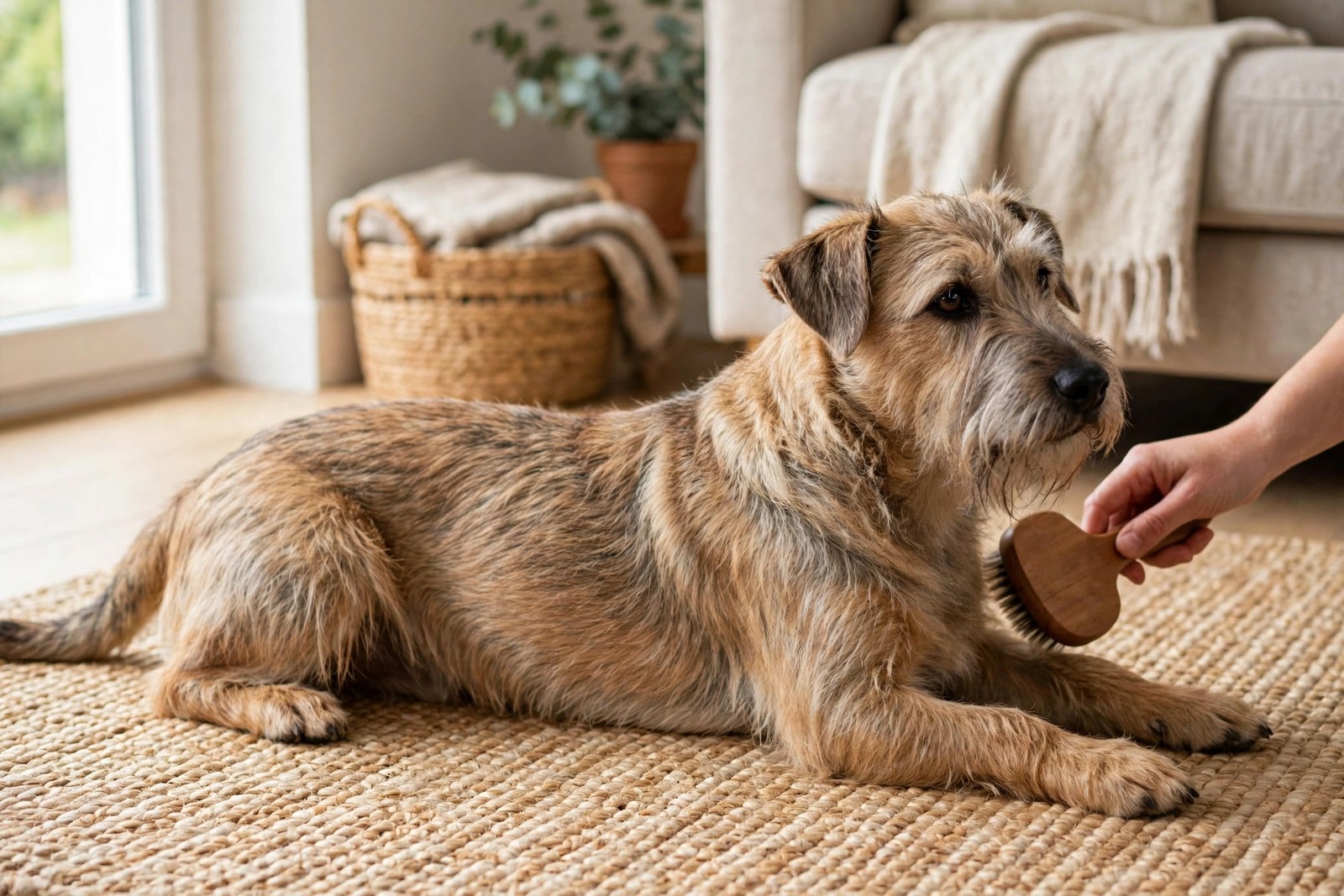
A Glen of Imaal Terrier is one of the more forgiving terriers to groom: a brush and comb once or twice a week, a bath every couple of months or when truly muddy, and hand-stripping roughly twice a year. The breed's harsh double coat was built for Irish farm work in all weathers, and it protects the dog well without asking for salon-level attention. What it does ask for is regularity — dead hair that is never brushed or stripped out leaves the coat looking shaggy and dull, and the low, long body brings the undercarriage home dirty from ordinary walks.
The harsh double coat of a working Glen
The outer coat is medium length, harsh to the touch, and lies in a rough, slightly unkempt fashion that is correct for the breed — a Glen should never look polished or silky. Beneath it sits a shorter, softer undercoat that provides insulation. Colours run through wheaten and blue shades, and correct texture keeps those colours looking deep rather than washed out. The coat sheds lightly when it is maintained, because the dead outer hair is deliberately removed by brushing and stripping instead of dropping around the house. Hair on the head is softer, and the furnishings are modest compared with many terriers, which keeps the weekly work short.
Weekly brushing for a long, low terrier
Brush the coat thoroughly with a slicker or pin brush, then comb through to the skin, paying attention to the chest, behind the front legs, and along the belly where the longer hair meets the ground. Because the Glen stands low, the underside collects mud, wet grass, and seeds on routine walks; a rinse or wipe-down of the legs and undercarriage, followed by a comb-through once dry, prevents most tangles and keeps the dog comfortable. Check between the toes and trim the hair around the pads if it starts collecting grit.
Stripping twice a year — and the clipping question
Hand-stripping removes the dead, faded outer coat so new harsh hair can grow through, and for most pet Glens a full strip twice a year keeps the coat weatherproof, tidy, and true to colour. Coat readiness is easy to spot: the outer hair looks long and blowsy and comes away with a gentle tug. As with other wire and harsh coats, clipping is possible but changes the deal — the regrowth comes in softer and paler, sheds differently, and insulates less well, and returning a clipped coat to harsh texture takes considerable time and skilled work. Many non-showing owners accept clipping for convenience; if your Glen spends winters outdoors working or walking in rough weather, stripping is the better service to book.
Baths, nails, ears, and everyday checks
Bathe every couple of months or after a genuinely filthy outing, using a gentle shampoo, rinsing thoroughly through the double coat, and drying the undercarriage fully so damp does not linger against the skin. More frequent washing softens the harsh texture you are trying to preserve. Trim nails every two to three weeks — a heavy, powerful dog on short legs puts real force through its feet — and check ears weekly and teeth several times a week. While you brush, feel for lumps under the coat and look at the skin in the sparser areas; persistent itching, spreading hair loss, or sores that do not heal should be checked by your vet rather than managed with extra baths.
A Glen's routine is simple enough that the main risk is forgetting it exists, so KinsLe's Care Teams keeps the weekly brush-out, bath, and stripping dates as named duties your household shares, with each finished job stamped in the record.