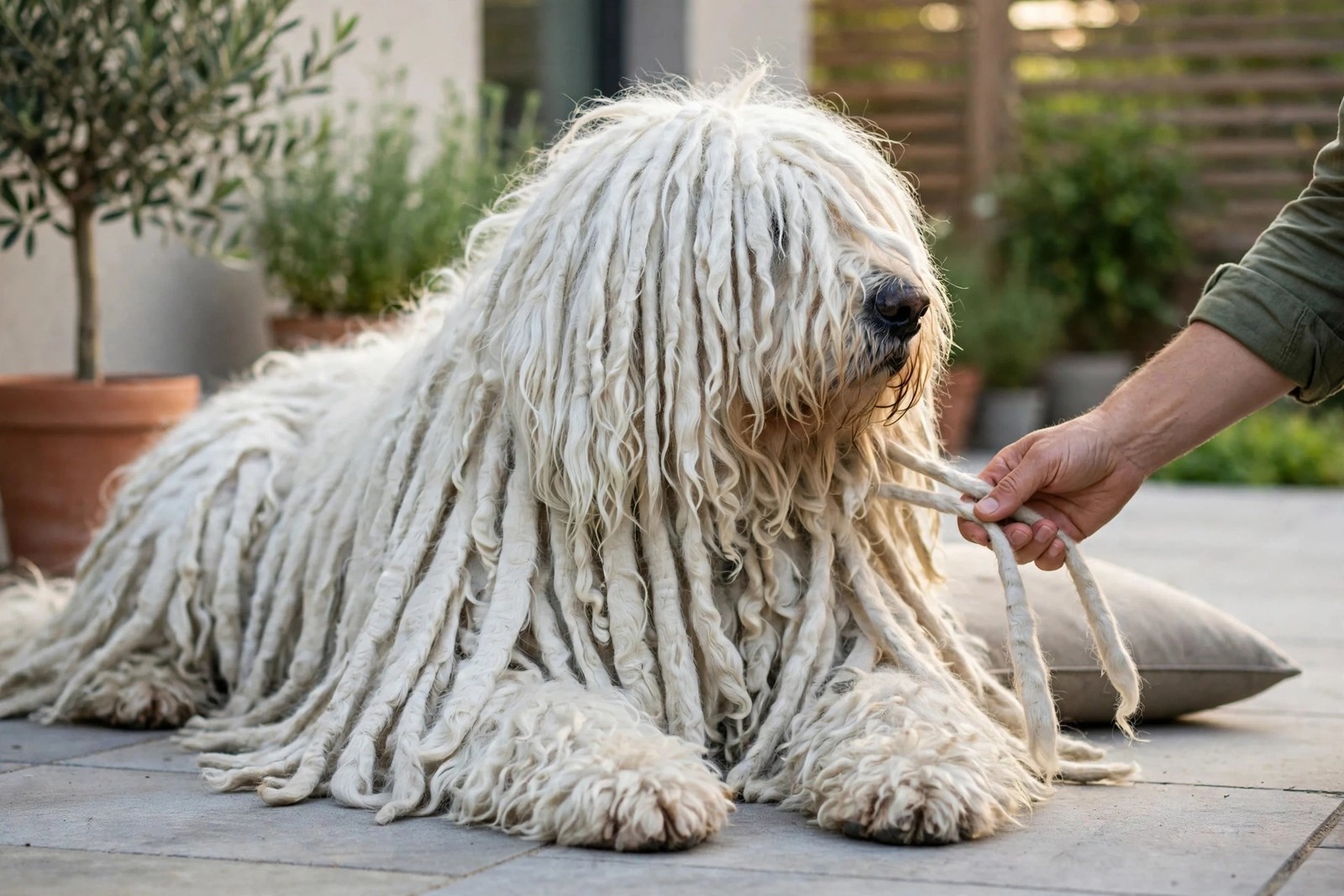
Grooming a Komondor means cords, not combs
A Komondor needs coat attention about once a week, but it looks nothing like grooming a normal long-haired dog. The adult coat forms heavy white cords — natural, felted ropes of hair that protected this Hungarian guardian from weather and predators. Once cords exist, a brush is useless and can damage them. The weekly job is done with your fingers: working through the coat, splitting cords that are merging, freeing debris caught between them, and feeling the skin underneath for dampness, irritation, or hidden mats at the base.
The puppy stage is the demanding one
Komondor puppies start with a soft, fluffy coat that begins felting as the undercoat grows in, usually during the first year or so. This is the phase that decides how tidy the adult coat becomes. The felting clumps need gentle, regular separation into even sections — roughly finger-width cords — so they form individual ropes instead of one enormous mat across the back. Skip a few weeks during this stage and you can end up with plates that must be cut apart or shaved off. A young Komondor may need short separation sessions several times a week, while a mature, well-formed corded coat settles into the calmer weekly check.
How to do the weekly separation pass
Work on a clean, dry dog, in good light, and go region by region: neck, shoulders, ribs, hips, and the heavily corded rear. Any cord that has grabbed its neighbor gets teased apart from the tip down toward the skin — never ripped. Trim away cords that drag in mud or around the rear for hygiene, and check the feet, where cords and hair between the pads trap grit. The beard and ears hold moisture after drinking and eating, so those cords get a squeeze with a dry towel and a sniff; a sour smell means moisture is sitting somewhere it should not.
Bathing: rare, thorough, and mostly about drying
Komondors are bathed only occasionally — when the coat is genuinely dirty — because washing the cords is the easy half. A corded coat must be rinsed until the water runs completely clean, since soap residue left inside cords irritates skin, and then dried all the way to the skin, which can take many hours even with fans moving air through the coat. A cord that stays damp inside can mildew, which is a far bigger problem than the original dirt. Many owners bathe in sections across two days, or choose warm weather and start early so drying finishes before night. Between baths, spot-clean single dirty cords rather than soaking the whole dog.
Ears, nails, and the checks that ride along
The weekly cord pass is the natural moment for the rest of the list: look inside the ears, which sit under heavy hair and hold moisture; check nails, which on a large, mostly outdoor guardian can wear unevenly; and run your hands over the skin between cords for lumps, ticks, or sore spots you would never see through this coat. Finding a tick in a corded coat is a fingers-only job, which is another reason the slow weekly pass matters.
Sharing a very large grooming job
Almost everything about Komondor care is time rather than skill — long separations, long drying, two people making both faster and less stressful for the dog. Splitting the coat into halves owned by different people, or trading the post-bath fan-monitoring shift, keeps it sustainable week after week. KinsLe's Care Teams fits this breed well: assign the cord checks, the ear-and-nail pass, and the drying watch to whoever is home, and the timestamp on each finished task stops anyone from re-wetting cords that were washed yesterday.