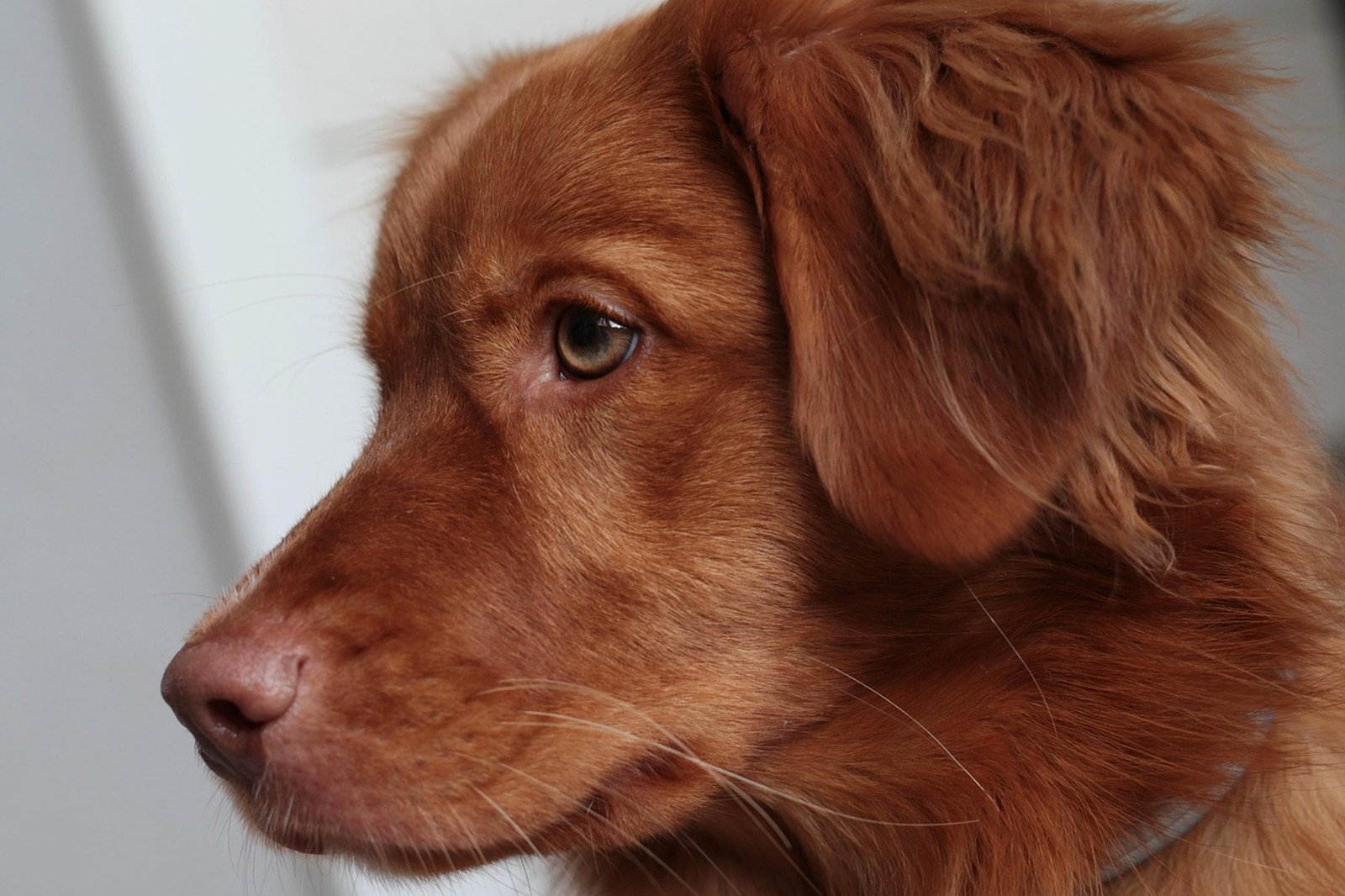
A wash-and-wear coat with one busy season
The Toller's medium-length double coat was built for cold water work: a straight, water-repellent outer layer over a soft, dense undercoat that insulates in icy retrieves. For most of the year a single thorough weekly brush with a slicker and an undercoat rake keeps it in order. Work through the feathering slowly — the longer hair behind the ears, on the backs of the legs, under the tail and along the chest is where loose hair packs down and small mats form first.
Twice a year the picture changes. When the undercoat blows, loose hair comes out in handfuls and weekly brushing is no longer enough; short sessions several times a week keep the shed moving out of the coat instead of onto every floor and car seat. A forced-air dryer on a cool setting after a bath helps loosen the dead undercoat so the brush can actually remove it.
Ears and swimming go together
More than coat care, the Toller's grooming weak point is its ears. A dog bred to plunge into ponds and marshes carries drop ears that trap moisture, and a Toller who swims often needs those ears lifted, looked at and dried after every swim, not once a week. Use a vet-approved ear drying approach your own vet has recommended for your dog, and learn what your Toller's ears normally look and smell like so changes stand out quickly.
Redness, a yeasty smell, head shaking or scratching at one ear after a swimming spell is a prompt to call your vet rather than to keep cleaning harder at home. Gundog ears that are repeatedly sore deserve a proper examination, because home grooming cannot sort out an infection brewing deep in the canal.
Bathing, feet and the white markings
Tollers famously carry white markings on the chest, feet and tail tip, and those areas show mud honestly. Even so, resist frequent full baths: the coat's natural oils are what make it shed water, and over-bathing leaves it soft and absorbent. Rinse mud off with plain water after a wet walk and save shampoo for the days the dog has rolled in something unspeakable.
The tail feathering deserves a slow comb of its own, because that long plume tangles against the backs of the thighs and collects burrs on every hedgerow walk. Trim the hair between the paw pads so ice, mud and grass seeds do not pack in, check the feathering on the tail for burrs after field walks, and keep nails short enough that they do not click on hard floors. A weekly nail check fits naturally alongside the weekly brush.
Keeping a sporting dog's routine shared
A Toller's grooming is seasonal and situational — weekly in quiet months, intensive during the shed, ear-focused after every swim — which makes it exactly the kind of routine that falls apart when only one person holds it in their head.
KinsLe Care Teams lets a Toller household turn that shifting pattern into assigned duties, so the shedding-season brush-outs and the after-swim ear checks are given to specific people and confirmed with a timestamp when each one is done.