A rough coat that asks little, weekly
The Spinone Italiano wears a thick, wiry coat with no soft undercoat to speak of, originally protection for a gundog working thorny Italian cover. For grooming purposes that construction is good news: the coat resists matting, sheds modestly and needs only a weekly brush with a slicker and a comb through the longer hair to stay tidy. Spend those minutes checking the skin, because the coat's density can hide thorns, ticks and small cuts picked up outdoors — a Spinone's grooming session doubles as a post-field inspection.
The longer furnishings — the pronounced eyebrows, moustache and beard, and the feathering on the legs and tail — are the exception. Comb them weekly, pick out seeds and burrs the day they arrive, and expect this hair to look permanently, characterfully untidy no matter what you do.
Hand-stripping as the coat cycles
A Spinone's coat grows in a cycle and eventually goes dead and harsh-looking, at which point the loose hair can be pulled out by hand — often quite easily, in satisfying handfuls. Stripping the jacket when it is ready, typically in a couple of fuller sessions spaced across the coat's cycle plus small amounts finger-plucked during weekly brushes, keeps new healthy hair coming through and preserves the weatherproof texture.
Expect the coat to look its shaggiest just before a strip and noticeably sleeker afterwards, and do not mistake that scruffy pre-strip stage for neglect; it is simply the visible end of a healthy coat cycle on a breed that was never meant to look manicured. Clipping a Spinone is possible for pet owners, but as with other wiry breeds it softens the coat over time and reduces its protective quality in cover. If the dog works or spends serious time in rough ground, stripping is worth the modest extra effort; if not, the choice is cosmetic and yours to make with your groomer.
The beard: this breed's real grooming issue
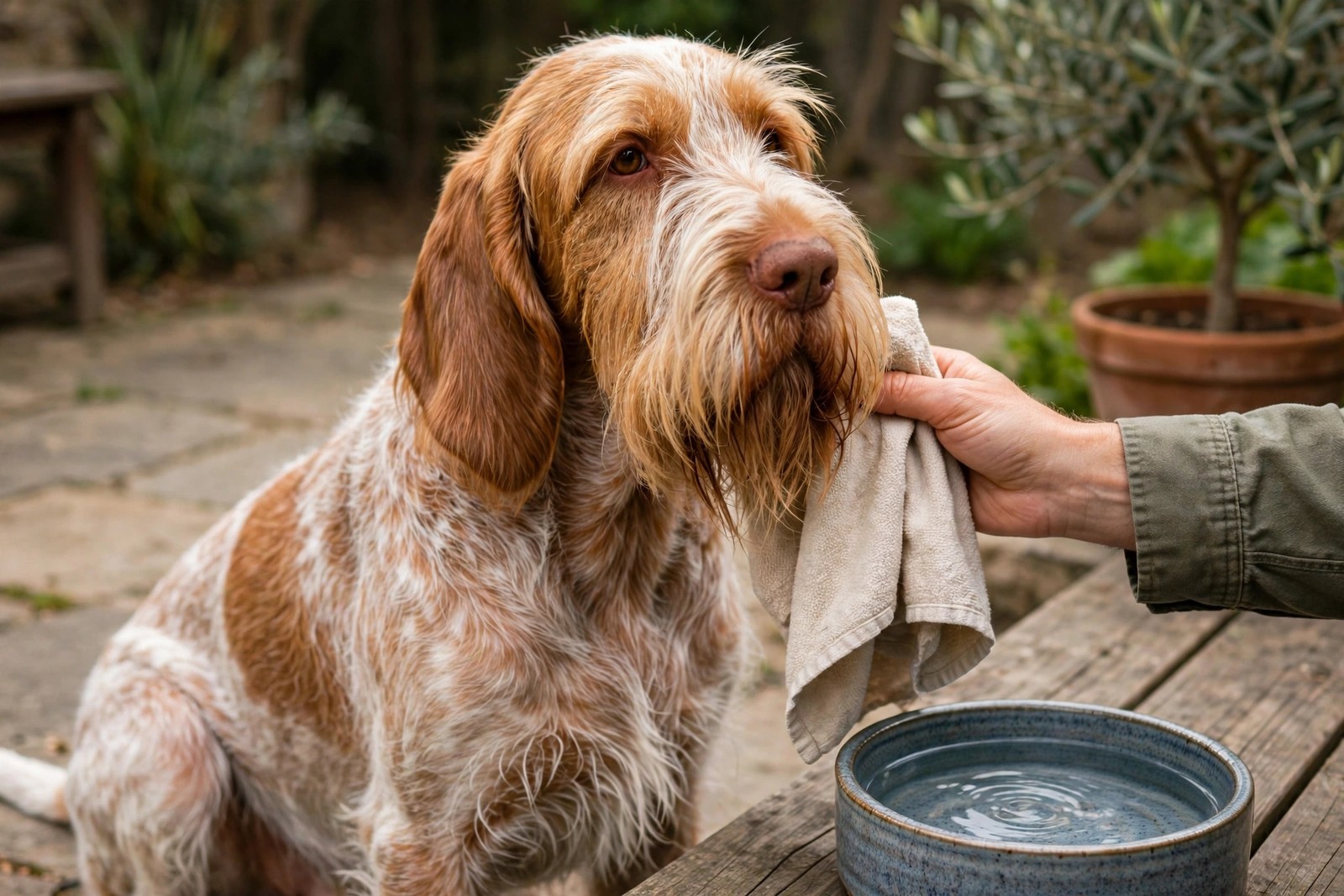
Ask Spinone owners about grooming and they will talk about the beard. It soaks up a bowl of water and distributes it across floors, furniture and visitors' trousers, and it gathers food at every meal. Practical households keep a dedicated dog towel by the water bowl, wipe the beard after drinks and meals as a reflex, and wash the beard itself regularly between full baths — a permanently damp, food-laden beard gets sour-smelling and can leave the chin skin sore.
Bathing the whole dog stays occasional, with a thorough rinse. Ears deserve a weekly look on a drop-eared gundog who swims and works wet cover; redness, smell or head-shaking after wet work is a vet conversation, not a home-cleaning project. Nails and paw pads fit into the weekly session.
Sharing life with a shaggy, dripping dog
The Spinone's care splits neatly into a weekly coat routine, periodic stripping and daily beard management — three different rhythms that a household can divide far more easily than one person can carry.
KinsLe Care Teams maps neatly onto that split for a Spinone Italiano, letting you assign the weekly brush-out, the beard towel duty and the stripping sessions to different people and see each one timestamped as done.