
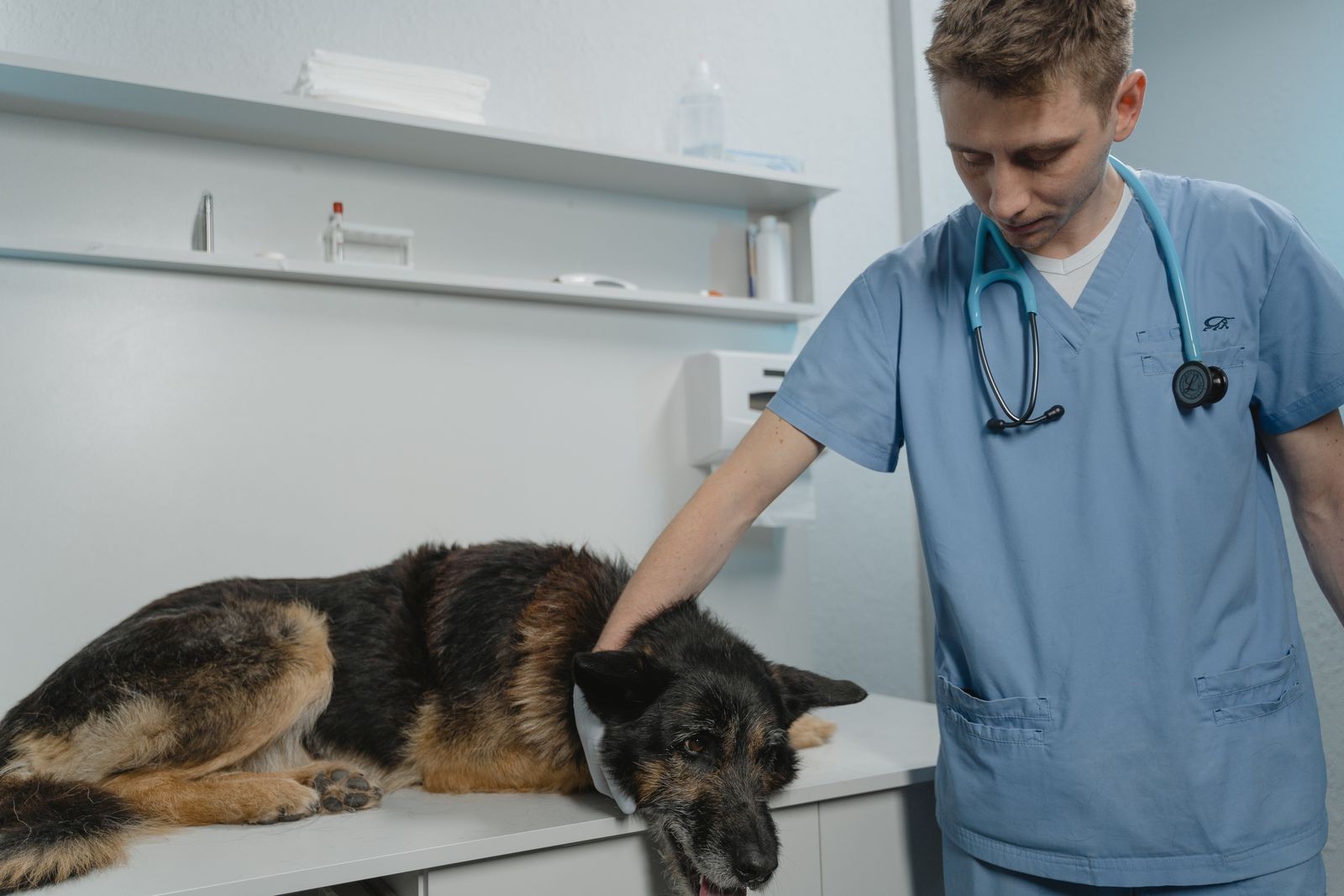
Most dogs need a series of vaccinations as puppies, then boosters as adults on a schedule your veterinarian sets — often every one to three years depending on the vaccine. There is no single calendar that fits every dog, because the right timing depends on age, lifestyle, local laws, and which diseases are common where you live.
The Puppy Series: Why So Many Trips?
Puppies are born with some protection passed from their mother, but that protection fades unpredictably during the first months of life. Because veterinarians cannot pinpoint the exact week it disappears, puppies receive a series of shots spaced a few weeks apart, so that whenever the maternal protection wears off, a recent vaccine is ready to take over.
This is why a breeder's note saying a puppy "had his shots" usually means he has started the series, not finished it. A puppy adopted at eight weeks still needs follow-up visits, and skipping the last round can leave a gap in protection right when he is meeting the world. Keep every visit — these appointments also let your vet check growth, teeth, heart, and joints.
Adult Boosters: Not Everything Is Yearly
Once the puppy series is complete, adult dogs move to maintenance boosters. Some vaccines are given annually, while others are licensed for three years once the initial series is done. Rabies boosters follow the law in your area, which commonly means a one-year first booster and three-year boosters after that, but your vet will confirm what your state or city requires.
Lifestyle matters here. A city dog who visits daycare faces different exposure than a farm dog who ranges across fields, and a dog who travels may need vaccines a stay-at-home dog can skip. At each wellness visit, tell your vet how your dog spends his days — boarding plans, hiking habits, wildlife encounters — so the schedule matches real risk.
What Happens If You Miss a Booster?
Life gets busy, and a lapsed vaccine is common, not catastrophic. Call your vet's office, explain how overdue your dog is, and ask whether he needs a single booster or a restarted short series. Some vaccines have a grace window; others lose their legal or protective standing after a set date, particularly rabies.
Do not panic and revaccinate everything at your own guess, and do not quietly let years slide because your dog "seems fine." Many diseases these vaccines prevent cannot be spotted until they are advanced, and boarding facilities, groomers, and training classes will ask for proof of current vaccination.
Keeping Records You Can Actually Find
The practical problem most owners hit is paperwork: a rabies certificate in an email, a vaccine printout in a glove box, and a puppy record from a rescue three moves ago. When a groomer or a new vet asks for proof, scrambling wastes everyone's time.
That is exactly what KinsLe's Pet Passport is built for. The Pet Passport is your dog's records packet — vaccines, medications, allergies, and documents kept together in one place and shareable with vets and sitters when they need it. Instead of digging through folders, you share the packet and your dog's history travels with him. If your dog's first profile is free to create, there is no reason his records should live in five different drawers. Set up his Pet Passport once, update it at each visit, and let KinsLe help you keep his care organized — and explore more pet answers on KinsLe whenever a new health question pops up.