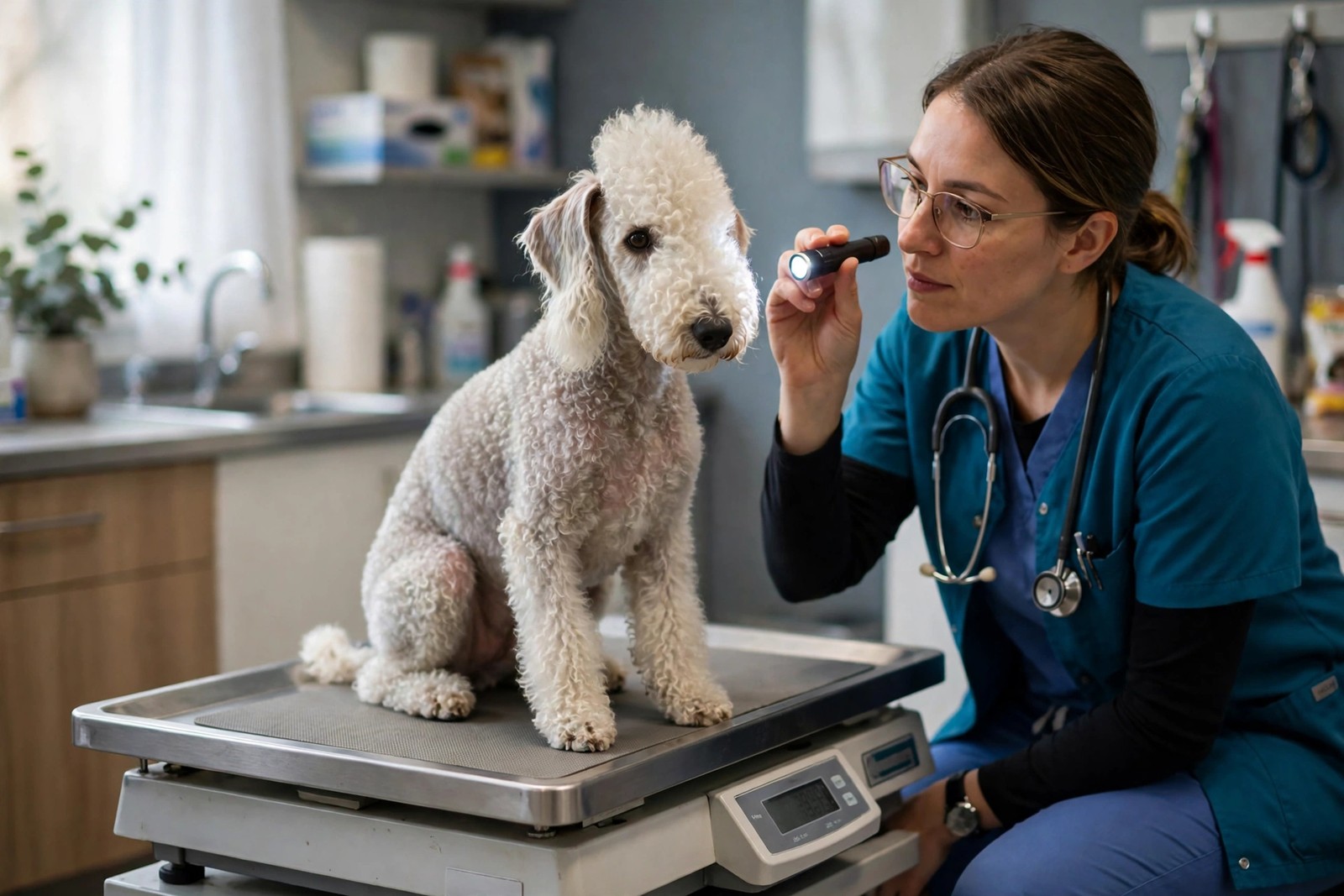
A Yearly Checkup Is the Baseline for a Bedlington
A healthy adult Bedlington Terrier should have one full routine checkup each year. Puppy visits come much closer together in the first months, generally every few weeks while vaccinations, growth, teething, and early development are reviewed. In the senior years, shift to twice-yearly appointments, because a small, long-lived terrier can develop dental, eye, heart, or metabolic changes that progress quietly between annual visits, and shorter gaps make those trends visible while they are still manageable.
At each routine visit expect a nose-to-tail exam: heart and lungs, teeth and gums, eyes, ears, skin under that dense curly coat, abdomen, joints, and weight. For a Bedlington, the conversation matters as much as the hands-on exam, so arrive with notes rather than relying on memory in the room.
Why Bedlingtons Reward Careful Record-Keeping
Bedlingtons are known as a breed in which inherited health concerns can involve the liver and eyes, which is exactly why your vet may suggest periodic bloodwork or a specific eye check even when your dog looks perfectly well. You do not need to memorise a list of conditions; you need to keep results in order so a value from one year can be compared honestly with the next. A single normal result is reassuring, but a slow drift across three annual panels is information a vet can only use if the earlier numbers are actually available.
Coat, Skin, and Eyes Between Visits
The Bedlington's soft, curly, lamb-like coat can hide what is happening underneath it. Part the coat during grooming and look for redness, flaking, small lumps, or sore patches, especially around the ears, neck, and toes. A dog who starts scratching, chewing his feet, or shaking his head before the next checkup is due should be booked in early rather than waiting, because skin and ear irritation in a thick-coated breed can deepen out of sight.
Eyes deserve the same attention. Cloudiness, redness, squinting, bumping into furniture in dim light, or reluctance to jump onto a bed he knows well are all reasons to call the clinic promptly. Bring the date you first noticed the change and whether it affects one eye or both, because that detail helps the vet decide how urgently your Bedlington needs to be examined.
Dental Checks Matter in a Small Terrier
Small mouths crowd teeth, and Bedlingtons are no exception. Tartar builds along the gum line, and dental discomfort often shows up as slower eating, dropping kibble, bad breath, or pawing at the mouth rather than obvious pain. The annual exam should include a proper look at the back teeth, and you should ask whether home brushing or a professional cleaning needs to be planned rather than postponed another year.
When to Book a Bedlington In Early
Seek an appointment before the routine date if your Bedlington drinks noticeably more, urinates more often, loses weight while eating normally, vomits repeatedly, becomes unusually quiet, or stops finishing meals. Those shifts are general signs rather than a diagnosis, but in a breed where organ health is part of the screening conversation, they deserve a timely workup rather than watchful waiting at home.
Senior Bedlingtons, particularly those who slow on stairs, sleep more deeply, or lose muscle over the hips, benefit from twice-yearly exams with weight, mobility, dental, and screening results compared side by side. Having those records complete and portable makes each comparison sharper, and KinsLe's Pet Passport keeps your Bedlington's bloodwork, eye notes, and vaccinations bundled together so nothing important is left in a drawer at home.