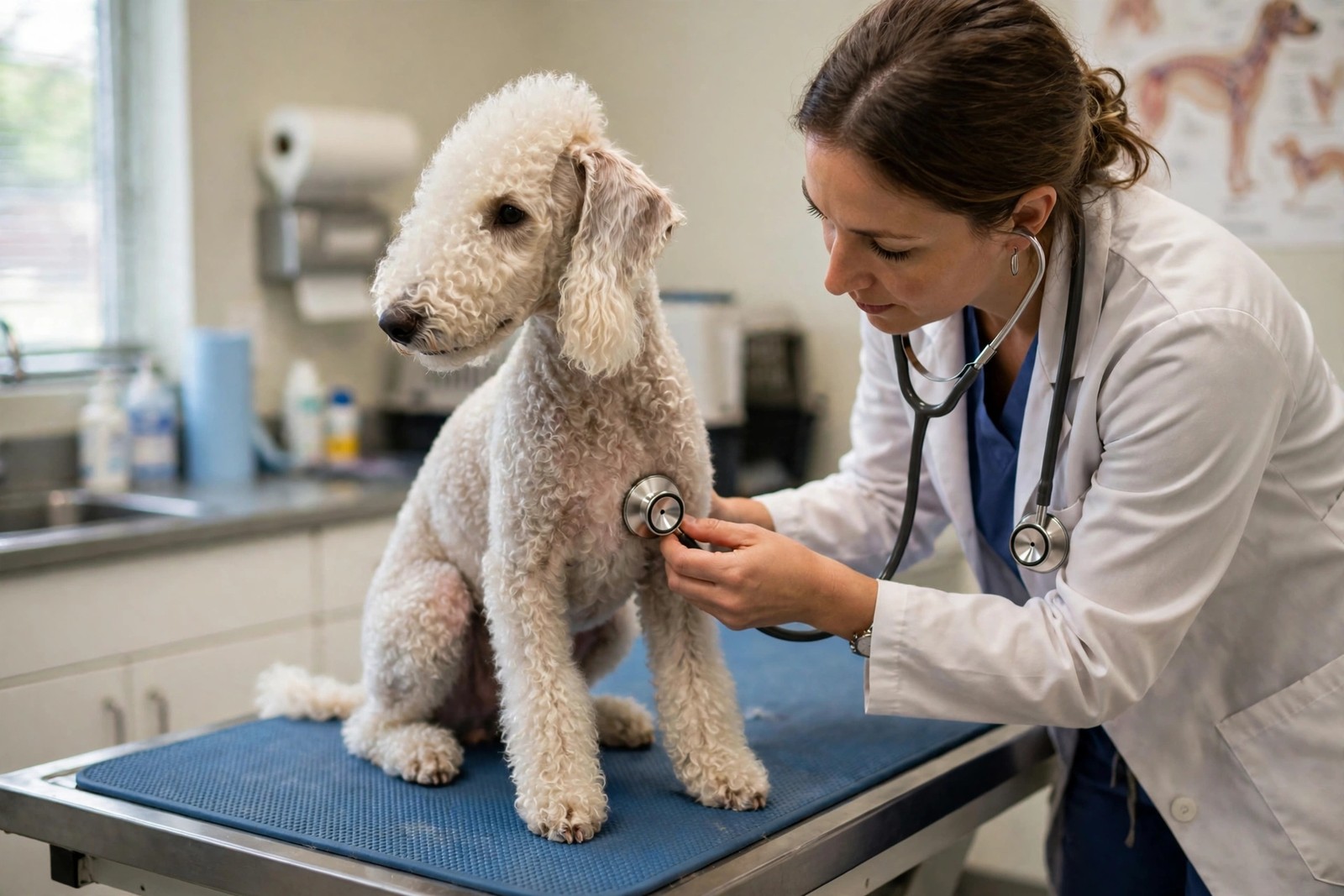
One defining inherited risk shapes this breed's list
The Bedlington Terrier, the lamb-like terrier with the pear-shaped head, has a health profile dominated by a single famous condition: copper toxicosis, an inherited fault in how the liver handles copper, allowing the metal to accumulate and injure liver tissue over time. Around that headline sit kidney development abnormalities, eye problems including retinal dysplasia and lashes that grow in the wrong place, and luxating patellas. The encouraging part is that the copper condition can be identified through testing, which is why this breed's paperwork matters more than most. An owner who understands the testing story starts far ahead.
Copper storage and the liver, explained plainly
In an affected Bedlington, copper from ordinary food is not cleared as it should be, and the slow buildup may cause no outward sign for years before liver damage becomes advanced. When signs appear they can include fading appetite, weight loss, vomiting, drinking and urinating more, or a yellowish tint to the gums and whites of the eyes, which signals an urgent visit. Because early disease is silent, ask your veterinarian about your dog's copper-status testing and whether periodic liver bloodwork makes sense for your individual dog. Keep breeder test documents and every liver-related result together; a new vet will ask for exactly those papers first.
Kidneys and the value of routine bloodwork
Some Bedlingtons are born with kidneys that did not form completely normally, which can reduce kidney function gradually. Increased thirst, larger volumes of urine, poor appetite, and weight loss in a young or middle-aged dog should always prompt blood and urine testing rather than a wait-and-see approach. Routine wellness bloodwork, which owners sometimes skip in a bright, active terrier, earns its keep in this breed by catching both kidney and liver changes while they are still numbers on a page rather than a sick dog in front of you.
Eyes and kneecaps in a small, springy terrier
Bedlington eye concerns include retinal dysplasia, which affects how the retina forms, and distichiasis, where extra lashes emerge along the eyelid edge and can rub the eye, causing tearing, squinting, and pawing. A persistently watery or uncomfortable eye deserves an examination rather than home rinsing alone. Patellar luxation, where the kneecap slips sideways, often shows as a brief skipping step in a hind leg that then returns to normal; frequent episodes, or a leg held up and not used, should be assessed, since ongoing slipping wears the joint. Note which leg skips and how often, as that detail guides the vet's grading of the problem.
Records that genuinely change this breed's care
For most breeds records are convenient; for Bedlingtons they are clinical tools, because copper status, liver values, and kidney numbers only mean something in sequence. Preserve the breeder's health testing, add every blood panel, and note dates of any appetite or thirst changes alongside them. When you store that sequence in KinsLe's Pet Passport, a specialist or emergency clinic can review your Bedlington's liver and kidney history in minutes instead of reconstructing it from memory during a stressful night.