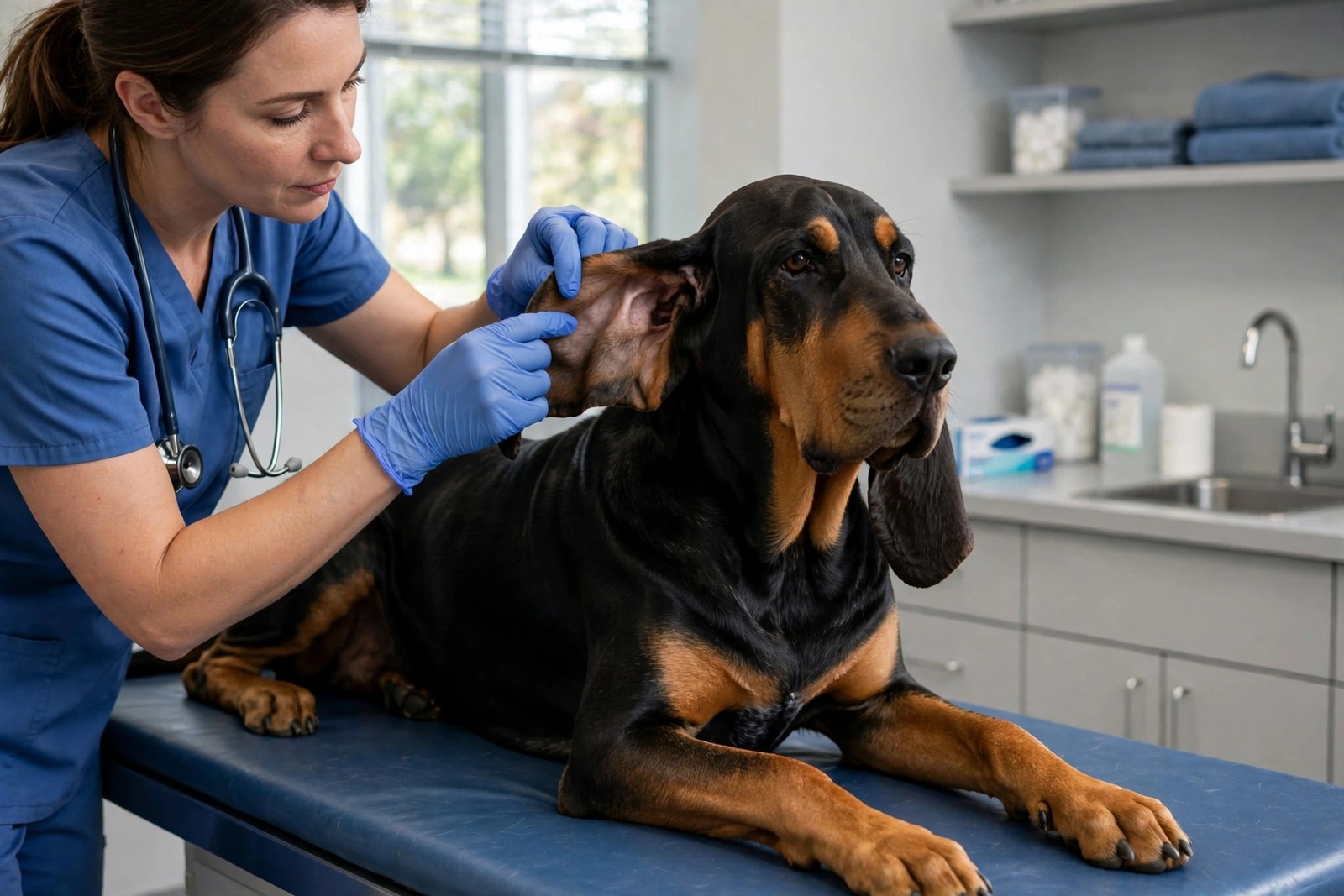
One Full Checkup a Year for an Adult Coonhound
A healthy adult Black and Tan Coonhound should see a vet once a year for a complete routine checkup. Puppies come in every few weeks during their first months for vaccinations, growth checks, and parasite screening, and senior Coonhounds should move to twice-yearly visits so that weight, joint comfort, heart health, and internal screening results can be tracked in shorter steps. A big scent hound who still eats enthusiastically can hide a great deal, and shorter senior intervals catch drift earlier.
The standard annual exam covers heart and lungs, teeth and gums, eyes, skin and coat, abdomen, joints, and weight. For this breed, though, one part of the exam deserves extra time and a direct conversation: the ears.
Long Ears Are the Black and Tan's Standing Agenda Item
A Coonhound's long, low-set ears hang over the ear canal and limit air flow, which creates the warm, damp conditions in which ear irritation thrives. At every routine visit, ask the vet to look deep into both canals rather than relying on what you can see at the surface, and to tell you honestly whether the cleaning routine you are using at home is keeping up. Leave with a clear picture of what a healthy Coonhound ear looks and smells like for your dog, so you can judge changes against that baseline.
At home, lift each ear weekly and look and sniff. A mild, neutral smell and pale, dry skin are normal; a yeasty or sour odour, redness, dark discharge, or a dog who flinches when the ear is touched means an appointment belongs in the next few days, not at the annual visit months away. Head shaking after swimming or bathing deserves the same prompt response, since trapped water is a common starting point for trouble in this breed.
Weight, Nose, and a Hound's Honest Appetite
Black and Tan Coonhounds love food and follow their noses straight to it, which makes steady weight gain the quiet risk of middle age. An overweight hound puts extra load through hips and elbows and tolerates summer heat and long hunts poorly. Use the annual visit for an honest body-condition assessment, then measure meals at home rather than eyeballing them, and count the extras a hound collects from counters, bins, and kind visitors.
Hips, Feet, and a Dog Who Covers Rough Ground
A working or hiking Coonhound covers serious ground over uneven, wet ground. The annual exam should include a gait check, a feel of hips and elbows, and a close look at feet: interdigital skin, torn nails, cracked pads, and anything lodged between the toes after time in brush and mud.
Book earlier if lameness lasts beyond a day or two, if a foot stays swollen or licked raw, or if your hound cries out on a movement he normally makes without thinking. Scent hounds push through discomfort when a trail is interesting, so your report of what happens at home, on ordinary days, carries real diagnostic weight.
Senior Coonhounds Benefit From Twice-Yearly Tracking
As your Coonhound ages, grey spreads over the muzzle, deep sleep replaces restless scenting around the house, and recovery from a long day outdoors takes longer. Twice-yearly visits at that stage let the vet follow weight, muscle condition, dental health, ear status, and screening results as a trend instead of isolated snapshots. Bring notes on appetite, water intake, night-time restlessness, and any new lumps you have felt while grooming, with rough dates for when each first appeared.
A tidy record makes those comparisons possible wherever your dog is treated, and KinsLe's Pet Passport holds your Coonhound's ear history, screening results, and vaccinations in a single portable packet that any vet can work from.