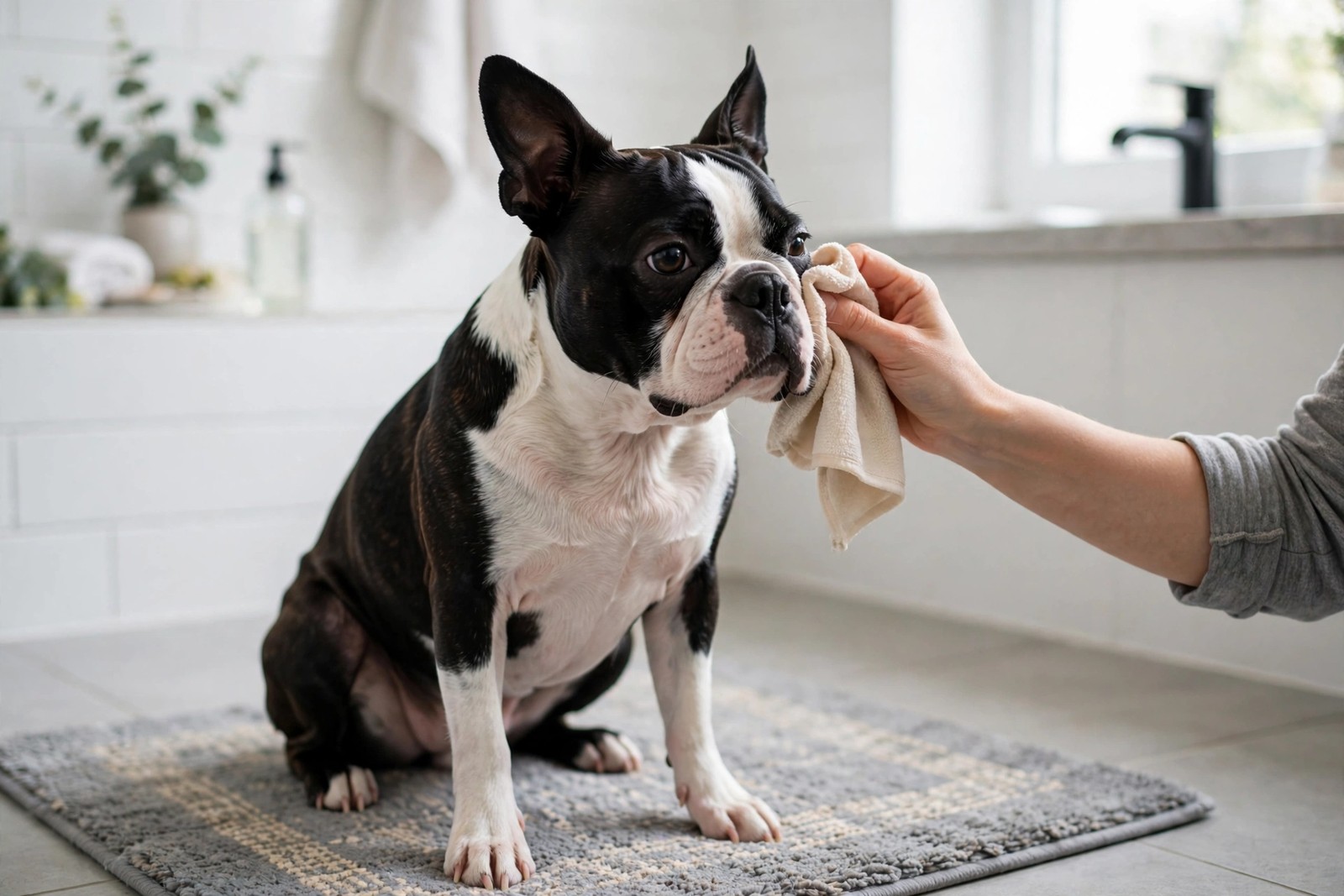
A Boston Terrier is a low-coat, high-detail breed. The tuxedo coat itself takes minutes a week, but the flat face, tight tail, fast-growing nails, and sensitive skin set the real schedule. Owners who only think about baths miss the jobs that actually matter for this breed.
The Weekly Rhythm
Brush once a week with a soft bristle brush or rubber grooming mitt, working in the direction the short hair lies. Expect five to ten minutes, not a session. That pass lifts loose hair — Bostons shed more than their smooth coat suggests, especially in spring and fall — spreads skin oils, and gives you a hands-on check for the dry, flaky patches and small rashes this breed is prone to along the back and belly.
Wipe the facial folds several times a week, and daily for dogs whose folds stay damp. Use a soft, damp cloth, clean inside each crease around the nose and under the eyes, then dry thoroughly, because trapped moisture in a fold is what leads to redness and a sour smell. Do the same quick dry around the screw tail after baths and wet walks.
Baths, Nails, Ears, and Teeth
Bathe every four to six weeks in lukewarm water with a gentle dog shampoo, sooner only after a genuinely muddy outing. Bathing more often strips a Boston's thin coat and commonly shows up as itching and flaking, so resist weekly baths unless your veterinarian advises them for a skin condition. Rinse folds especially well and dry them last.
Trim nails every three to four weeks. Boston nails grow into the quick quickly when walks are mostly on grass, and you will hear clicking on hard floors before you see the length. Check ears weekly: look for redness, dark wax, or odor, and clean only the outer ear with a vet-approved cleaner. Brush teeth several times a week if your dog allows it, working up from a finger brush, since small jaws crowd teeth and trap plaque.
Puppies, Seniors, and Skin Signals
A Boston puppy needs the handling habit more than the grooming itself: thirty seconds of brushing, a paw held, a fold touched, a few times a week from the first month home, always ending before fussing starts. Seniors often need nails checked every two to three weeks because they walk less and wear less off, and their skin thins, so use softer brushes and warmer rooms.
See your veterinarian promptly if fold skin stays red or smelly despite daily drying, if scratching breaks the skin, or if ear odor returns within days of cleaning. Those patterns point to allergy or infection questions that grooming alone cannot settle, and early visits are far simpler than treating raw folds.
A Schedule That Survives a Busy Household
Write the breed's split rhythm down where everyone sees it: brush Sundays, folds on bath days and midweek, nails monthly, ears with the weekly brush. When two people each assume the other wiped the folds, the fold is where the problem starts. KinsLe's Care Teams turns that split Boston schedule into named assignments with timestamps on completion, so the daily fold check and the monthly nail trim each have an owner and a record.