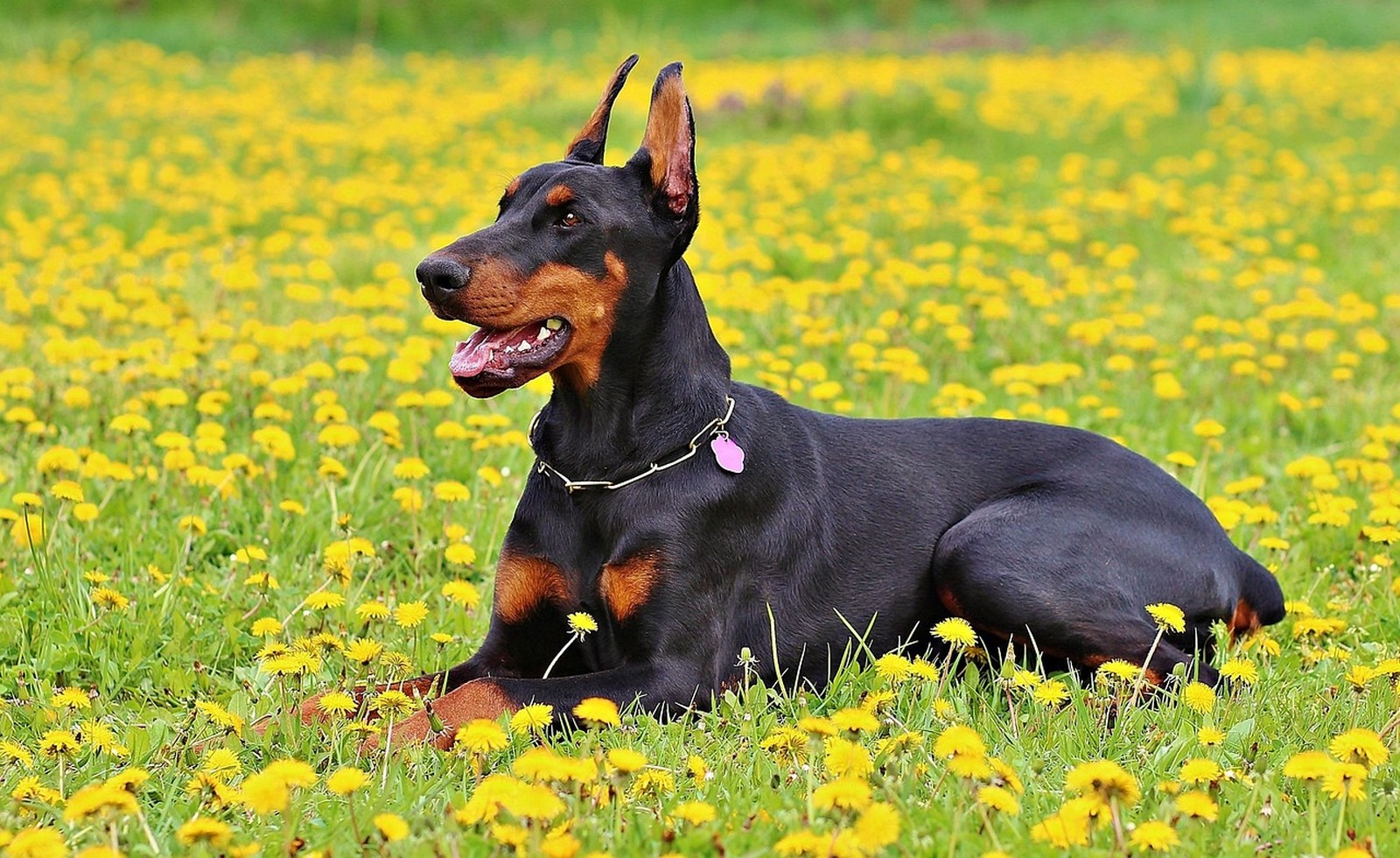
Compared with almost any breed on a grooming list, the Doberman is refreshingly little work — and that is the honest headline. The short, smooth, close-lying coat has no undercoat, no feathering, and no trim. Owners switching from a high-maintenance breed often over-groom this one; the skill is doing the small routine well instead.
The Weekly Once-Over
Brush once a week for about five minutes with a rubber curry brush or grooming mitt, first against the coat growth to lift dead hair and skin flakes, then with it to lay the coat flat and glossy. Dobermans shed lightly all year and a little more in spring, and the weekly pass is also your skin check: this breed commonly shows dry flaking along the back and thinning on the flanks, both worth noticing early and mentioning to your veterinarian if they spread or itch.
Wipe the dog down with a damp cloth between baths after muddy or pollen-heavy outings instead of reaching for shampoo.
Baths Only When They Earn It
Bathe every six to eight weeks, or when the dog is actually dirty or smelly. More frequent bathing is the most common Doberman grooming mistake — it strips the limited natural oil from a single coat and turns mild dryness into persistent itching. Use lukewarm water, a gentle dog shampoo, rinse very thoroughly, since residue under a short coat still irritates, and dry fully; Dobermans feel the cold, so winter baths belong in a warm room with a complete dry afterward.
Where the Real Schedule Lives: Nails, Ears, Teeth
Trim nails every two to three weeks. An athletic, heavier dog wears nails unevenly — dewclaws especially keep growing while weight-bearing nails wear — and long nails on a powerful breed change foot posture fast. Check ears weekly: cropped or natural, look for redness or odor and clean the outer ear only; Doberman ears that smell or produce dark discharge warrant a veterinarian visit. Brush teeth several times a week, scaling up from brief sessions, and wipe the corners of the eyes as needed.
Puppies, Seniors, and Skin Watch
Doberman puppies need handling practice in short daily doses — paws, ears, mouth — so a large adult accepts nail care calmly. Seniors may need gentler, more frequent nail checks as activity drops, and slower, warmer baths. Ongoing hair thinning, bumps, or itching that outlasts a bathing correction is a skin conversation for your veterinarian, not a cue to change shampoos repeatedly.
Because this breed's list is short, weeks slide by with nothing visibly overdue until nails are clicking, which is why KinsLe's Care Teams suits a Doberman household: assign the weekly brush, fortnightly nails, and weekly ear check once, and each completion is timestamped for everyone to see.