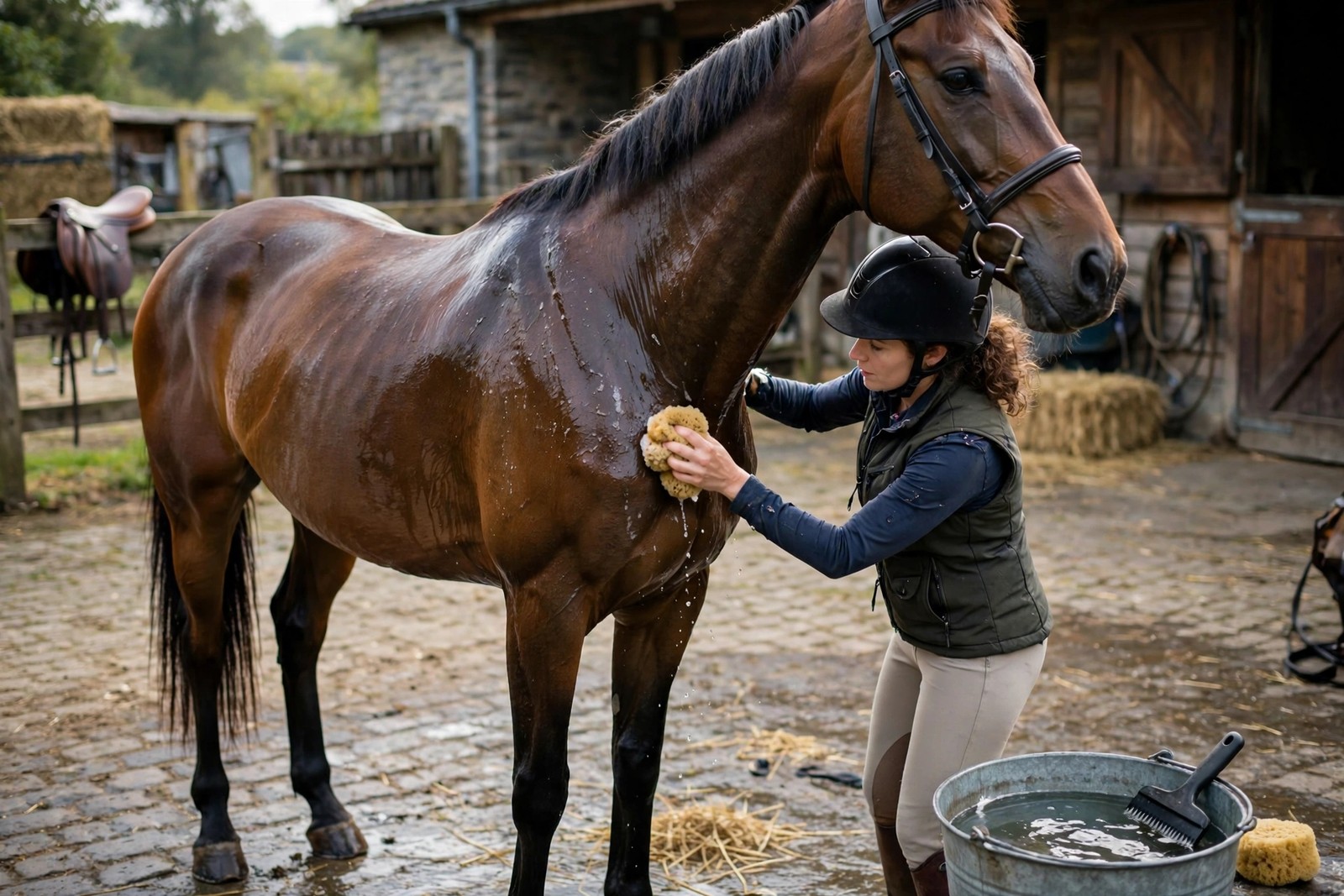
A horse does not need a bathing schedule in the way a dog with an appointment book might. The useful distinction is between a full shampoo bath, which should happen only as needed, and a plain-water rinse, which can happen as often as work and weather call for. Confusing the two is how horses end up washed weekly with shampoo, standing with a dull, dry coat and itchy skin, while their owners believe they are doing extra care rather than extra stripping.
What a shampoo bath is for
Book a full bath around a reason. Before a show or competition, a bath lifts the ingrained dust that brushing cannot reach and lets plaits sit neatly. After a horse has rolled in manure or caked mud that has dried into the coat, a bath may be the only practical reset. Occasionally a veterinarian advises a specific wash routine for a skin condition, and that advice overrides general guidance for as long as the vet sets it. Outside reasons like these, a healthy horse at grass or in ordinary work can go long stretches with no shampoo at all and have a better coat for it.
The oils in a horse's coat are functional. They carry water off the hair so a horse standing in rain stays dry at the skin, they keep the coat lying flat and shining, and they protect the skin underneath. Shampoo is designed to remove grease, so every full bath removes that protection as well as the dirt, and the coat needs days afterwards to rebuild it. Bathing just before turning a horse out in cold, wet weather is therefore poor timing as well as unnecessary work.
Rinsing: the everyday tool
After hard or hot work, rinsing or sponging with plain water removes sweat, dust, and saddle-area salt without touching the coat oils much at all. Scrape the water off afterwards so your horse is not left dripping and chilled, walk until the breathing settles, and rug or shelter according to the weather. Sweat left to dry makes a horse itchy and can leave tide-mark stains on the coat, so this rinse is genuinely useful care, not a cosmetic extra. On a clipped horse in winter, sponge only the sweaty areas rather than soaking the whole body, and dry those areas thoroughly before rugging.
Mud needs patience rather than water. Let wet mud dry, then brush it out; hosing muddy legs daily in winter keeps skin permanently damp and invites mud fever, a painful scabby condition of the heels and lower legs that needs veterinary attention if it takes hold. If legs must be washed, dry them completely, including the heels and the backs of the pasterns.
Bathing well when a bath is due
Choose a warm part of the day, use water that feels comfortably lukewarm on your own wrist, and wet the coat through before shampooing with a product made for horses, worked in with a mitt or body brush. Keep shampoo and run-off out of the eyes and ears, wash the face last with a clean damp sponge and plain water, and rinse until the water runs completely clear, because dried shampoo residue is a common cause of post-bath itching. Sweat-scrape, then dry in the sun, under a cooler rug, or in a sheltered yard before turning out, and never put a horse away wet in a cold stable.
Foals, nervous horses, and horses new to you need the process introduced in stages, starting with sponging, before a hose and a full bath are fair to ask for.
So the answer is simple: shampoo only as needed, rinse with plain water whenever sweat and dust call for it, and let daily brushing do the routine cleaning. KinsLe Care Teams supports that distinction by letting you log a rinse and a full bath as different tasks on a horse's care list, so everyone helping knows exactly which one was done and when.