
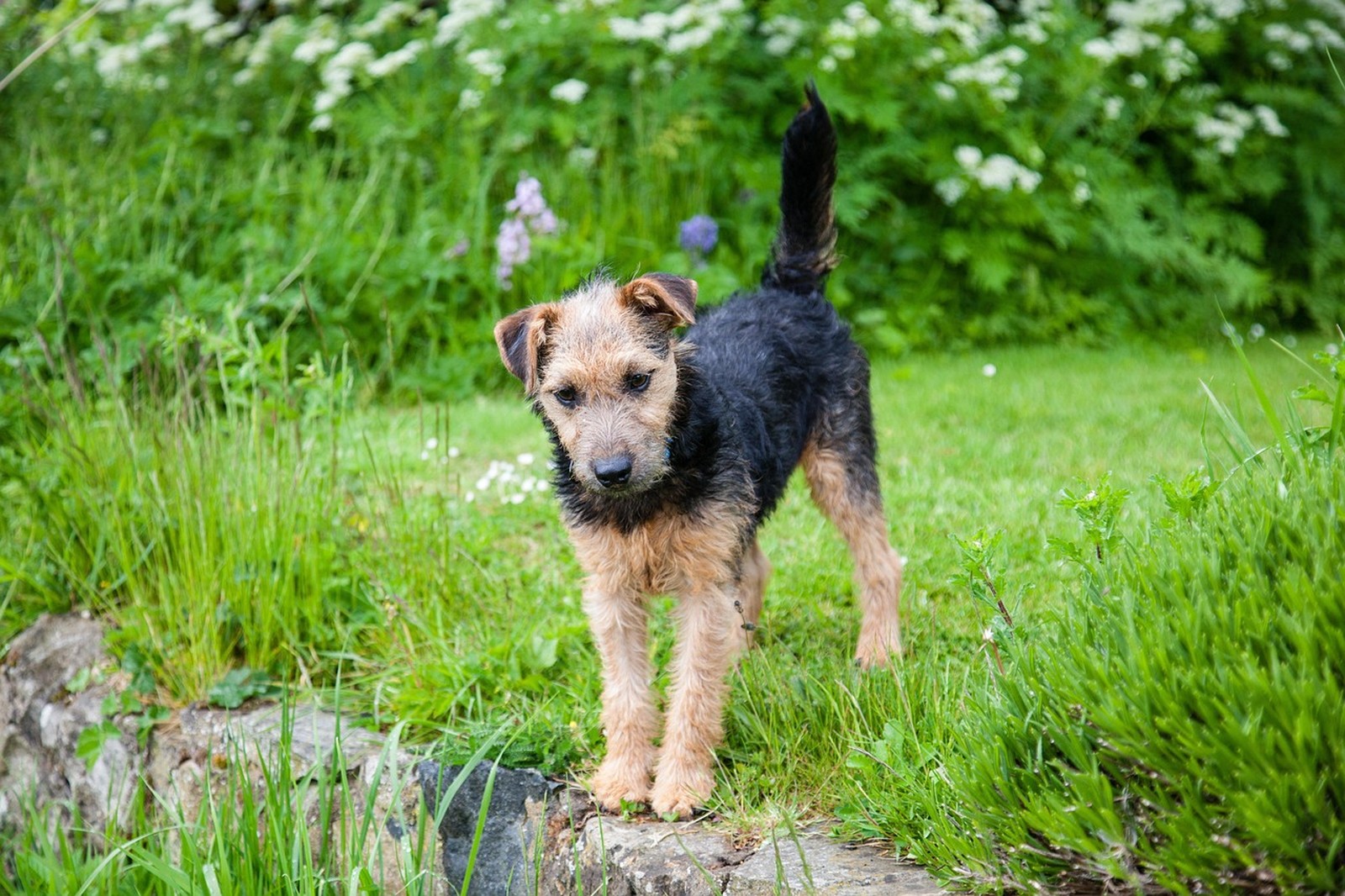
One routine checkup a year suits a healthy adult Lakeland Terrier. Puppies need several visits in their first months for growth monitoring and preventive care, and older Lakelands are usually seen twice a year so the vet can follow teeth, legs, eyes, and weight more closely in a small breed that can live an active, vigorous life. Lakelands are sturdy and self-confident, traits that make them delightful and also make them prone to carrying on through minor injuries, which is precisely why a scheduled hands-on exam matters more than waiting for obvious signs.
Legs, patellas, and a terrier that will not complain
At the checkup the vet will watch your Lakeland move, feel each leg, and check the kneecaps and hips as part of the standard small-terrier review. Your contribution is the history: whether the dog ever skips a step on a hind leg, hops for a few strides, or slows on steep Lakeland-style terrain and then recovers. Note which leg, how often it happens, and whether it follows digging, jumping, or long walks. A terrier bred to follow quarry over rocks and through tight places will rarely dramatise discomfort, so these small, specific observations are often the only clue the vet gets.
Coat, skin, and teeth in a wiry jacket
The Lakeland's wiry double coat is traditionally hand-stripped, and the skin beneath it should be checked at least at the yearly visit for irritation, especially where a harness sits and around the ears and muzzle furnishings. Teeth are a real focus in a small breed with a determined working mouth: the vet will inspect for tartar build-up, sore gums, and any damaged tooth from gripping and digging. Bad breath, dropping biscuits, or chewing on one side are reasons not to wait. Because Lakelands are bright and strong-willed, practise brief mouth and paw handling at home so the clinic exam is quick and unstressful.
When a Lakeland should be seen sooner
Book earlier for limping that lasts beyond a day of rest, repeated skipping on one leg, swelling around a joint, or reluctance to jump and play. Persistent scratching, a lump felt during stripping, appetite loss, or a marked change in the breed's typical bold, cheerful character also warrant a prompt visit. Puppies that are not gaining and seniors that lose weight or dental comfort need attention ahead of schedule. Kept yearly, the routine checkup gives this tough little dog a documented baseline, so the small changes its temperament would otherwise conceal are caught while they are still small.
Small notes for a dog that hides big efforts
A Lakeland Terrier's toughness means its file should record the things the dog itself would never report: skipping steps, brief limps after digging, dental comments, skin findings from stripping sessions, and clinic weights across the years. Note which leg was involved and what the dog had been doing, because that context is what turns a vague memory of occasional hopping into something a vet can assess properly. Photographs of stance and short clips of normal movement at home also help at senior visits. Collected in Pet Passport on KinsLe, those small, honest notes ensure your Lakeland's stoicism never delays the care it needs.