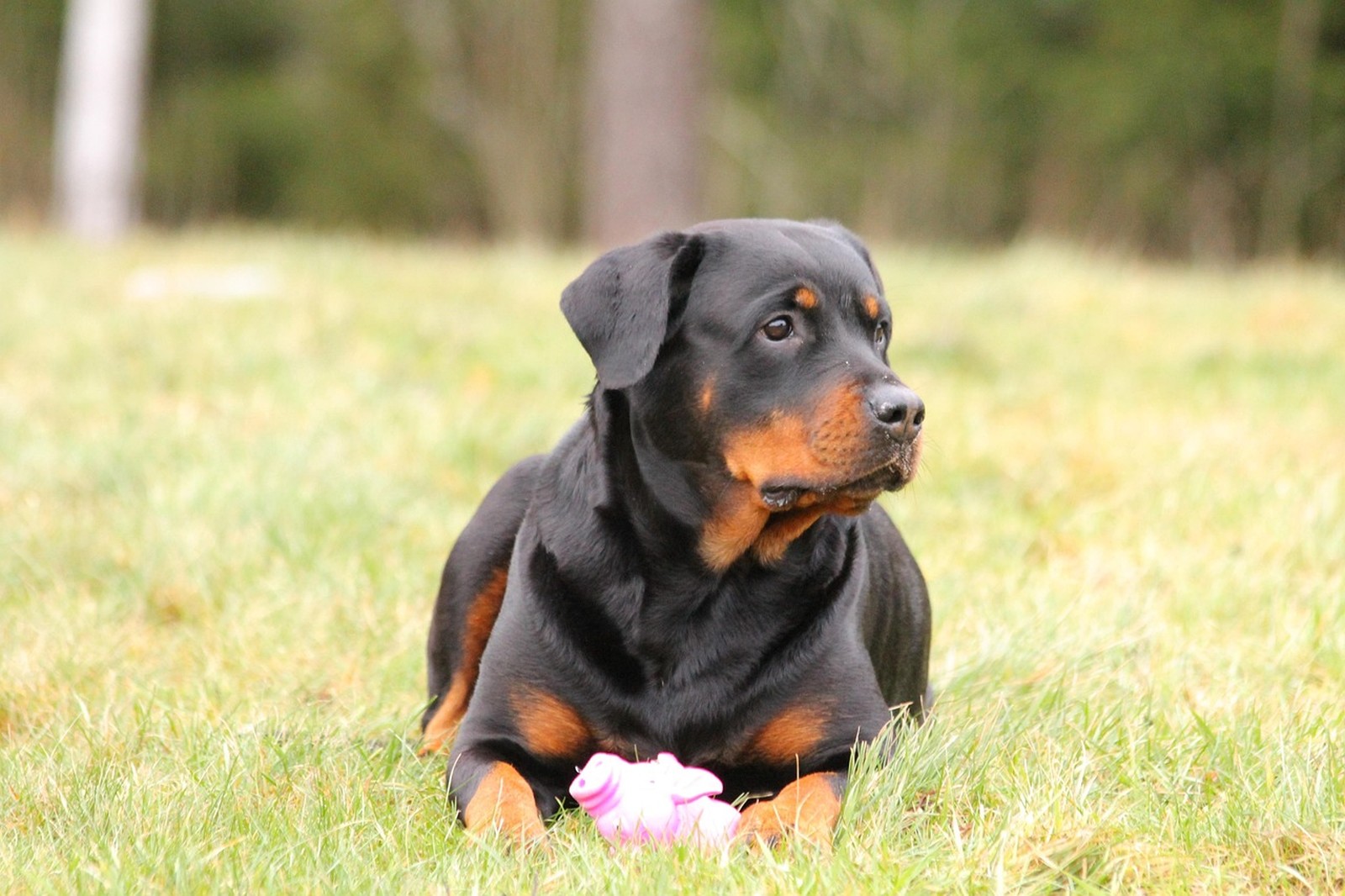
A Rottweiler looks wash-and-go, and mostly is — but the medium-length black coat is a true double coat, with a dense undercoat that sheds in quantity and hides skin problems until they are established. The routine is light in minutes and heavy only in consistency.
Weekly Brushing, Seasonal Step-Up
Brush once a week for ten to fifteen minutes with an undercoat rake followed by a bristle brush or rubber mitt. Work the thick neck and shoulder area, the backs of the thighs, and the tail base, where undercoat packs thickest. Expect a modest amount of hair most of the year, then a clear increase in spring and fall when the undercoat turns over; during those weeks brush two to three times a week so loose coat comes out in sessions instead of coating the house, and so you can see the skin underneath as it clears. Never shave a Rottweiler's coat down — the double layer protects skin and regulates temperature, and your veterinarian can advise if a medical clip is ever required.
Part the coat as you brush and look at skin, not just hair. On a large black-coated dog, early flaking, small bumps, a thinning patch, or a sore between the toes is easy to miss in normal petting and obvious during a deliberate brush-out.
Baths, and Drying a Big Dog Properly
Bathe every six to eight weeks, or sooner after mud, swimming, or a shedding peak — a warm bath mid-shed loosens undercoat so the next day's brush removes far more. A dog of this size needs a non-slip surface, lukewarm water, thorough rinsing (shampoo left in a dense coat itches), and complete drying down to the undercoat, which can stay damp against the skin long after the top feels dry and then smell stale.
Nails, Ears, Teeth, and Jowls
Trim nails every three to four weeks. Weight-bearing nails on hard ground wear somewhat, but dewclaws and nails on quieter indoor dogs do not, and on a dog this strong, nail care is far easier maintained monthly than wrestled back quarterly. Wipe drool and food from the jowls and lip folds after meals — Rottweiler lip folds collect moisture and can get sore and smelly if never cleaned. Check ears weekly for redness or odor and clean the outer ear only. Brush teeth several times a week.
Puppies and Seniors
Rottweiler puppies should get brief, calm handling sessions several times a week so a very large adult accepts brushing and nail trims without a contest. Seniors benefit from slightly more frequent nail checks as activity falls, and from grooming on a surface they do not have to climb onto.
The shedding-season step-up is where households lose track of whose turn the extra brush-outs were, so KinsLe's Care Teams lets you add those sessions as named assignments during the heavy weeks and mark each one complete with a timestamp, then settle back to the single weekly session.