
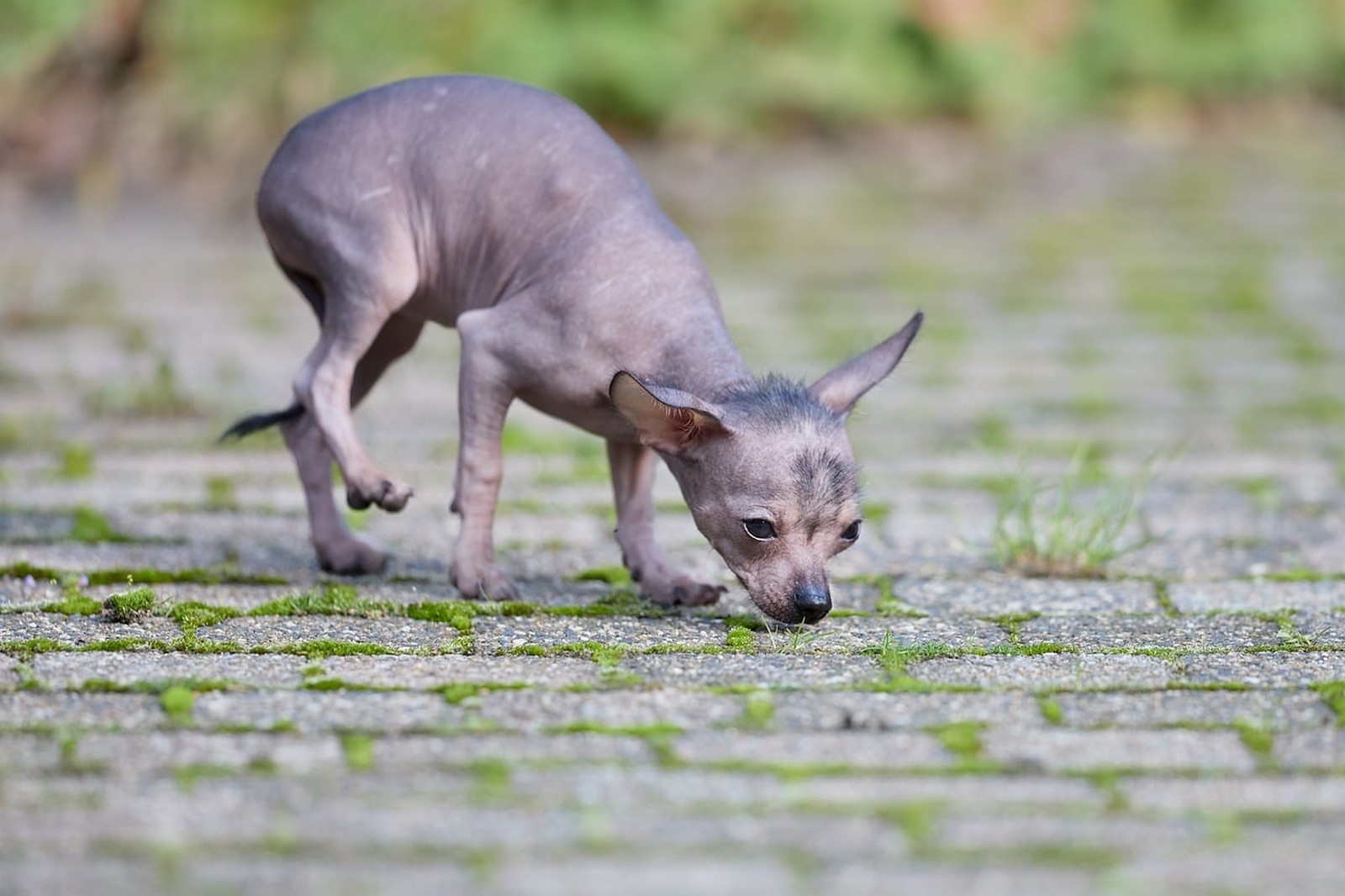
The yearly checkup for a Xoloitzcuintli
A healthy adult Xoloitzcuintli needs one routine vet checkup a year. Puppies attend more often in their first months, and older dogs should be seen twice a year. Xolos come in hairless and coated varieties and in three sizes, and while the coated dog's exam looks much like any other breed's, the hairless dog brings a different checklist, led by skin that lives exposed to the world and teeth that may simply not all be there.
Skin: the hairless dog's main event
Without a coat, a Xolo's skin takes direct sun, friction from harnesses and bedding, and every dry or greasy patch is visible — which is an advantage if you use it. At the annual exam the vet inspects the whole surface for sun damage, clogged pores and acne-like bumps, dry flaking, rashes in the folds, and any new lump or sore that is not healing. Adolescent hairless dogs in particular can go through a spotty phase, and the vet can help you separate normal teenage skin from an infection that needs attention.
Bring your skin-care routine to the appointment, literally if possible. What you bathe her with, how often, whether you moisturise, and what you use for sun protection all shape the vet's advice, and some products that suit coated breeds clog or irritate exposed skin. A sore that keeps returning in the same place, rapid colour change in a patch of skin, or scratching that breaks the surface should be seen promptly, not saved for the annual visit.
Teeth that arrive incomplete
Hairlessness in this breed is genetically linked with dentition, and many hairless Xolos are missing some teeth or have teeth that sit unusually. That is normal for the breed, but it makes the dental part of the checkup genuinely important: the vet checks which teeth are present, whether gums are healthy around them, and whether the remaining teeth are collecting tartar faster because chewing is uneven. Coated Xolos usually have fuller dentition, yet still earn the same careful mouth exam.
At home, drooling, dropping food, or a new reluctance to crunch are dental signals in any Xolo. Puppy visits are where the vet maps which adult teeth have arrived and which are absent, setting the baseline every later exam compares against — a record well worth keeping accurately for this breed.
The rest of the annual picture
Beyond skin and teeth, the visit covers heart and lungs, eyes, ears, weight, and movement. Xolos are athletic, primitive-type dogs, and keeping them lean protects joints in the toy size and the standard alike. The vet will also ask about temperature comfort, since a hairless dog feels cold and heat differently from a coated one, and about appetite, drinking, and energy as the all-purpose early-warning set.
Senior Xolos moving to twice-yearly visits may have screening blood and urine tests suggested to watch kidney and liver function, and skin checks gain importance with age, as older exposed skin produces more lumps, warts, and slow-healing spots whose changes in size or colour the vet needs reported early.
Making each visit count
Photograph skin marks you are watching, with something for scale, and note when they appeared; a hairless dog's skin tells its history visibly, and dated photos turn worry into evidence. Write down bathing and product changes too, because a rash that follows a new shampoo by two days is a connection the vet can only make if you supply the timeline.
All of those skin notes, dental maps, and screening results belong together rather than scattered across visits, and KinsLe's Pet Passport gives a Xoloitzcuintli exactly that: one clear record her skin and teeth history can be followed in, year after year.