No calendar says the brand must rotate
A dog doing well on a complete, balanced food does not need a brand change for variety's sake. Dogs do not get bored with a bowl the way people get bored with a menu, and a stable diet gives you a stable baseline: you know his normal stool, normal coat, and normal energy, so any change stands out. Frequent swapping for novelty mostly buys you repeated transition weeks, pickier eating as he learns to hold out for something new, and difficulty pinpointing which ingredient upset him when his stomach objects.
Some owners rotate proteins within one trusted range and their dogs cope well, but that is a preference, not a requirement. If you do rotate, each new food still deserves a gradual introduction rather than an overnight switch.
The reasons that genuinely justify a switch
Life stage is the clearest one: a puppy food, an adult food, and a senior food are built differently, and the moves between them are planned changes, not whims. A vet may also suggest a different food for weight control, a sensitive stomach, skin trouble, or a diagnosed condition needing a specific nutritional profile. Other honest reasons include the current food being discontinued, a formula changing in a way your dog clearly dislikes, or persistent problems — recurring loose stools, excessive wind, dull coat, relentless scratching — that persist after simpler causes are ruled out.
Price, bag size, and availability are practical reasons too, and there is no shame in them. The method matters more than the motive: whatever prompts the move, transition properly.
How to swap without upsetting the stomach
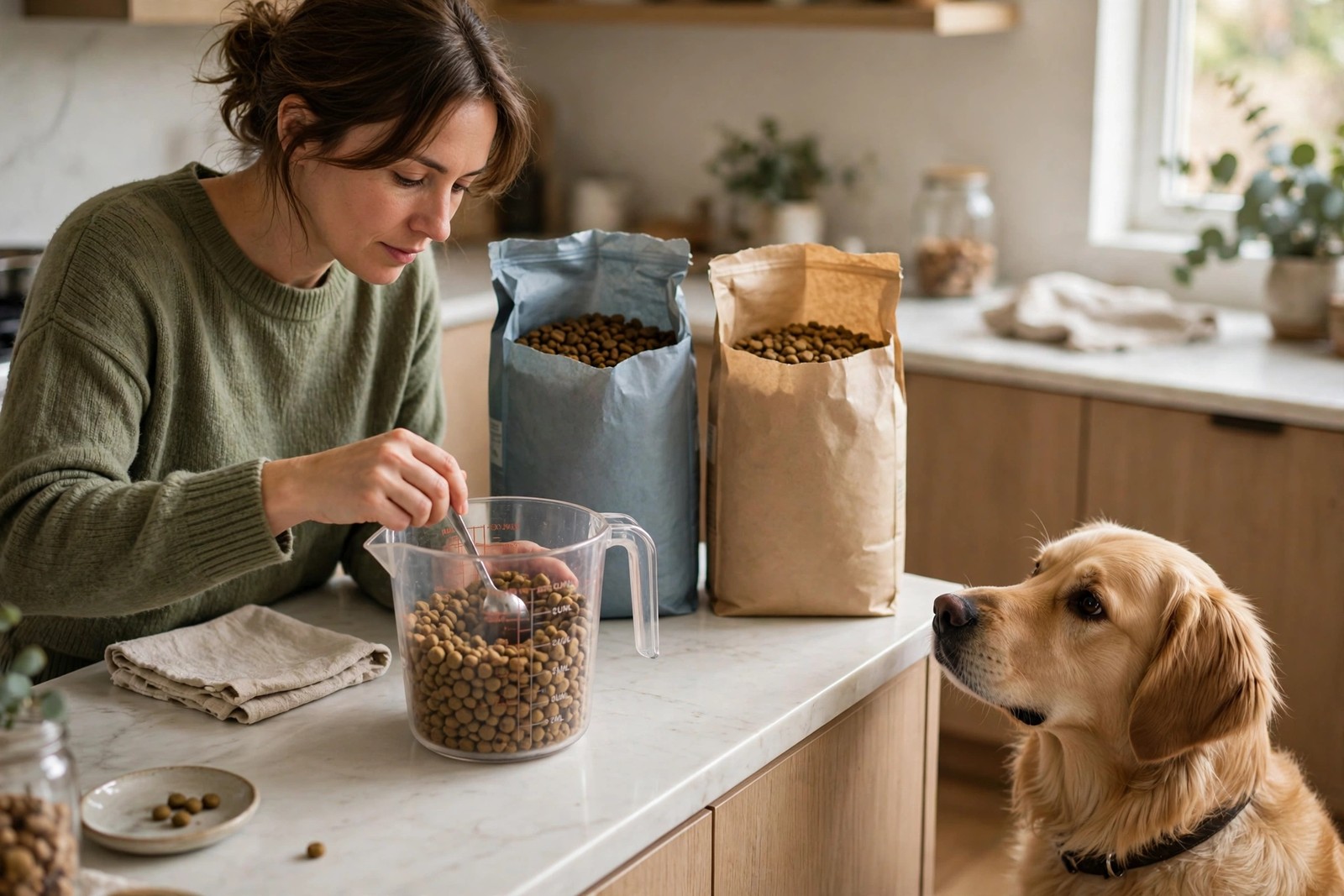
Blend the new food into the old over about a week. Start with roughly a quarter new food for a couple of days, move to half and half, then mostly new, then fully new, slowing down if stools soften at any step. Dogs with sensitive digestion may need ten days to two weeks, and one step back usually settles things better than pushing through diarrhoea. Keep treats and chews constant during the swap so the new food is the only variable, and feed measured amounts — a richer new food in the old scoop size can quietly add weight.
Expect mild stool changes in the first days. Persistent vomiting, refusal to eat, blood in the stool, or a dog who seems unwell is not normal transition fallout and warrants a vet call rather than another brand hop.
Settling on the new food and judging it fairly
Give a new food a fair trial once the transition finishes: several weeks of consistent feeding before you judge coat, stool quality, weight, and enthusiasm. Changing again after four unsettled days tells you nothing except that transitions are disruptive. Keep the bag or a photo of its label, note the date you switched and why, and record how he responded — that history is gold if a vet later investigates a food reaction and asks what he has eaten over time.
Share the transition plan in writing with anyone else who feeds him, since one full bowl of new food from a well-meaning helper can undo three careful days. In KinsLe, Care Teams lays out that day-by-day mix as assigned feeding tasks, so each person serves the right blend and marks it done for the next feeder to see.