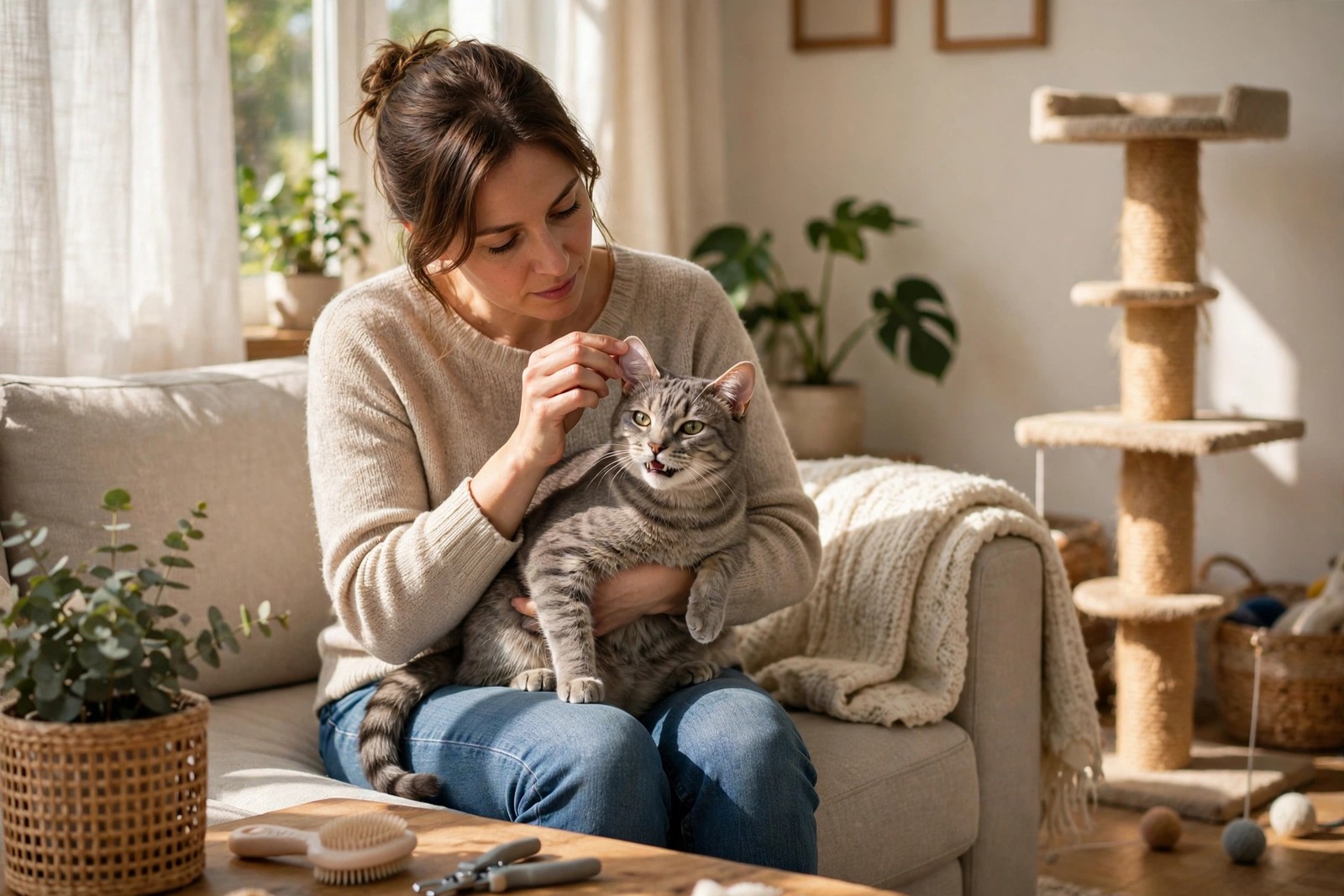
A weekly rhythm suits this job: ears and teeth checked at the same sitting, in under a minute once your cat accepts the routine. Start with the ears: the outer ear and the entrance just inside it should be a clean pale pink, with only a little wax present. Then lift each upper lip for the teeth, checking the big cheek teeth and the gum line. For teeth, that quick look matters because cats conceal oral pain expertly. Pair the check with something pleasant (a stroke session, a treat afterwards) and the same time each week — after Sunday dinner works for many households — so it becomes a habit rather than an event.
What Should Trigger a Vet Call
In ears: dark crumbly debris that looks like coffee grounds (a classic ear-mite sign), redness, discharge, a sour or yeasty smell, scratching at the ears, head-shaking, or a head tilt. Never push cotton buds or anything else into the canal — you can only see — and do not use leftover drops without advice. In teeth and gums: tartar crust, a red line along the gum edge, bleeding, a broken or discoloured tooth, pink defects at the gum line (possible tooth resorption), bad breath that has changed, or dropping food. What you can see at the surface usually understates what is happening underneath.
Turning Weekly Checks Into a Vet-Ready Record
Treat each check as observation, never as a home diagnosis. Note the date, which ear or which side of the mouth you are describing, and when a change first appeared alongside anything else that shifted — appetite, head-shaking, willingness to crunch dry food. Guidance like this can help you judge how urgent a finding is, but an examination is what lets a veterinarian name the cause, and dated notes or a clear photo of the gum line often show the vet more than a description offered weeks later.
Weekly is the rhythm; findings set the urgency. Same-day contact for a head tilt, loss of balance, a swollen ear flap, or a cat who has stopped eating; a routine appointment for tartar, mild gum redness, or wax that keeps building up despite the cat seeming well.
Because these checks repeat, the dated log is where their value compounds: a line each week on wax, tartar, breath, and appetite builds a picture no single check can give. Wax that thickens over a month, or a gum line that reddens check by check, is a pattern worth showing a vet — and patterns only exist if the entries do. Revisit the log when anything else changes too, since a new home, a new pet, or a new medication can all alter what your cat's ears and mouth normally look like.
Keep those weekly findings alongside the rest of the record — vaccination dates, past visit notes, and any treatment history — so the appointment starts from evidence rather than recollection. Inside KinsLe's Pet Passport, that material travels as one packet for your cat: the check notes from home sit with the clinical history, ready for a vet visit, a trip, boarding, or a handover.