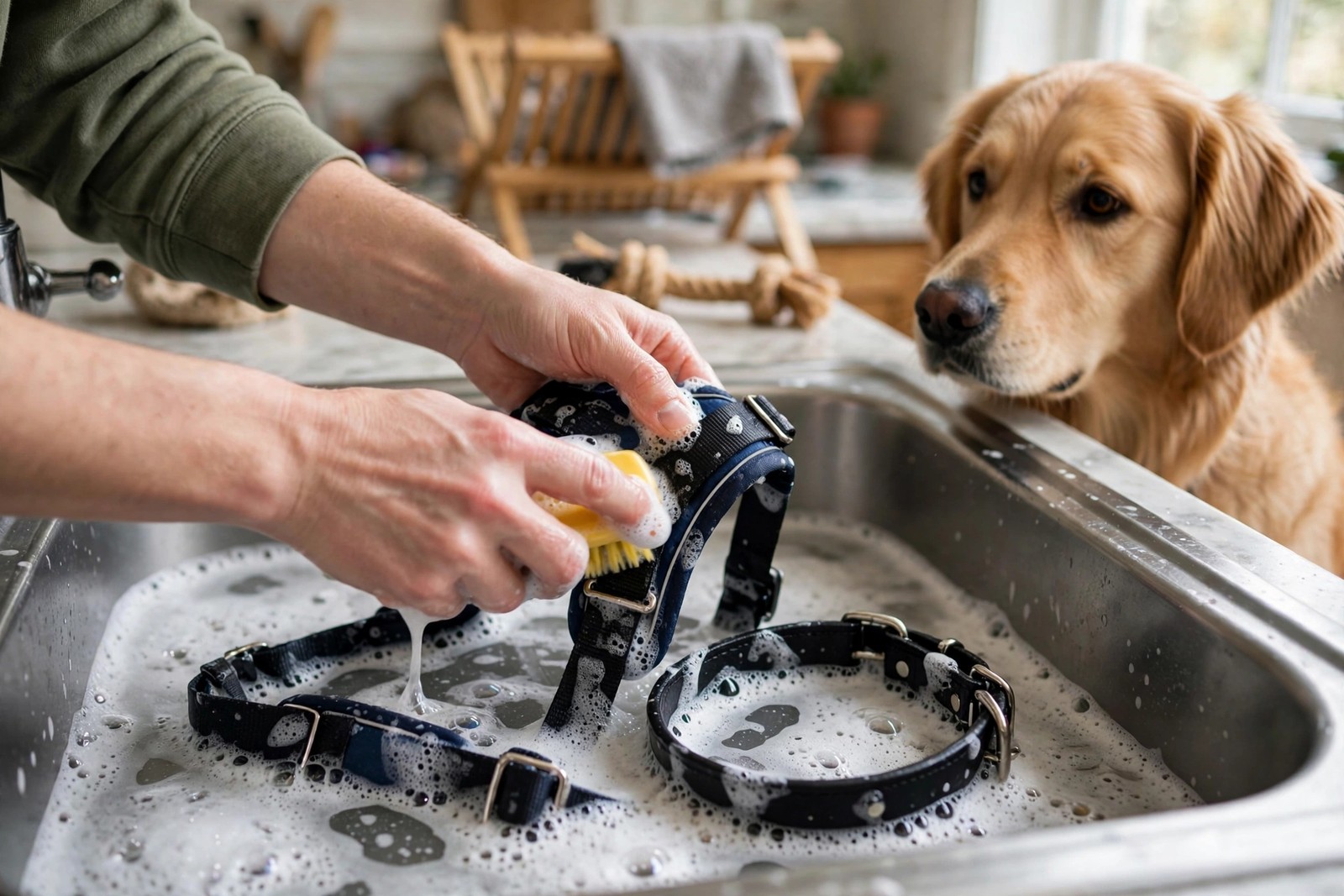
Gear that sits against your dog's neck all day picks up more than you might expect: dried mud, pond water, skin oils, and saliva work into webbing and padding, and damp fabric left unwashed soon smells stale and can rub sore skin. A fortnightly wash suits a typical pet dog, with an extra clean brought forward after swims, muddy walks, or any redness under the collar.
Choosing the Right Wash for Each Material
Nylon and other synthetic webbing tolerate a proper soak: warm water, a little mild soap, and a soft brush along the straps lifts ground-in dirt from the weave. Rinse until the water runs clear, because soap residue left in the fibres can irritate skin, then hang the gear somewhere airy until it is completely dry before it goes back on. Leather behaves differently — soaking stiffens and cracks it — so wipe it down with a damp cloth, use a leather cleaner sparingly, and work in conditioner once it has dried at room temperature, away from radiators.
While everything is off your dog, treat the wash as an inspection as well. Run your fingers along stitching, squeeze plastic buckles to check for cracks, and slide adjusters to confirm they still grip. Webbing that has frayed at the edges or a clasp that no longer clicks shut positively is a replacement, not a repair, because that hardware is what stands between your dog and a busy road.
A Simple Washing Order
Try these in sequence on wash day:
- Fill a basin with warm soapy water and soak nylon collars, harnesses, and leads for fifteen minutes
- Scrub straps and padding with a soft brush, paying attention to the neck-facing side
- Rinse thoroughly, then hang everything to air-dry fully before refitting
- Wipe leather pieces clean instead of soaking, and condition them once dry
- Check buckles, stitching, and adjustment sliders while the gear is in your hands
A spare collar earns its keep here: your dog can wear the dry backup while the washed set finishes drying, rather than going back into a damp strap that chafes. If the skin beneath the collar ever looks red, or hair starts thinning in a band around the neck, look at both fit and cleanliness together, and let your veterinarian examine any soreness that does not settle within a few days.
Keeping the Fortnightly Habit Alive
The easiest trigger is a fixed pairing: gear gets washed on the same day you change bedding or clean food bowls, so the job rides on an existing rhythm instead of relying on memory. Dogs who swim weekly or roll enthusiastically in mud will need the cycle shortened; a mostly indoor senior may stretch it slightly, as long as the fabric still smells neutral and the skin beneath stays calm. For the household side of that rota, KinsLe's Care Teams records each finished wash with a timestamp once the assignee marks it done, so anyone can see whether this fortnight's clean is still outstanding.