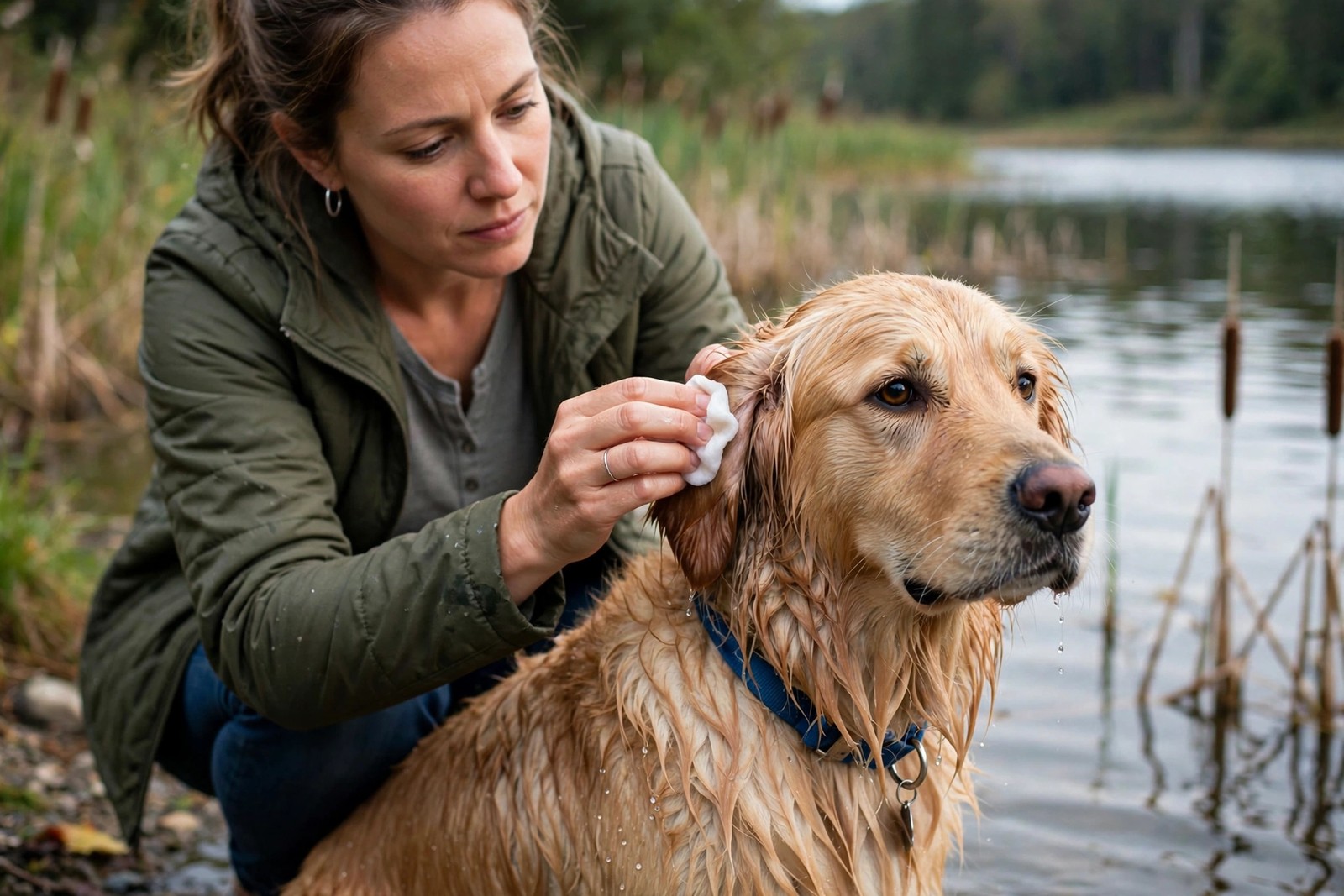
Not every dog needs ear cleaning after swimming: the shake-and-wipe check suits all swimmers, yet fuller drying care matters chiefly for floppy-eared dogs, dogs with hairy canals, dogs prone to ear infections and dogs who swim often. The mechanics are shared — let the dog shake, wipe the outer flap and the part you can see, use a drying cleaner only if the vet recommends it, and never clean a red, painful or infected-looking ear — yet the need behind those mechanics is unevenly spread. Sorting your dog into the right group is the real answer to this question, because over-cleaning a dog who needs little can irritate healthy ears, while under-drying a dog who needs more invites recurring trouble.
Why ear shape changes the answer
A floppy ear flap works like a lid: it covers the canal entrance, slows evaporation and holds warm, damp air against the skin after every swim, so water that would dry from an upright ear in an hour can sit for far longer. Hairy canals add a second trap, since hair inside the entrance wicks water inward and mats against moisture, which is why breeds with hair growing in the ear benefit from their vet's guidance on both drying and whether that hair should be managed. Upright ears ventilate themselves well, and a healthy dog with open ears, no wax build-up and no infection history dries effectively with shaking alone. Judge your own dog by her actual ears — flap coverage, hair, and how the entrance looks a few hours after a swim — rather than by breed label alone, since crosses and individuals vary widely.
History and swim frequency raise the need
A dog who has had even one ear infection moves up a group, because a canal that has been infected before often carries the shape, wax pattern or sensitivity that allowed trouble once, and vets commonly advise a drying routine after water for such dogs. Frequent swimmers move up too: a dog in the water daily through summer never gets the long dry interval that protects an occasional paddler, so moisture load is a dose question as much as a shape question. Dogs who swim in ponds, canals or the sea, then roll in grass or sand, also carry grit and organic matter back into a damp ear, which argues for the careful wipe every time rather than on a rota.
The light-touch routine for dogs who need less
For the upright-eared, clear-history, occasional swimmer, keep the routine deliberately small: let her shake, wipe the flap and visible entrance dry, glance at the skin colour, sniff briefly — healthy ears smell faintly waxy at worst — and be done in under a minute. Resist upgrading to cleaners, buds or deep wiping out of thoroughness; the canal cleans itself by migrating wax outward, and interfering with a system that works creates the irritation you were trying to prevent. Re-sort your dog after any change: a first infection, a new hairy coat change with age, a move to daily swimming, or a vet comment about narrow canals all shift her into the group that gets fuller drying care and, if the vet advises it, a recommended cleaner after swims.
One rule every group shares
Across all groups the stop rule never varies: never clean an ear that looks red, swollen or discharged, smells sour or sweet, or makes your dog flinch, scratch or tilt her head to one side. That ear needs a veterinary examination rather than home cleaning, whatever her usual group, because cleaning a sore ear can drive debris deeper and blur what the vet needs to see. Write down which group your dog is in, what her routine is, and the swim dates when you applied it, so a pattern — say, redness always following pond swims — becomes visible across a season. Sharing that written sort inside KinsLe through Care Teams does quiet, useful work here: the classification travels with the dog to sitters and family, so nobody gives the light-touch dog a deep clean or leaves the floppy-eared swimmer dripping.