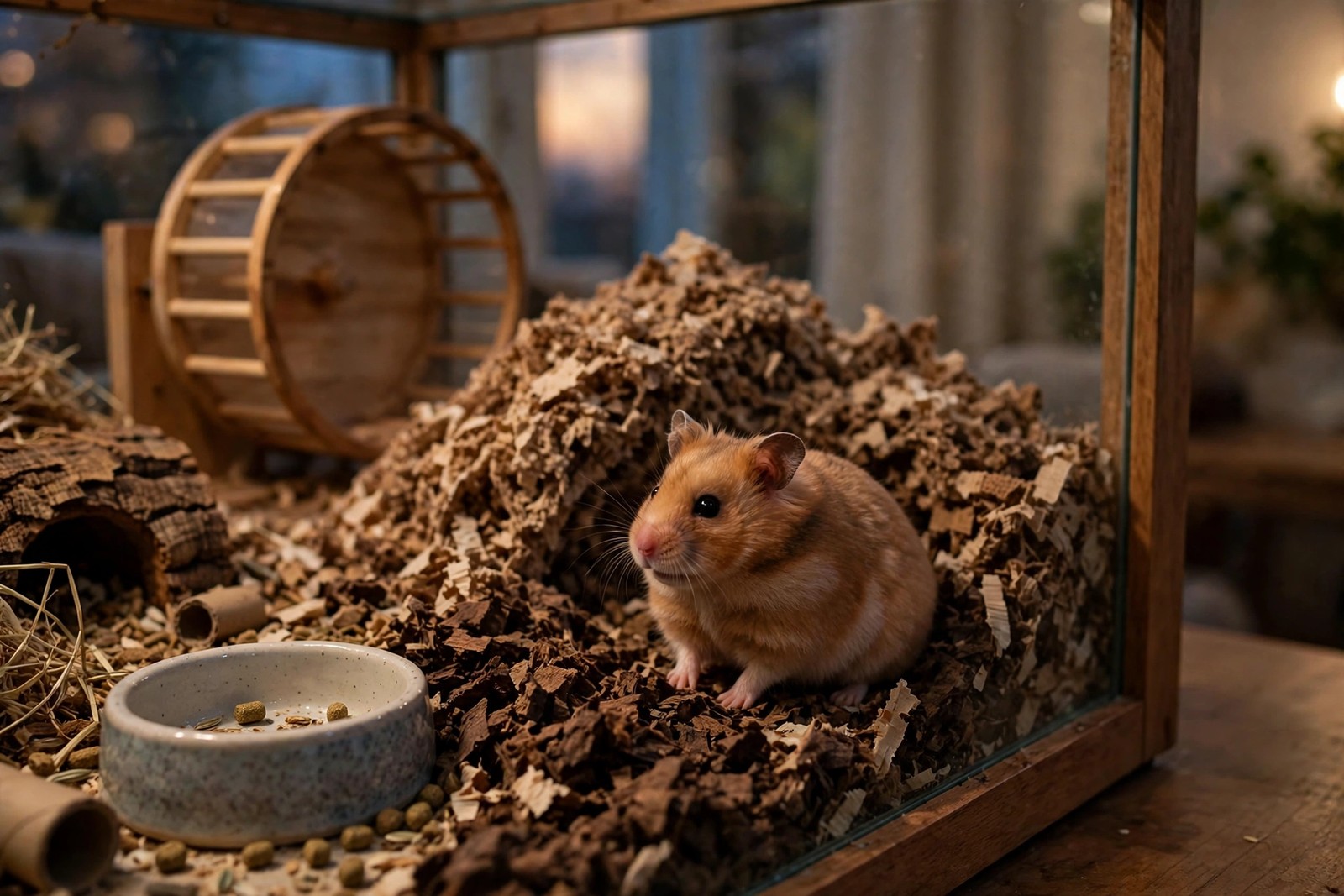
Clean a hamster's cage in layers, not in one big weekly upheaval. Spot-clean every day, change about one-third of the bedding once a week, and reserve a full strip-out for rare occasions such as illness or a cage move. Rotating one-third a week means most bedding has been renewed across three weeks, while enough of the hamster's own scent stays in place for the enclosure to still smell like home. That balance matters because a hamster navigates and feels secure largely by scent, and a cage that suddenly smells of nothing familiar is a genuine stress, not a treat.
The daily spot-clean
Spend a couple of minutes each day on the small jobs. Lift out the damp patch of bedding, which most hamsters concentrate in one toilet corner, remove any fresh food that has been hoarded and is going soft, and pick visible droppings off the surface. Top the water bottle up as needed and check that the ball in the spout moves freely, because a stuck spout leaves a hamster without water even though the bottle looks full. Rinse and refill a water bowl daily if you use one instead, and wash it properly rather than only topping it up.
Do the spot-clean while the hamster is awake in the evening where you can, rather than digging a sleeping hamster out of its nest during the day; disturbing the nest itself should be kept to a minimum, because that is where the hamster feels safest.
The weekly partial change
Once a week, work through the enclosure in sections. Scoop out and replace roughly a third of the bedding, starting with the toilet corner and the areas around the food store, wash the wheel and the food bowl with hot water, and let them dry fully before they go back. Wash reusable items and change disposable ones: that distinction keeps a wheel running quietly and stops odour building up in plastic that a rinse cannot shift. Leave the nest area for last and touch it least, mixing a little of the old, clean bedding back into the new as you go so the scent carries over.
If your hamster keeps a dry-food hoard, replace what you removed with a similar small amount of its usual food, so the animal does not wake to find its store raided and start guarding or over-hoarding. Deep bedding should be pressed back down after cleaning so burrows hold their shape, because Syrian and dwarf hamsters both rely on tunnelling rather than treating deep bedding as decoration.
The rare full clean, and keeping it calm
A complete empty, wash, and dry of the whole enclosure is justified when a hamster has been ill, when parasites are being dealt with on a vet's advice, when an enclosure is being changed, or when odour persists despite the weekly routine. Move the hamster to a secure carrier or playpen with some of its old bedding, work efficiently, use only hot water or a plainly pet-safe cleaner with no strong scent, rinse thoroughly, and let everything dry before fresh bedding goes in. Return some saved, clean old bedding and the hamster's own nest material so the space still carries its scent.
A cage that smells strongly within a day or two of cleaning usually signals an enclosure that is too small or bedding that is too shallow, not a cleaning rota that needs to be harsher. KinsLe's Care Teams can split the daily spot-clean and the weekly partial change between the people who share your hamster's care, with each job timestamped so the rota holds even in busy weeks.