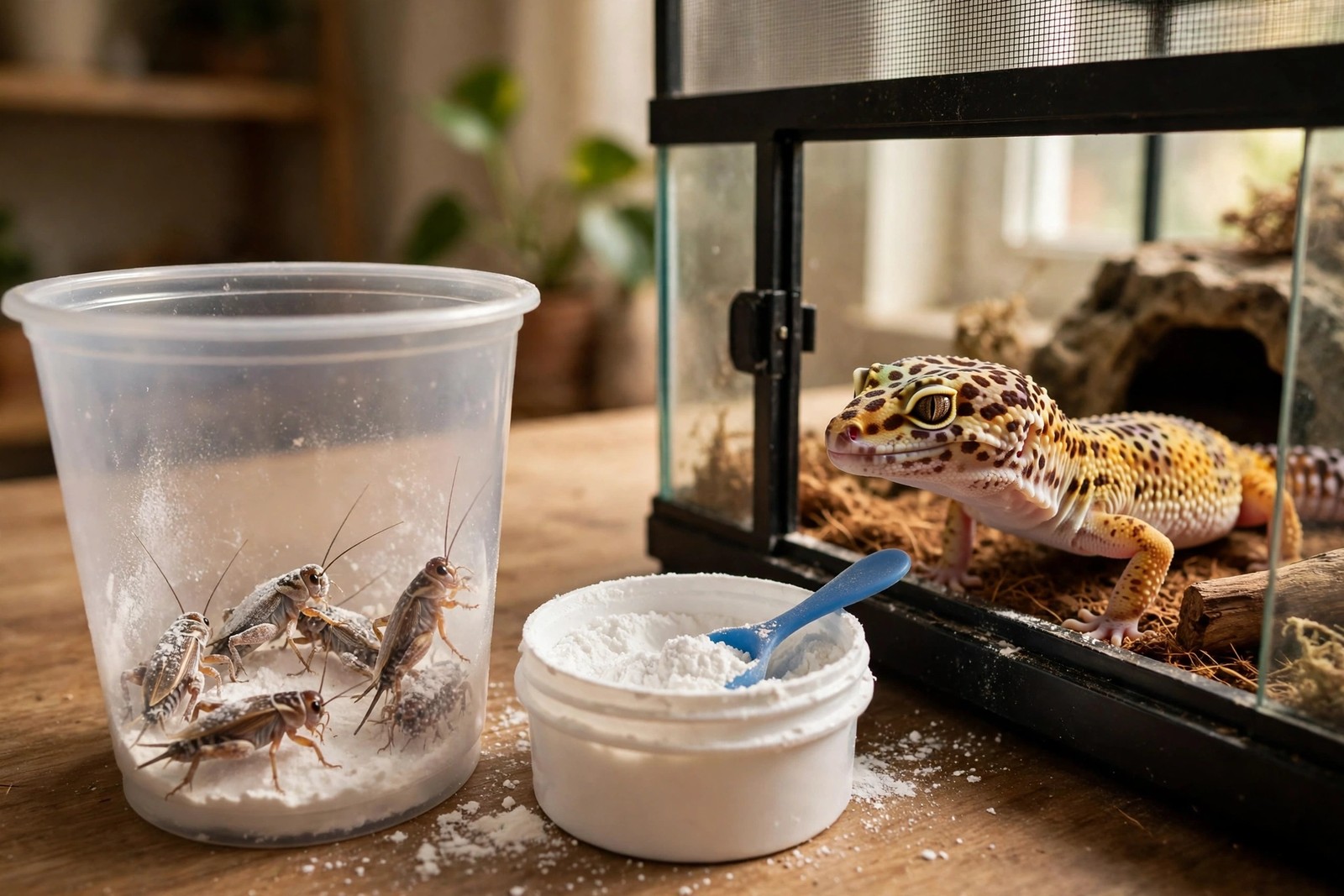
Feeder insects have a nutritional weakness that dusting exists to correct: they carry far more phosphorus than calcium, and a reptile fed on undusted insects alone takes in that imbalance at every meal. Over time the body draws calcium from the bones, which is how preventable bone disease takes hold in geckos, bearded dragons, chameleons and other insect-eaters. A light coating of calcium powder at nearly every feeding is the standard way keepers close that gap.
The pattern by age
Growing juveniles eat daily and are building skeleton at full speed, so their insects should carry calcium at every feeding, with one planned exception set out in the multivitamin section below: on the multivitamin feeding, the multivitamin replaces the calcium rather than joining it. Adults, eating every other day or so, should have calcium on most of their feedings; an adult in maintenance condition does not need the powder quite as relentlessly as a growing youngster, but letting adult dusting slide to once in a while reopens the same imbalance more slowly. Gravid females, meaning females producing eggs, sit back at the juvenile level of need while they are forming eggs, because each shell is drawn from the mother's calcium. Whatever the age, dust lightly: insects should look faintly frosted, not buried, because heavily coated insects are often refused, and a refused insect delivers no calcium at all.
Plain calcium, D3 calcium and ultraviolet light
Which powder belongs in the routine dusting depends on the lighting above the enclosure. A reptile with proper ultraviolet lighting makes vitamin D3 in its skin, and that D3 is what lets it use dietary calcium; for such an animal, plain calcium without added D3 is the right powder for the routine dusting at nearly every feeding. A calcium powder containing D3 then has a narrower role, used on the pattern your vet advises for your species and setup, because D3 arriving from the lamp and the powder together can overshoot. For a reptile kept without ultraviolet lighting, a setup weakness worth correcting in its own right, a vet who treats reptiles should set the powder pattern while the lighting is fixed. Check whether your tub says it contains D3 before you build the weekly pattern around it, because two tubs that look identical can be different products.
Multivitamin on its own feeding
A reptile multivitamin covers the vitamins and trace minerals plain calcium does not, and it belongs on its own feeding rather than mixed with calcium. For a growing juvenile, use the multivitamin instead of calcium at one or two feedings a week; for an adult, use it instead of calcium at one feeding a week. Keeping the two powders on different feedings avoids doubling up on fat-soluble vitamins and keeps each dusting light enough for the insects to stay appetising. Mark the multivitamin feeding clearly, because it is easily lost when weeks repeat and the programme quietly drifts out of balance.
Technique: gut-loading and coating the insects
Dusting works best on insects worth eating in the first place, so feed the insects themselves for the twenty-four hours before they are offered: leafy greens and vegetables turn a hollow cricket into a nourishing one, a step called gut-loading. To dust, place the insects in a smooth cup or bag with a small pinch of powder and swirl gently until each insect carries a thin coating, then offer them promptly, because insects groom powder off themselves as time passes. Remove uneaten insects at the end of the feeding rather than leaving them loose in the enclosure overnight. If your reptile develops a soft jaw, tremors, bent limbs or a falling appetite, stop adjusting the schedule at home and see a vet who treats reptiles, since those signs can reflect bone disease that powder alone cannot reverse. Writing the pattern into KinsLe Care Teams, feeding by feeding day, means whoever feeds the gecko or the dragon that day can see whether the insects take calcium, multivitamin or neither, and the programme survives busy weeks intact.